
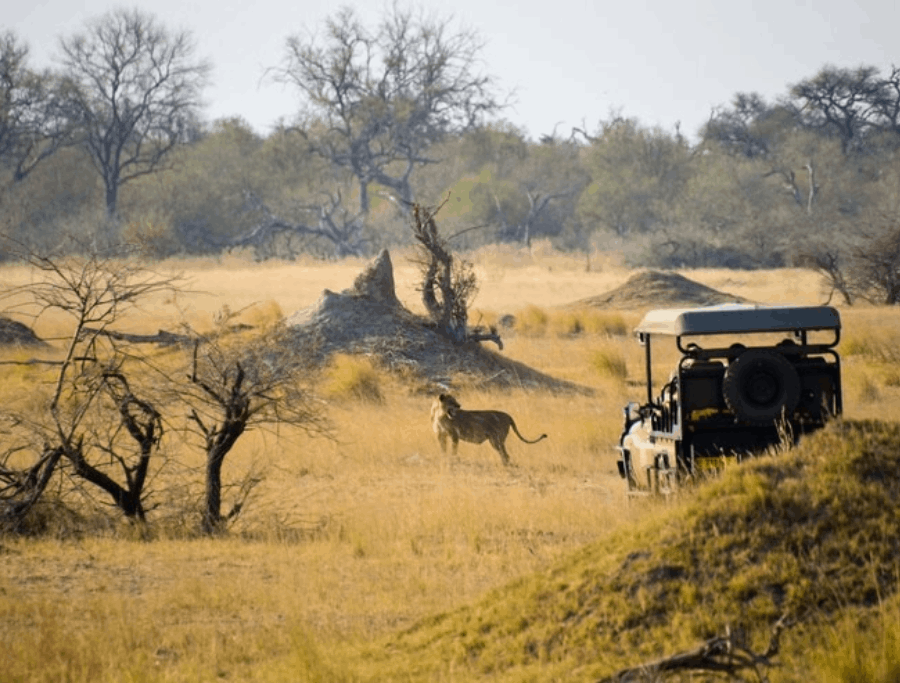
The Maasai Mara and the Serengeti are the same ecosystem. The Mara River runs through both; the wildebeest do not check passports. What separates them is a border drawn in 1886 by two European powers who had never set foot in either place.
A 10-day Kenya and Tanzania safari is, in practice, a single continuous wildlife experience split across two of East Africa’s greatest destinations. Ten days is enough to do it properly, if the routing is right. This guide covers what that routing looks like, what each destination contributes, and what you should expect at every stage of the journey.
Is 10 Days Enough for Kenya and Tanzania?
The honest answer is yes, with one condition. The itinerary needs to be built around the ecosystem’s logic, not around equal time in each country for its own sake.
The most common mistake is spending too many nights in Nairobi at either end. Two nights in the capital is sufficient: one to arrive and recover, one to depart. Every additional Nairobi night is a game drive morning you are not having in the Mara or the Serengeti.
A well-structured 10-day split looks like this: three to four nights in the Maasai Mara or its surrounding conservancies, one night in Amboseli for the Kilimanjaro backdrop, then a short flight across the border into Tanzania for two nights in Tarangire and two nights split between the Serengeti and Ngorongoro Crater. That structure gives you two of East Africa’s best predator territories, the world’s most dramatic elephant landscape, and the greatest wildlife density on the planet, all in sequence.
What the ten days do not leave room for is a coast extension. If Zanzibar or Diani Beach is part of the plan, you are looking at a 12-day Kenya and Tanzania itinerary at a minimum.
The Maasai Mara: Where the Migration Crosses
The Mara is the most recognisable name in East African safari, and the most misunderstood. Most visitors arrive expecting a single dramatic river crossing and leave either surprised by how much more there is, or frustrated because they waited at the wrong crossing point on the wrong day.
Between July and October, over 1.5 million wildebeest and 250,000 zebra move north from the Serengeti into the Mara in search of grass. The Mara River crossings (at Serena, Purungat, and Sand River) are where the spectacle concentrates: animals packed at the bank, crocodiles waiting in the shallows, the herd eventually committing and pouring across in a chaotic surge that can last fifteen minutes or three hours.
No guide can guarantee a crossing on any given morning. What a guide can do is read the herd’s behaviour, the way they bunch at the bank, test the water, retreat, and bunch again, and position you where the momentum is building. That is the difference between watching a crossing happen and being there when it does.
Outside the July–October window, the Mara is still excellent. The resident wildlife, lion prides, cheetah families, large elephant herds, and a leopard population that rewards patience, is present year-round. January and February bring the calving season to the southern Serengeti, and the predator concentration that follows is, by most measures, more reliably dramatic than a single river crossing.
The Conservancy Advantage
The Maasai Mara National Reserve covers 1,510 square kilometres and receives the majority of the Mara’s visitor numbers. The private conservancies, Olare Motorogi, Mara Naboisho, and Mara North, wrap around the reserve and operate under strict vehicle limits, no more than a handful of Land Cruisers per sighting.
Inside a conservancy, your guide can follow a leopard off-road into the long grass. Night drives are permitted. Walking safaris with a ranger are available. The conservancy fee, typically $80 to $150 per person per day, usually bundled into the camp rate, funds Maasai landowner lease payments and anti-poaching programmes. The experience differential between the reserve and the conservancies is significant enough that, for a 10-day trip, spending the Mara nights inside a conservancy is consistently the better allocation.
Amboseli: Elephants Against Kilimanjaro
One night in Amboseli National Park sits naturally between the Mara and the Tanzania crossing. It is not a long stop — but it is an irreplaceable one.
Amboseli hosts some of East Africa’s largest elephant herds, and its position directly below Mount Kilimanjaro creates a visual that does not exist in the same form anywhere else on the continent. On a clear morning — most common between October and February — the mountain’s snow-capped summit floats above the plains while elephant families move in silhouette across the swamp edges in the foreground. It is a scene that has filled more wildlife photography books than almost any other in Africa, and it earns its place there.
The park also has strong lion and cheetah populations, and the Observation Hill viewpoint gives a panoramic view of the entire swamp ecosystem that helps guests understand the landscape’s structure before getting down into it.
Crossing Into Tanzania: Tarangire and the Elephant Highways
Tanzania’s northern circuit begins in Tarangire National Park, and Tarangire is consistently undervalued by itineraries that skip it in favour of an extra night on the Serengeti.
Between July and October, Tarangire concentrates elephants in numbers that exceed anything in the Mara. Herds of 200 to 300 animals are documented regularly during the dry season, drawn to the Tarangire River — the only permanent water source in the region, while the surrounding landscape empties. The baobab forests that frame the river give Tarangire a visual character entirely different from the open grass plains of the Mara and Serengeti: ancient trees, some over a thousand years old, rising from red earth above the moving elephants.
The park also has strong populations of lesser kudu, gerenuk, and oryx, species rarely encountered in the Mara ecosystem, and one of East Africa’s highest recorded lion densities outside of the Ngorongoro Crater.
Two nights in Tarangire, positioned before the Serengeti, gives the Tanzania leg of the itinerary its own identity rather than treating it purely as a Serengeti warm-up.
The Serengeti: Scale That Has No Comparison
The Serengeti National Park covers 14,750 square kilometres — roughly the size of Northern Ireland. The first time most guests register its scale is from a small aircraft descending toward a bush airstrip, watching the plains extend in every direction without a building or road in sight.
The same migration that crosses the Mara River in Kenya circles through the Serengeti across the rest of the year. Between December and March, the wildebeest calving season unfolds in the short grass plains of the south, 500,000 calves born within a six-week window, triggering a predator concentration that Laban Swai, Kwezi’s Tanzania operations specialist, describes as “the most intense wildlife viewing in East Africa, bar nothing.”
The Serengeti’s central corridor (the Seronera area) is where the resident lion prides are largest and the leopard sightings are most consistent. The western corridor follows the Grumeti River, where the herds cross in June and July before reaching the Mara. The northern Serengeti borders the Mara directly and sees the highest density of big cat activity during the peak migration months.
A two-night Serengeti stay on a 10-day itinerary is enough to see the plains, cover a central and a peripheral game drive zone, and have a meaningful encounter with the ecosystem — but not enough to sit at a single pride territory for three consecutive mornings. That depth of wildlife immersion requires a longer Tanzania leg.
Balloon Safari Over the Serengeti
A hot air balloon flight over the Serengeti takes place at first light, before the day’s game drive begins. The flight lasts approximately an hour and covers terrain that would take several hours to cross by vehicle, giving a read of the landscape’s patterns — migration corridors, river systems, the distribution of herds across the plains — that is genuinely impossible to understand from ground level.
Current pricing runs between $450 and $500 per person, plus a $50 landing fee. It is one of the few safari add-ons that consistently justifies its cost on first-time visitors’ accounts.
Ngorongoro Crater: A World Contained
The Ngorongoro Conservation Area is the last stop before returning to Arusha for the Tanzania departure. The crater floor — 260 square kilometres of compressed wildlife habitat formed when a massive volcano collapsed approximately 2.5 million years ago — holds an estimated 30,000 animals within its steep walls.
The crater contains the highest density of lions in Africa. It holds one of the continent’s last stable populations of black rhino, with roughly 26 individuals recorded. Elephant bulls — large old males with sweeping tusks that are increasingly rare elsewhere — move through the fever tree forests on the crater rim and descend to the floor seasonally.
Descending into the crater on a clear morning, the walls rising 600 metres on all sides, the floor laid out below with herds visible in every direction, is one of the most disorienting and extraordinary landscape experiences in East Africa. It operates differently from the open Serengeti: denser, more contained, with a quality of encounter that comes from animals that have lived within the same natural boundary for generations and show little of the wariness found in more disturbed environments.
The Cultural Dimension: Maasai and Hadzabe
A 10-day Kenya and Tanzania safari crosses through two of East Africa’s most distinct indigenous cultures, and both encounters are worth approaching seriously rather than as a scheduled photo opportunity.
The Maasai have lived alongside the wildlife of the Mara ecosystem for centuries. Their relationship with the conservancies — they lease the land, receive the conservation fees, and in many cases employ the rangers — is the reason the private conservancy model works. A village visit through a camp-arranged introduction, rather than through a roadside stop, gives a context for that relationship that a brief cultural show does not.
In Tanzania’s Lake Eyasi basin, the Hadzabe are one of the last populations on Earth still living as hunter-gatherers. A morning with a Hadzabe hunting group — following trackers through the dry thornbush before dawn — is not a recreation or a demonstration. They hunt for food. Watching that happen, and the social structure that organises it, is an encounter with a way of life that has remained largely unchanged for 10,000 years. It is available as a half-day excursion from Lake Manyara or Karatu, positioned naturally within the Tanzania leg of the itinerary.
Lodges and Camps: What to Expect
The accommodation across a Kenya and Tanzania safari spans a wide range — from comfortable tented camps inside the national parks to owner-run private conservancy properties with fifteen tents, a plunge pool, and meals served in the bush.
The functional difference between a park camp and a conservancy property is not primarily comfort — the top park lodges are excellent — it is access. A conservancy property gives you off-road tracking, night drives, and a guide whose entire working day is focused on your group. A park lodge has fixed road access and shared game drive routes. Both are valid; the choice depends on what you are prioritising for each destination.
For guidance on specific properties across the Kenya and Tanzania circuit, Diana Muimi handles lodge selection for every Kwezi itinerary and matches properties to groups based on travel style, not just price point.
Practical Planning: What to Know Before You Go
Domestic flights: The Nairobi–Mara flight takes under an hour from Wilson Airport. The Amboseli–Kilimanjaro or Amboseli–Arusha leg varies by carrier and season. Flying between destinations adds cost — roughly $120 to $280 per person per sector — but recovers a full day of road travel per leg. For a 10-day trip, flying is worth building into the budget.
Park and conservancy fees: Kenya Wildlife Service fees for the Maasai Mara National Reserve currently sit at $100 per adult per day from January to June and $200 per day from July to December. Conservancy fees add $80 to $150 per person per day on top of that, though most conservancy camps bundle this into the nightly rate. Tanzania’s Tanzania National Parks fee structure differs by park — confirm current rates when building your budget.
Best season: The July–October window captures the Migration in the Mara and the peak dry season in Tanzania. January–March covers calving season in the southern Serengeti. Both are excellent. April–June (green season) drops lodge rates by 30 to 40%, the landscape is lush, and crowds are minimal — a strong choice for travellers whose priority is wildlife quality over river crossings.
AMREF Flying Doctors: All Kwezi bookings include AMREF Flying Doctors emergency evacuation cover as standard. The Mara is two hours by air from Nairobi’s tertiary hospitals. This is not an upsell.
Plan Your 10-Day Kenya and Tanzania Safari
Kwezi Safaris has operated private Kenya and Tanzania itineraries since 2013. Every routing is built around the specific combination of wildlife, landscape, and cultural experience you have come to see — not a fixed departure schedule.
The 10 Days Kenya and Tanzania Safari covers the Maasai Mara conservancies, Amboseli, Tarangire, the Serengeti, and Ngorongoro, with accommodation options at each tier and domestic flights factored in.
To discuss routing, season, and accommodation options for your travel window, contact Diana Muimi at sales@kwezisafaris.com or call +254 745 522 208. We respond to every enquiry within one business day.
George Nchau is the Director and Lead Guide at Kwezi Safaris. He has operated private safaris across Kenya, Tanzania, Uganda, Rwanda, and Zanzibar for over 20 years and has guided the Maasai Mara–Serengeti circuit in every month of the year.