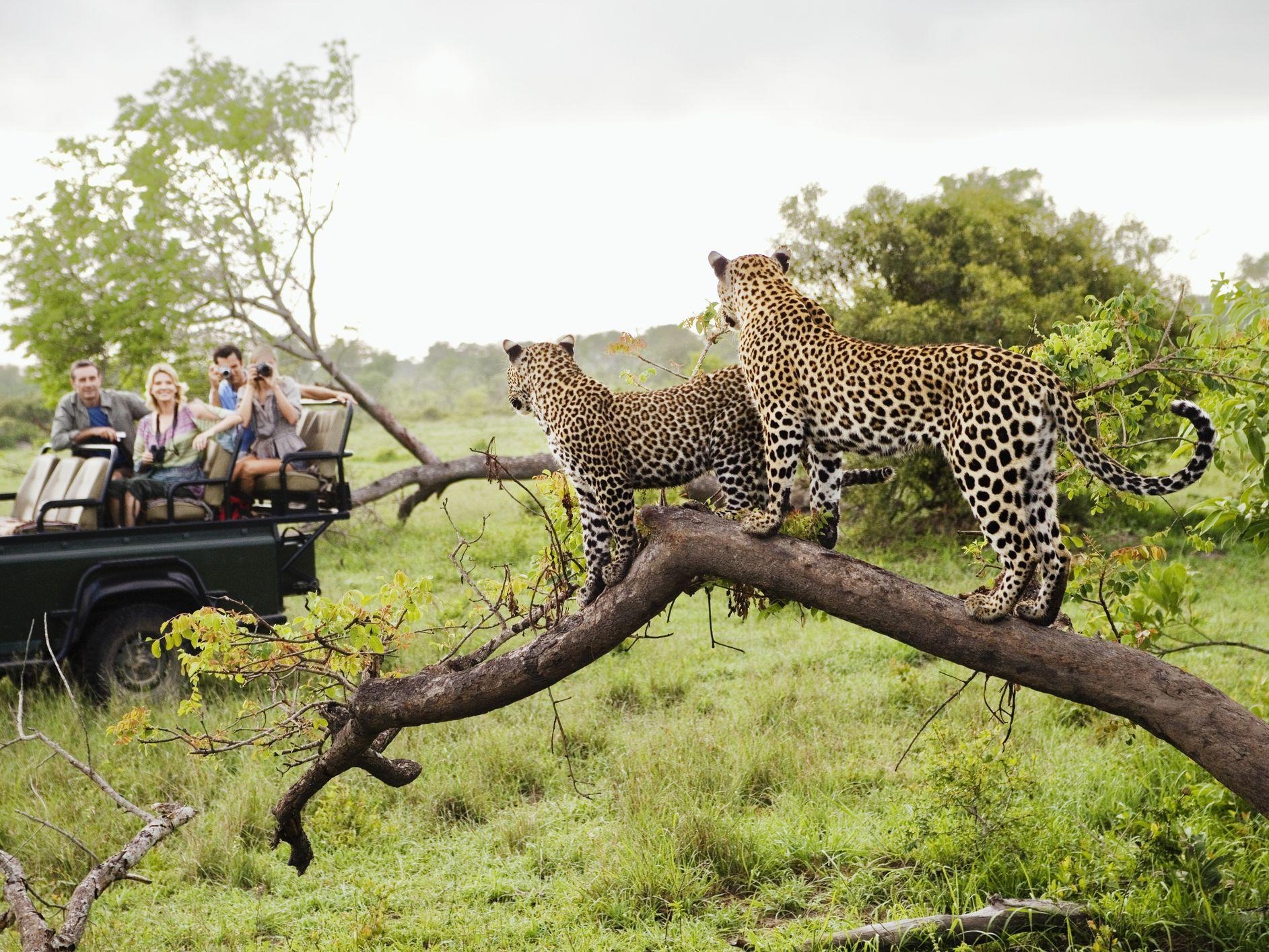
There is a moment, usually about ten minutes into your first morning game drive, when the question of what you paid stops mattering entirely. A leopard is draped over an acacia branch sixty metres ahead. Your guide has cut the engine. The only sound is the wind moving through the grass. There is no other vehicle in sight.
That experience has a price. And unlike most things in travel, it is largely transparent once someone walks you through it honestly.
This is that walkthrough. No vague ranges. No hidden asterisks. Just a clear breakdown of what a private Kenya safari costs in 2026, what drives that number up or down, and what separates a well-spent dollar from an overpaid one.
What “Private Safari” Actually Means in Kenya
Before the numbers, a definition worth making explicit: a private safari means a dedicated vehicle, a dedicated guide, and an itinerary built around your dates, your pace, and the wildlife or experiences you have come to see. There are no fixed departure dates. No strangers in the back seat. No compromises on timing because eight other guests need to be back at camp by noon.
This is the standard Kwezi Safaris operates by. It is also the standard around which this guide is written. If you are pricing shared-vehicle group departures, the numbers below will not apply.
What Does a Private Kenya Safari Cost in 2026?
The honest answer is that most private safaris in Kenya fall between $800 and $2,500 per person per night, all-inclusive. Where you land within that range depends on five variables: the parks and conservancies you visit, the accommodation you choose, the time of year, the size of your group, and whether you fly or drive between destinations.
Here is how those bands break down in practice:
Entry-level private ($800 to $1,200 per person per night): Comfortable tented camps and lodges inside or bordering the national parks, private Land Cruiser and guide, all meals, park fees, and twice-daily game drives. Strong wildlife, solid guiding, fewer design flourishes in camp. Amboseli, Tsavo, and the Mara conservancies at this price point offer excellent value without compromise on the experience that matters most.
Mid-tier private ($1,200 to $1,800 per person per night): Premium camps with larger tents or suites, enhanced food and wine, and often a location inside a private conservancy rather than the national reserve. This is where the crowd dynamic shifts noticeably. Vehicle numbers are capped, off-road tracking becomes possible, and night drives are permitted.
Luxury and ultra-luxury private ($1,800 to $2,500+ per person per night): Named camps — the properties with plunge pools, butler service, private dining in the bush, and helicopter transfers available on request. Rates at camps like Cottar’s 1920s Camp in Olderkesi or Mahali Mzuri in Olare Motorogi operate at the upper end of this range. The conservation fees, meals, laundry, house wines, and guided activities are bundled. You are paying for complete exclusivity, not just comfort.
The Cost Components Operators Rarely Itemise
Most operators quote a per-person-per-night rate and leave the arithmetic to you. Here is what that rate is actually built from, and where the hidden additions tend to appear.
Accommodation (40 to 55% of total cost)
This is the largest single variable. A well-run tented camp inside the Masai Mara National Reserve charges differently from one in a private conservancy, which charges differently again from an owner-run boutique property with twenty kilometres of exclusive wilderness. The accommodation rate typically includes all meals, non-premium drinks, and daily game drives. Confirm this in writing before booking.
Private vehicle and guide (bundled into most packages, but worth verifying)
On a private safari, your Land Cruiser and guide are yours for the day. This is not a premium add-on, it is the baseline. What varies is the calibre of the guide. A Kenya Professional Safari Guide Association-certified guide with ten-plus years of field experience is a different product from a newly licensed driver-guide. At Kwezi, George Nchau leads our Kenya operations with over twenty years in the field. That depth of knowledge does not appear as a line item on a quote, but it determines the quality of every hour you spend in the bush.
Park and conservancy fees (significant and often underquoted)
Kenya Wildlife Service fees for Masai Mara National Reserve currently sit at $100 per adult per day from January to June, and $200 per adult per day from July to December for non-resident visitors. These are among the highest park fees on the continent, and they apply on top of your accommodation rate unless your camp explicitly states otherwise.
Private conservancies bordering the Mara — Mara North, Naboisho, Olare Motorogi — charge their own conservancy fees of between $80 and $150 per person per day. These fees fund the Maasai landowner lease payments, anti-poaching ranger programmes, and the strict vehicle limits that make the conservancy experience what it is. Most luxury camps in conservancies bundle this fee into the nightly rate. Always confirm.
Amboseli National Park fees sit at approximately $90 per adult per day following the 2025 reclassification. Tsavo parks run lower, at around $52 per adult per day, making them a strong choice for longer itineraries where you want to balance cost and coverage.
Domestic flights (optional but worth serious consideration)
The drive from Nairobi to the Masai Mara takes four to five hours on a good day. A domestic flight from Wilson Airport takes under an hour. One-way fares currently run between $120 and $280 per person depending on the operator and season. For a seven-night itinerary covering multiple parks, flying between destinations saves a full day of road travel and arrives you at camp rested.
We factor domestic flights into every itinerary we build. Whether clients choose to fly or drive is their decision, but we never quietly remove the option to keep a quote number lower.
AMREF Flying Doctors emergency evacuation cover
Every Kwezi Safaris booking includes AMREF Flying Doctors cover as standard. This provides emergency medical evacuation across East Africa. It is not an upsell. It is what responsible operators include because the Mara is two hours by air from Nairobi’s best hospitals, and the bush does not pause for medical emergencies.
Optional add-ons priced separately
A hot air balloon safari over the Masai Mara currently costs between $450 and $500 per person, plus a landing fee of approximately $50. It is one of the few experiences in Kenya that consistently lives up to its reputation, particularly at first light during the migration months. Bush dinners, private sundowner setups, and specialist walking safaris in conservancies are priced on request and structured around your itinerary.
How Group Size Affects Your Per-Person Cost
A private safari vehicle in Kenya typically accommodates up to six passengers. Whether that vehicle carries two people or five, the vehicle cost remains broadly fixed. This means the per-person rate drops meaningfully as group size increases.
A couple on a private seven-night safari will pay more per person than a family of four on the same itinerary, in the same camps, with the same guide. If you are travelling with friends or extended family, it is worth knowing this before you price separately and reconvene.
We build all our quotes on actual group size and are transparent about where economies exist. You should never pay a solo supplement on the guiding component when a larger group joins the same vehicle.
The Conservancy Advantage: Why the Extra Cost Is Worth It
The Masai Mara National Reserve is one of the finest wildlife destinations on earth. It is also, during peak migration season, one of the most congested. At a busy river crossing in August, it is not unusual to count thirty or forty vehicles circling a single sighting.
The private conservancies that border the reserve operate under a fundamentally different model. Vehicle numbers are capped. Entry is exclusive to guests staying at partner camps within the conservancy. Off-road tracking is permitted, meaning your guide can follow a leopard into the long grass rather than watching it disappear from a fixed road. Night drives are legal in the conservancy and illegal in the reserve. Walking safaris alongside a qualified ranger are available at most conservancy camps.
Olare Motorogi Conservancy holds the highest lion density per square kilometre in the Mara ecosystem, and frequently the lowest vehicle count at a sighting. Mara Naboisho carries Africa’s highest recorded lion density alongside a strong cheetah population. Mara North is the largest of the conservancies and offers perhaps the widest range of accommodation options at different price points.
The conservancy fees are real. The experience differential is also real. For a traveller who has decided on a private safari, spending that money inside a conservancy rather than inside the national reserve is, in most cases, the better allocation.
Peak Season vs. Green Season: What the Price Gap Looks Like
Kenya safari pricing follows two primary seasons. The high season, running from July through October, coincides with the Great Migration in the Masai Mara and commands peak rates. Expect accommodation costs to run 30 to 50% higher than the same camp in low season. Conservancy fees remain fixed year-round.
The green season (broadly April through June) offers a different proposition. Camps discount substantially, sometimes by 30% or more. The landscape is lush and dramatic rather than dry and golden. Wildlife is present and active, though visibility through longer grass requires a more patient approach. Birdlife is exceptional, and the Mara sees a fraction of the visitor numbers it draws in August.
January and February sit in a secondary high season: dry, excellent predator activity, and lower prices than the migration months. These are months George Nchau rates highly for clients who want quality game viewing without the peak season premium.
The right season depends on what you are there to see. We map every itinerary to the specific wildlife experience you have prioritised, not to the season that is easiest for us to fill.
What a Typical 7-Night Private Kenya Safari Costs in 2026
To make this concrete: a well-planned seven-night private safari, three nights in the Masai Mara conservancies, two nights in Amboseli, two nights at a Laikipia property, for two adults flying between destinations, staying at mid-to-upper tier camps, will typically total between $14,000 and $22,000 for the pair, inclusive of all park and conservancy fees, domestic flights, meals, and daily guided activities. That is a wide range because camp selection alone can shift the number significantly in either direction.
At the luxury end of the same itinerary, top-tier conservancy camps, private bush dining, balloon safari included, the figure climbs toward $28,000 to $36,000 for two.
These are Kenya-only land costs. International flights, travel insurance, and personal expenses are separate.
What Distinguishes Good Value from Overpaying
The two things that determine whether your safari budget is well-spent are accommodation placement and guide quality. Everything else is secondary.
A camp positioned inside a private conservancy with a vehicle limit of fifteen guests per night delivers a fundamentally different wildlife encounter than one outside the park boundary, regardless of how the rooms are appointed. And a guide who has spent twenty years reading animal behaviour, tracking spoor, and understanding the specific terrain of the park you are in changes what you are able to see and understand on every single drive.
Operators who lead their proposals with price are usually optimising for the win, not the trip. The question to ask any operator is not “what is your cheapest seven-night package” but “what would you design for someone who wants this specific experience, and what does it cost to do it properly?”
That is the conversation we are built for.
Plan Your Private Kenya Safari With Kwezi
Kwezi Safaris has operated private safaris across Kenya, Tanzania, Uganda, Rwanda, and Zanzibar since 2013. Every itinerary is built around your dates, your priorities, and the version of East Africa you have come to see. No joining fees. No fixed groups. No itinerary you did not sign off on.
Contact Diana Muimi at sales@kwezisafaris.com or call +254 745 522 208 to start the conversation.