Here’s something that should stop you in your tracks: there are fewer than 23,000 wild lions left on Earth. Let that sink in for a moment. Roughly 415,000 wild elephants are roaming Africa, but only 23,000 lions. The animal we call “King of the Beasts” has disappeared from over 90% of its historical range and is now extinct in 26 African countries.
Yet when you hear that deep, rumbling roar echo across the savanna, a sound that carries for five miles and registers at 114 decibels, you understand why lions command such reverence. There’s nothing quite like your first encounter with a pride of lions. The way they move with liquid grace despite their massive bulk. How they nap for 20 hours a day yet can explode into 50 mph sprints when needed. The social complexity that puts most animals to shame.
Lions aren’t just Africa’s most iconic predator. They’re a window into the raw, unfiltered drama of nature, birth, death, power struggles, cooperation, and survival. And if we’re being honest, they’re running out of time.
So let’s dive deep into the world of Panthera leo, understand what makes them extraordinary, discover where to see them, and explore how we can ensure future generations get to witness the king in the wild.
Quick Lion Facts
Scientific Name: Panthera leo
Conservation Status: Vulnerable (IUCN), Critically Endangered in West Africa
Population: Approximately 22,000-25,000 (down from 200,000+ historically)
Lifespan: 10-14 years in wild; up to 20 years in protected areas
Weight: Males 190 kg (420 lbs), Females 130 kg (290 lbs)
Top Speed: 50 mph (80 km/h) in short bursts
Roar Volume: 114 decibels—audible from 5 miles away
Pride Size: Typically 10-15 members (up to 40 in exceptional cases)
Daily Food Intake: 7-8 kg normal; can eat up to 30 kg in one sitting
Gestation Period: 110 days (about 3.5 months)
Night Vision: 6 times better than humans
The Shocking Reality: A Species in Crisis
Let’s get the uncomfortable truth out of the way first. The lion is disappearing faster than most people realize.
The Numbers:
Historical range: Once roamed from Europe to India, across all of Africa
Current range: Only 7% of historical territory remains
Population decline: 43% decrease in just 20 years (roughly 2000-2020)
Regional breakdown: 13,014 lions in East/Southern Africa; only 342 in West/Central Africa
Extinct in: 26 of 48 African countries
Projected future: At current rates, lions outside protected southern African reserves could face extinction by 2050
Why the Collapse?
Habitat Loss: Human settlement, agriculture, and infrastructure have devoured lion territory. Lions need large ranges to hunt and thrive—those spaces are vanishing.
Human-Wildlife Conflict: When lions kill livestock, farmers retaliate. When lions are perceived as threats to communities, they’re eliminated.
Poaching: Lions are killed for their bones, teeth, claws, skin, and fat—sold in illegal markets and traditional medicine trade.
Prey Depletion: Bushmeat hunting reduces wild prey populations, leaving lions with less food and forcing them into human-livestock areas.
Fragmentation: Isolated lion populations can’t exchange genes, leading to inbreeding and vulnerability to disease.
The tragedy? Lions need us more than ever, but most safari-goers don’t even know they’re critically endangered in parts of Africa.
Lion Subspecies: Not All Lions Are the Same
Eastern and Southern African Lions (Panthera leo melanochaita)
This subspecies dominates East and Southern Africa, encompassing countries such as Kenya, Tanzania, Botswana, South Africa, Zimbabwe, Zambia, and Mozambique. These are the lions most people envision: males with impressive manes, prides roaming the Serengeti and Maasai Mara.
West and Central African Lions (Panthera leo leo)
Genetically, these lions are more closely related to India’s Asiatic lions than their cousins in East Africa! The Sahara Desert and Sahel region isolated northern populations from southern ones thousands of years ago, creating distinct genetic lineages.
These lions are critically endangered, with only about 342 individuals remaining in fragmented West and Central African populations.
Asiatic Lions (Panthera leo persica)
Found exclusively in India’s Gir National Park, about 650 Asiatic lions survive. Conservation efforts are slowly growing this population, but they remain endangered.
Meet the King: Physical Characteristics
The Iconic Mane
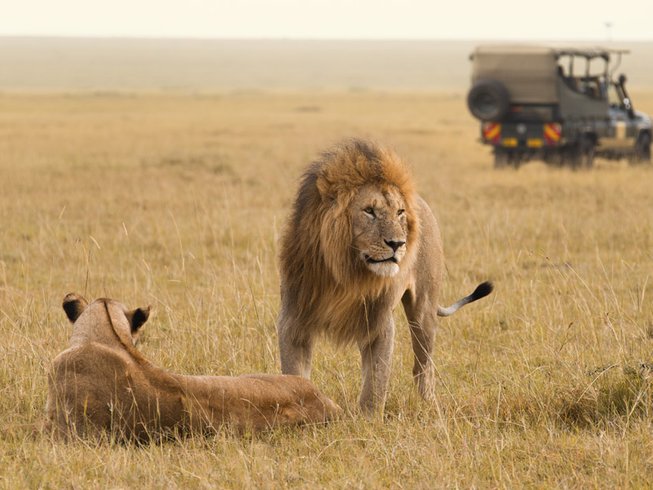
Only male lions sport the famous mane, that flowing fringe of hair encircling their head and neck. Mane color and size vary based on age, genetics, and testosterone levels, ranging from blonde to reddish-brown to black.
The mane serves multiple purposes:
- Intimidation: Makes males appear larger and more formidable
- Protection: Cushions blows during fights with rival males
- Sexual selection: Females often prefer males with darker, fuller manes (indicating genetic fitness)
Interestingly, some lion populations (like Tsavo’s famous “maneless lions”) have reduced or absent manes, possibly due to genetics, injury from thick brush, or adaptation to hot climates.
Built for Power
Lions are the second-largest cats on Earth (tigers are bigger), with compact, muscular bodies designed for explosive strength rather than endurance.
Adult Males: 190 kg (420 lbs), stand 1.2 meters (4 feet) at shoulder
Adult Females: 130 kg (290 lbs), slightly smaller and more agile
Their massive shoulders and forelegs pack incredible power for tackling prey—sometimes animals three times their size. Those retractable claws can extend up to 38 mm (1.5 inches), and their bite force is formidable.
The Coat
Adult lions have yellow-gold to tawny coats, perfect camouflage in sun-bleached grasslands. Cubs are born with faint cheetah-like spots that fade as they mature, offering some camouflage while vulnerable.
Rare white lions (leucistic, not albino) exist in South Africa’s Timbavati region, pale fur with normal eye pigmentation. They’re striking but disadvantaged hunters, standing out against the golden savanna
Night Vision Superpowers
Lions hunt primarily during cooler hours, dawn, dusk, and night. Their eyes are adapted for low-light conditions, with a reflective layer (tapetum lucidum) that gives them vision six times better than humans in darkness. This is why their eyes glow when caught in spotlights during night game drives.
Pride Dynamics: Lion Society is Fascinating
Lions are the only truly social cats, and their pride structure is complex, dramatic, and sometimes brutal.
Pride Structure
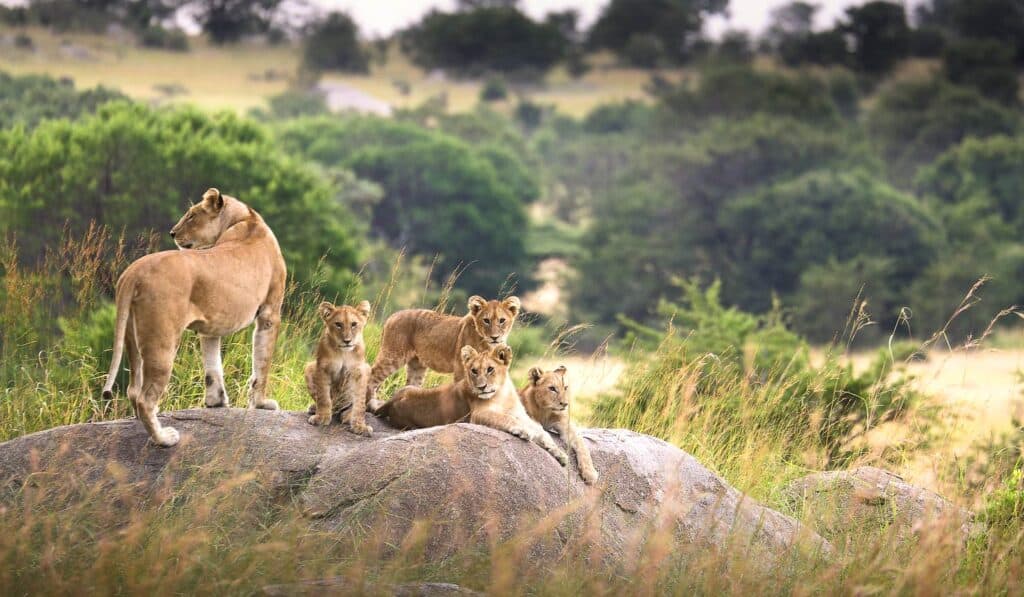
A typical pride consists of:
- Related females (sisters, mothers, daughters, aunts)
- Their cubs (multiple ages and litters)
- 1-4 dominant males (often brothers or coalition partners)
Pride size varies from 3 to 40 individuals, with 10-15 being average. Larger prides control more territory but face more internal competition for food.
The Females: The Real Rulers
Don’t let the “king” title fool you, females run the show. They’re the pride’s core: permanent residents, primary hunters, cub-raisers, and territory defenders.
Female roles:
- Hunt cooperatively (though males participate when tackling large prey)
- Raise cubs communally (will nurse each other’s young)
- Defend territory from intruding females
- Maintain pride stability and cohesion
Females usually stay in their birth pride for life, creating multi-generational family units with deep bonds.
The Males: Temporary Rulers
Male lions have a tougher road. Around 2-3 years old, young males are pushed out by pride males. They become nomads, alone or forming coalitions with brothers or unrelated males.
For years, these coalitions roam, building strength and experience. Eventually, they challenge pride males for breeding rights. If successful, they take over the pride. If not, they die trying or remain nomads.
Dominant male tenure: Typically 2-4 years before younger, stronger males dethrone them.
Infanticide: Nature's Harsh Reality
When new males take over a pride, they often kill existing cubs. This horrible-sounding behavior has evolutionary logic: it brings females back into estrus (they stop nursing), allowing new males to father their own offspring quickly during their limited tenure.
It’s brutal, but ensures the strongest genes propagate.
Synchronized Births: Strength in Numbers
Lionesses in the same pride often give birth around the same time. This synchronization improves cub survival, more adults to protect against predators, communal nursing provides backup if one mother dies, and larger cub groups confuse predators about which to target.
Hunting and Feeding: Apex Predators in Action
Watching lions hunt is witnessing millions of years of evolution perfected.
Cooperative Hunting
While males sometimes hunt, females are the pride’s primary hunters—and they’re strategic about it.
Common tactics:
- Ambush: Stalk close using tall grass, then explosive short sprint
- Encirclement: Some lionesses drive prey toward hidden pride members
- Exhaustion: Chase prey until tired, then attack
- Teamwork: Multiple lions coordinate to bring down large animals
Lions can hit 50 mph but only in short bursts (200-300 meters). They’re ambush predators, not marathon chasers like wild dogs or cheetahs.
What's on the Menu?
Preferred prey: Zebra, wildebeest, buffalo, impala, warthog
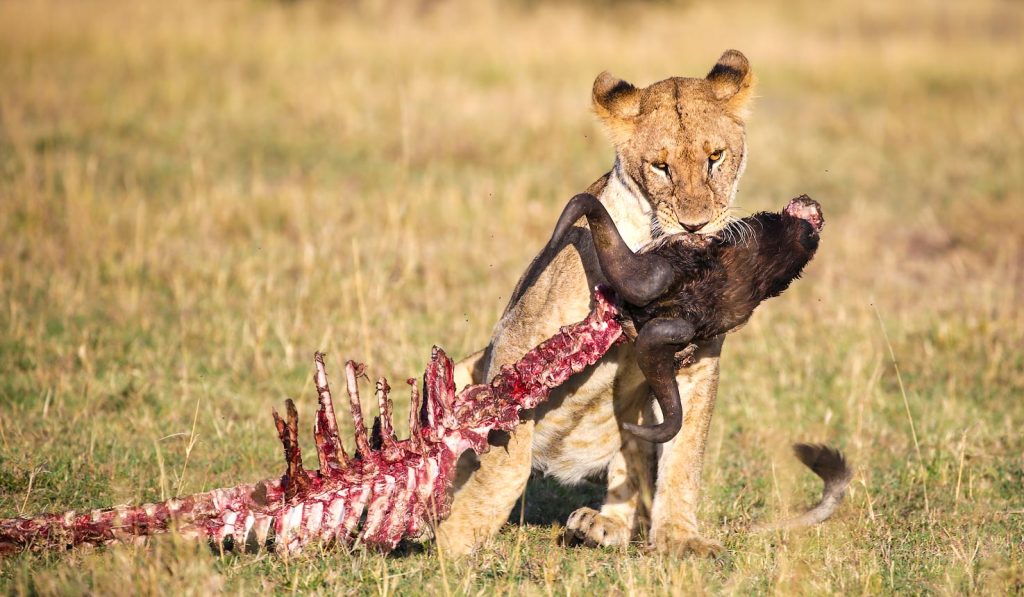
Lions are opportunists and will eat whatever’s available—from mice to elephants (yes, lions occasionally kill young or sick elephants). They’re also shameless scavengers, stealing kills from cheetahs, leopards, and hyenas when possible.
Feast or Famine
An adult lion averages 7-8 kg (15-18 lbs) of meat daily, but they don’t eat that consistently. Instead, lions gorge when kills are available—consuming up to 30 kg (66 lbs) in one meal—then fast for several days.
This boom-bust eating pattern suits their lazy lifestyle. Lions sleep 16-20 hours daily, conserving energy for brief, intense hunting sessions.
Water Needs
Lions drink 5-7 liters (1.3-1.8 gallons) daily when water’s available. In arid regions, they can survive several days without water, getting moisture from prey blood and organs.
Lion Life Cycle
Cubs: The Vulnerable Stage
After a 110-day gestation, lionesses give birth to 1-4 cubs (average 2). They’re born blind, helpless, and weigh about 1-2 kg (2-4 lbs).
Cub development:
- 0-6 weeks: Hidden from pride, nursed frequently
- 6 weeks: Introduced to pride
- 6-7 months: Weaned, start eating meat
- 1 year: Begin learning to hunt
- 2-3 years: Females reach maturity
- 3-4 years: Males reach maturity (but won’t breed until dominating a pride)
Cub mortality: Roughly 50% of cubs die before age 2 from starvation, infanticide, predation (hyenas, leopards), or abandonment during prey scarcity.
Prime Adulthood
Lions reach their peak at 5-9 years—full strength, experienced hunters, established social roles.
The Decline
After 10 years, lions slow down. Older males lose their pride to younger challengers. Aging females struggle to keep pace during hunts. Many die from starvation, disease, or injuries that heal slowly.
Wild lions rarely exceed 14 years. In protected areas with veterinary care, they can reach 20.
The Famous African Lion Roar
A lion’s roar is one of nature’s most recognizable sounds—and one of the loudest biological sounds on Earth.
Volume: 114 decibels (about as loud as a chainsaw or rock concert)
Range: Audible up to 5 miles (8 km) in ideal conditions
Why roar?
- Territory advertisement: “This land is ours”
- Pride communication: Coordinating separated members
- Dominance display: Intimidating rivals
- Mate attraction: Males advertising fitness
Most roaring happens at dawn and dusk. If you hear it in person, it resonates through your chest—an unforgettable reminder of who rules the savanna.
Where to See Lions in East Africa
Best Places to See the African Lion in Kenya (Population: ~2,500-2,600)
Kenya’s lion population grew 25% between 2010 and 2021—a conservation success story!
Best locations:
Maasai Mara National Reserve: World-famous for lion viewing, especially during the Great Migration (July-October) when prey is abundant. Prides are habituated to vehicles, offering incredible close-up opportunities.
Amboseli National Park: Known for large-maned males against Mount Kilimanjaro’s backdrop—iconic photography.
Tsavo National Parks (East & West): Famous for “maneless lions” and the historical “Man-Eaters of Tsavo.” Vast landscapes with good populations.
Samburu National Reserve: Unique semi-arid ecosystem with distinct wildlife. Lions here hunt adapted prey like Grevy’s zebras and reticulated giraffes.
Ol Pejeta Conservancy: Combines wildlife with rhino conservation. Good lion sightings in smaller, concentrated areas.
Lake Nakuru National Park: Compact park with healthy lion population, often spotted on tree branches.
Best Places to See the African Lion in Tanzania (Population: ~14,500)
Tanzania hosts the world’s largest lion population—about 14,500 individuals.
Best locations:
Serengeti National Park: The pinnacle of lion safaris. Massive populations follow the wildebeest migration year-round. Multiple prides, incredible hunting opportunities to witness, and vast landscapes.
Ngorongoro Crater: This collapsed volcano creates a natural amphitheater teeming with prey. High lion density in a concentrated area makes sightings almost guaranteed.
Tarangire National Park: Dry season (June-October) concentrates wildlife, creating excellent predator viewing. Lions often rest in acacia trees.
Nyerere National Park (formerly Selous): Tanzania’s largest park, relatively untouched. Wild, remote, authentic lion encounters.
Best Places to See the African Lion in Uganda (Population: ~400-450)
Smaller population but excellent quality sightings in spectacular landscapes.
Best locations:
Queen Elizabeth National Park: Famous for tree-climbing lions in the Ishasha sector—a rare behavior not commonly seen elsewhere.
Murchison Falls National Park: Northern Uganda’s premier park. Lions thrive in the Nile delta grasslands.
Kidepo Valley National Park: Remote, wild, spectacular. Fewer tourists mean more authentic experiences.
Conservation: What Can Be Done?
The lion’s situation is dire, but not hopeless. Conservation successes in southern Africa (Botswana, Namibia, South Africa, Zimbabwe) show what’s possible with commitment and resources.
What’s Working:
Fenced Reserves: Intensive management in smaller, protected areas has stabilized populations in southern Africa, though this isn’t viable everywhere.
Community Conservation: Programs that compensate livestock losses, employ locals as guides/rangers, and share tourism revenue reduce human-lion conflict.
Anti-Poaching: Increased patrols, technology (drones, GPS collars), and stronger enforcement protect lions from illegal killing.
Translocation: Moving lions to establish new populations in historical ranges shows promise.
Tourism Revenue: Safari income justifies lion protection economically, creating financial incentive for conservation.
What You Can Do:
- Choose safari operators committed to conservation (like Kwezi Safaris)
- Your park fees directly fund conservation and anti-poaching
- Support organizations working on lion conservation
- Spread awareness about their endangered status
- Never support canned hunting or lion cub petting attractions
- Advocate for stronger wildlife protections
Safety Around Lions
Lions generally avoid humans, but accidents happen. If you’re on a walking safari or find yourself unexpectedly near lions: