
I am Laban Swai, and I guide tours in northern Tanzania for Kwezi Safaris. Most of my working days begin in the dark, with a flask of coffee sitting on the hood of a Land Cruiser, accompanied by guests who have travelled across an ocean to be here. Before the engine starts, nearly all of them ask me the same question: “What should we expect?”
This is the right question, and unfortunately, brochures don’t do a good job of answering it. So, let me explain what to expect on a Tanzania safari. I will share this information as I would during our drive out of Arusha: park by park, hour by hour, clearly stating the costs and seasons. I will follow the route I drive most often, the northern circuit, as it is where most first-time visitors to Tanzania begin their adventure and where many of our guests choose to return.
Your Private Tanzania Safari Begins in Arusha
You will land at Kilimanjaro International Airport, usually tired and usually at night. Someone from our Arusha office will be standing at arrivals with your name, and within the hour you will be at your lodge on the green lower slopes of Mount Meru. Sleep. The safari can wait until morning.
At breakfast you meet your guide. If you are travelling with us, that guide stays with you for the entire journey, and so does the vehicle: a 4×4 Land Cruiser with a pop-up roof, a window seat for every guest, and nobody in it you did not bring. Kwezi runs private safaris only. That matters more than any thread count, because it decides who controls the day. If you want to sit with a leopard for two hours, we sit. If your daughter wants to follow the elephants, we follow the elephants.
Before we leave, I ask every guest three things: what you most want to see, how you like to photograph, and how early you are willing to wake. Your answers shape every drive that follows. Expect that from any guide worth traveling with.
A note on luggage, because it catches people out. Bring one soft-sided bag, not a hard case, and keep it near 15 kilograms if your itinerary includes a light aircraft flight. Pack neutral colours, layers for cold mornings, a wide-brimmed hat and the best binoculars you can borrow. Every camp does laundry, so you need far less than you think.
Visit Tarangire: Where the Elephants Set the Pace
Two hours south of Arusha, the tarmac ends, the baobabs begin, and Tarangire National Park opens in front of you. I like to start here. The Serengeti is the famous name, but Tarangire teaches you how to watch.
In the dry months, from June to October, the Tarangire River is the only reliable water for a very long way, and the elephants know it. They come down in family herds, forty and fifty at a time, matriarch in front, calves tucked between the legs of their aunts. I switch off the engine. This is the first thing nobody tells you about a safari: how quiet it is. You hear the river sand being dug, the low rumble that passes between the adults, the calf that squeals because it has slipped.
Tarangire is also where you learn the rhythm that every day will keep. Coffee arrives at your tent at half past five. We drive at six, when the light is soft and the cats are still moving. Breakfast is often out in the bush, on the hood of the vehicle or at a table set under a tree. By late morning the heat has put the animals in the shade, so you return to camp for lunch and the hours that belong to you. At four we go out again, and we stay out until the sun is on the horizon and there is a cold drink in your hand.
Ngorongoro Crater at First Light
The road climbs from the Rift Valley floor into forest and cloud. The rim of the Ngorongoro Crater sits at around 2,300 meters, and the first surprise is the cold. Pack a fleece. You will wear it at dawn and thank me.
We descend early, and there is a reason. The crater is a collapsed volcano with walls about 600 meters high, and its floor holds roughly 260 square kilometres of grassland, swamp, forest and a soda lake. Around 25,000 large animals live inside it. In the first hour of the day you share that with very few vehicles, and the light comes over the eastern wall in a way I have still not learned to describe to guests in advance.
Ngorongoro is your best chance in northern Tanzania of seeing a black rhino. I will not promise you one, and you should be wary of anyone who does. What I can promise is that we will look properly, with binoculars and patience, along the edges where they like to feed in the morning. The lions here are heavy and unbothered. The hyena clans are large and busy. Old bull elephants with long ivory keep to the Lerai forest.
Ngorongoro is also where the safari stops being only about animals. Maasai families graze their cattle across the highlands of the conservation area, alongside zebra and wildebeest, as they have for generations. A visit to a boma here is a conversation, and you should expect to be asked as many questions as you ask. Many of our guests name that hour as the one they talk about most at home.
Expect company by mid-morning. The crater is small and well loved, and I would rather you hear that from me than discover it at the picnic site. A private vehicle and an early start are how we stay ahead of it.
A Serengeti Safari: Big Cats and the Great Migration
Then the land flattens, the trees fall away, and you are driving into the Serengeti. Nearly 15,000 square kilometres. The name comes from the Maasai for the place where the land runs on forever, and on your first afternoon you will understand why they left it at that.
This is the part of the journey most guests have been waiting for, so let me be exact about what a Serengeti safari gives you.
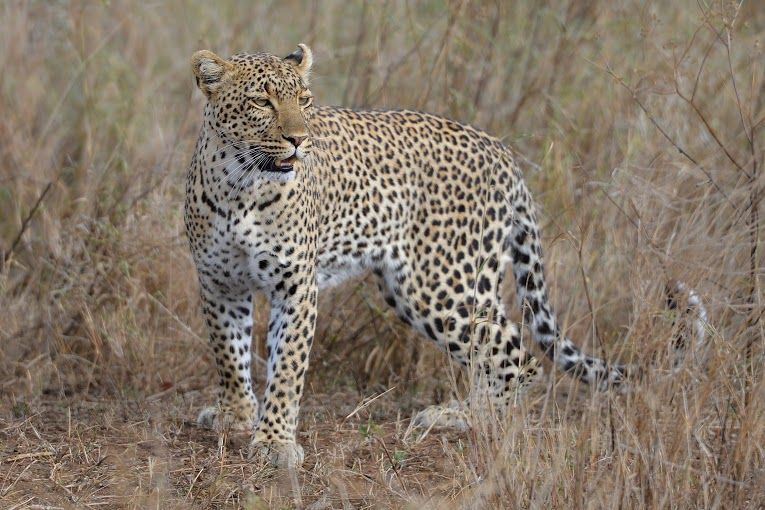
It gives you cats. The central Serengeti around the Seronera River has resident lion prides and some of the most reliable leopard viewing in Africa, and I check the same sausage trees and the same granite kopjes every morning because the cats use them like furniture. Out on the open plains to the east and south, cheetahs hunt in daylight. If big cats are the reason you are coming, tell your planner, and we will give this park more nights.
It gives you the Great Migration, if you come to the right place in the right month. Close to two million wildebeest, zebra and gazelle move through this ecosystem in a loop that never stops, and where you stay must follow where they are:
- January to March: the herds are in the southern Serengeti for calving season. Hundreds of thousands of calves are born within a few weeks, and every predator in the region is paying attention.
- June and July: the herds move north and west through the central and western Serengeti.
- July to October: the northern Serengeti, and the Mara River crossings.
A word on those crossings, since they are the image everyone carries. Expect to wait. I have sat with guests for four hours while ten thousand wildebeest stood on the bank and thought about it, and I have watched them turn around and walk away. I have also seen a crossing begin with no warning and run for forty minutes. A Great Migration safari rewards people who give it time, which is why we plan at least three nights in the north for anyone traveling for the river crossings.
And one morning, if you choose, you will leave camp before dawn and rise over all of it in a hot air balloon, then land to breakfast on the plain.
Nights Under Canvas on a Luxury Tanzania Safari
People worry about the nights more than anything else. They should look forward to them.
A good tented camp in Tanzania is a suite with canvas walls: a proper bed with good linen, a writing desk, an en suite bathroom with hot water, a veranda facing the bush. Dinner is three courses by lantern, often with the camp manager and your guide at the table, and the wine is better than you expected this far from a road. On the crater rim, the lodges trade canvas for stone, fireplaces and a view straight down into the caldera.
After dark, a member of the camp team walks you to your tent. That is a rule, and it is there because the camps are unfenced and the animals are not decoration. You will hear lions. Their call carries eight kilometres across the plains, and at two in the morning it sounds much closer than that. You will hear hyenas and zebra arguing, and sometimes something large pulling grass a few meters from your pillow. Most guests tell me at breakfast that it was the best night of sleep, or the best night without sleep, they have had in years.
We choose every property ourselves, and you can see the Tanzania safari lodges and camps we use before you commit to any of them. For travellers who want the top tier throughout, our luxury safaris are built around the smallest and best-positioned camps in each park.
What a Tanzania Safari Costs and the Best Time to Go
You should expect clear numbers before you book, so here they are.
A private Tanzania safari with good mid-range lodges runs from about $300 to $500 per person per day. A luxury Tanzania safari runs from $600 to $1,500 per person per day, and higher in the most exclusive camps during migration season. Park fees are a large share of that figure, and they are the reason Tanzania costs more than many travellers assume.
With Kwezi, the price you are quoted includes airport transfers, your private Land Cruiser and driver-guide, full-board accommodation, all park and conservation fees, drinking water in the vehicle, and AMREF Flying Doctors emergency evacuation cover. International flights, visas, travel insurance and tips are yours to arrange. Each itinerary is priced in three tiers, Silver, Gold and Platinum, so you can see exactly what a step up in lodges costs.
On timing, the short version I give guests:
- June to October is the dry season and the best all-round game viewing. July and August book out early.
- January to March is calving season in the south, with fewer vehicles and strong value.
- November, April and May bring rain, green landscapes, lower rates and excellent birding. Some camps close in April and May.
If you can only travel in one window, tell us which animals matter most and we will tell you where to be.
Tanzania Safari Packages We Recommend
Every journey we run is private and can be reshaped around you. These are the itineraries I would point you to first.
- 9 Days Tanzania Safari, from $3,470 per person sharing. The full northern circuit as I have described it: Arusha, Tarangire, the Serengeti, Ngorongoro and Lake Manyara. If this is your first safari, start here.
- 8 Days Tanzania Big Five and Beach Safari, from $3,297 per person sharing. The same parks at a quicker pace, ending with two nights on Zanzibar. Currently $200 off the total booking.
- 10 Days Kenya and Tanzania Safari, from $4,483 per person sharing. The Masai Mara and the Serengeti in one journey, for travelers who want both sides of the same ecosystem. Currently $200 off the total booking.
- 21 Days Kenya and Tanzania Safari, from $7,455 per person sharing. Samburu to the Serengeti, for those with the time to do East Africa properly. Currently $200 off the total booking.
- 11 Days Luxury Tanzania Safari, from $3,869 per person sharing. Ruaha, Nyerere and Zanzibar: the remote south, for travelers who have done the north and want wilder country and fewer vehicles.
Almost any of these can end with three days on Zanzibar, and after a week of five o’clock starts, most guests are glad they did. You can compare every option on our Tanzania safaris page.
So, what to expect on a Tanzania safari? Early mornings and long silences. A guide who learns what you love and goes looking for it. Wildlife at a scale that changes your sense of proportion, and a bed at the end of the day that asks nothing of you. Expect to plan your return before you have left.
When you are ready, tell us your dates and what you most want to see. Diana will come back to you within 24 hours with a costed itinerary, and I will have the coffee on the hood.