Wildebeest Migration River Crossing: Your Complete Guide to Nature's Greatest Spectacle
The Great Wildebeest Migration is one of the most remarkable natural phenomena on Earth. It involves a year-round, cyclical movement of over 1.5 million wildebeest, accompanied by hundreds of thousands of zebras and gazelles, across the vast Serengeti-Mara ecosystem, which spans Tanzania and Kenya.
Driven by ancient instincts and the need for survival, these massive herds follow the seasonal rains in search of fresh grazing and water, traveling hundreds of kilometers as the seasons change. Their nomadic journey includes iconic locations such as Serengeti National Park, Ngorongoro Conservation Area, and Kenya’s Maasai Mara National Reserve.
Among the many events within this migration, the most dramatic and visually striking are the wildebeest river crossings. These crossings do not happen year-round; instead, they occur at specific times when the herds must navigate major rivers like the Grumeti and Mara. During these heart-stopping moments, the migration becomes particularly perilous and mesmerizing.
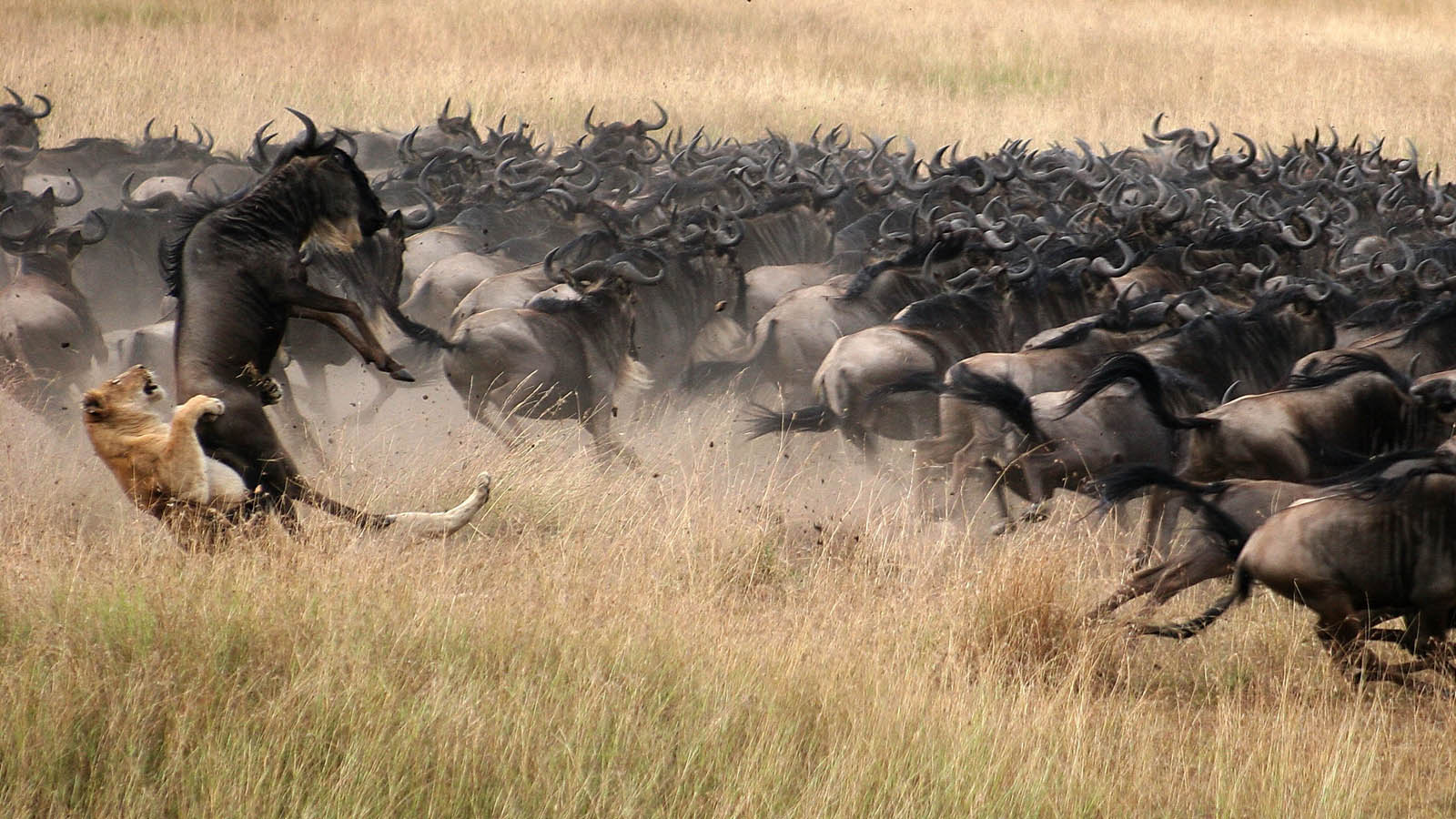
Wildebeest plunge into muddy, fast-flowing waters filled with giant Nile crocodiles, while predators—such as lions, hyenas, and leopards—strategically wait on the riverbanks. This transforms the crossings into life-and-death trials. These brief, intense displays of nature’s raw drama offer a thrilling contrast to the otherwise steady rhythm of the Great Migration, together defining the epic story of survival on the African savannas.
Plan your Great Migration safari to witness these incredible crossings.
Understanding Migration Patterns: Northward vs Southward Movement
The Annual Migration Cycle
The wildebeest migration in the Serengeti-Maasai Mara ecosystem follows a predictable cyclical pattern divided into two key phases: northward migration and southward migration, each offering distinct wildlife viewing opportunities.
Northward Migration (March to August)
Large herds travel from southern Serengeti plains toward the Maasai Mara in Kenya, pursuing fresh grazing as the southern plains dry. During this phase, dramatic Mara River crossings—particularly at the Mara and Grumeti Rivers—attract worldwide attention.
The perilous crossings, teeming with enormous crocodiles and ambushing predators, create thrilling spectacles that captivate wildlife enthusiasts and photographers. This represents peak safari season for witnessing the migration’s most dramatic moments.
Southward Migration (September to February)
This quieter phase sees wildebeest returning to Serengeti’s southern plains for the calving season. While river crossings do occur during southward movement, they’re generally less intense and visually captivating than northward crossings.
However, this phase proves equally important for species survival, culminating in the synchronized calving season (January-February) when hundreds of thousands of calves are born within weeks—creating different but equally spectacular wildlife viewing opportunities as predators converge on vulnerable newborns.
Major vs Minor River Crossings: What Makes Them Different
Understanding Crossing Classifications
In the Maasai Mara-Serengeti ecosystem, wildebeest river crossings are categorized as major or minor based on scale, intensity, and dramatic impact.
Major Crossings Characteristics
Involve the Mara River (both Kenya and Tanzania sides) and Grumeti River
Feature large-scale events with thousands of wildebeest plunging simultaneously
High crocodile populations create extreme danger
Strong currents and steep banks increase peril
Attract significant predator concentrations
Draw international safari tourists specifically for viewing
Minor Crossings Characteristics
Occur at Sand River, Seronera River, Lake Ndutu areas, and Mbalageti River
Involve smaller herd numbers at given times
Lower crocodile densities and gentler banks
Still essential to migration routes
Offer subtler but equally fascinating wildlife moments
Provide more intimate viewing experiences with fewer crowds
Both crossing types play crucial roles in the migration cycle, though major crossings deliver the heart-pounding drama most travelers seek on Great Migration safaris.
Major River Crossings: The Ultimate Wildlife Drama
Grumeti River Crossing (Western Serengeti, Tanzania) - May to June
Location and Timing
The Grumeti River, located in Serengeti’s western corridor, flows westward before joining the Mara River system heading toward Lake Victoria. Wildebeest encounter this river during their northward migration between mid-May and mid-June, with exact timing dependent on rainfall patterns.
Crossing Characteristics
While dangerous, Grumeti crossings are generally considered less dramatic than Mara River crossings due to several factors:
- Smaller crossing scale with fewer animals crossing simultaneously
- Lower overall danger level compared to Mara crossings
- Narrower river width making crossings shorter
- Gentler banks facilitating easier exits
- Lower crocodile density (though large Nile crocodiles still present)
Wildebeest face challenges including steep, muddy banks and potential drowning in strong currents, but overall danger remains less extreme than other major crossing points.
Return Journey
During southward migration (October to early November), wildebeest cross Grumeti again as they return to southern Serengeti plains. These return crossings typically involve smaller groups and receive less tourist attention.
Best For: Travelers seeking migration river crossing experiences with fewer crowds and more intimate viewing conditions.
Mara River Crossing - Serengeti Side (Tanzania) - June to July
The Second-Best Crossing Experience
The Mara River crossing on Tanzania’s Serengeti side ranks as the second-most dramatic crossing, with the Maasai Mara (Kenya) side claiming top billing. Wildebeest typically make their first Mara River crossing on the Serengeti side between late June and early July during northward migration.
Why Choose the Serengeti Side?
The Mara River crossing on Tanzania’s Serengeti side ranks as the second-most dramatic crossing, w
Though less dramatic than the Kenyan side, the Serengeti crossing offers compelling advantages:
- More intimate setting with significantly fewer safari vehicles
- Stunning views across rolling Serengeti plains
- Opportunity to witness early crossing stages
- Close-up perspectives of wildebeest navigating the river
- Lower tourist numbers create peaceful viewing atmosphere
- Easier positioning for unobstructed photography
- Good accessibility from northern Serengeti camps
ith the Maasai Mara (Kenya) side claiming top billing. Wildebeest typically make their first Mara River crossing on the Serengeti side between late June and early July during northward migration.
Crossing Dynamics
Wildebeest face substantial dangers including Nile crocodiles, strong currents, and steep banks, though overall peril is slightly less than the Kenyan side due to more gradual approaches and lower predator densities on riverbanks.
Return Crossings: October to early November during southward migration
Best For: Photographers seeking uncrowded perspectives and travelers valuing serene experiences over maximum drama.
Book your Serengeti migration safari with expert guides.
Mara River Crossing - Maasai Mara Side (Kenya) - July to August
The Ultimate Migration Spectacle
The Mara River flows through Kenya’s Maasai Mara National Reserve in the southwest, forming the natural border between Kenya and Tanzania. Originating from the Mau Escarpment, it flows southward before turning west and north through the Mara-Serengeti ecosystem, carving dramatic valleys and providing year-round water.
Peak Crossing Season
Wildebeest make their first major Mara River crossing around late July through mid-August as they move northward from Serengeti into the Maasai Mara. This crossing earned worldwide fame for heart-stopping dramatic scenes where thousands risk their lives reaching the Mara’s lush grazing grounds.
The Crossing Experience: Nature's Ultimate Drama
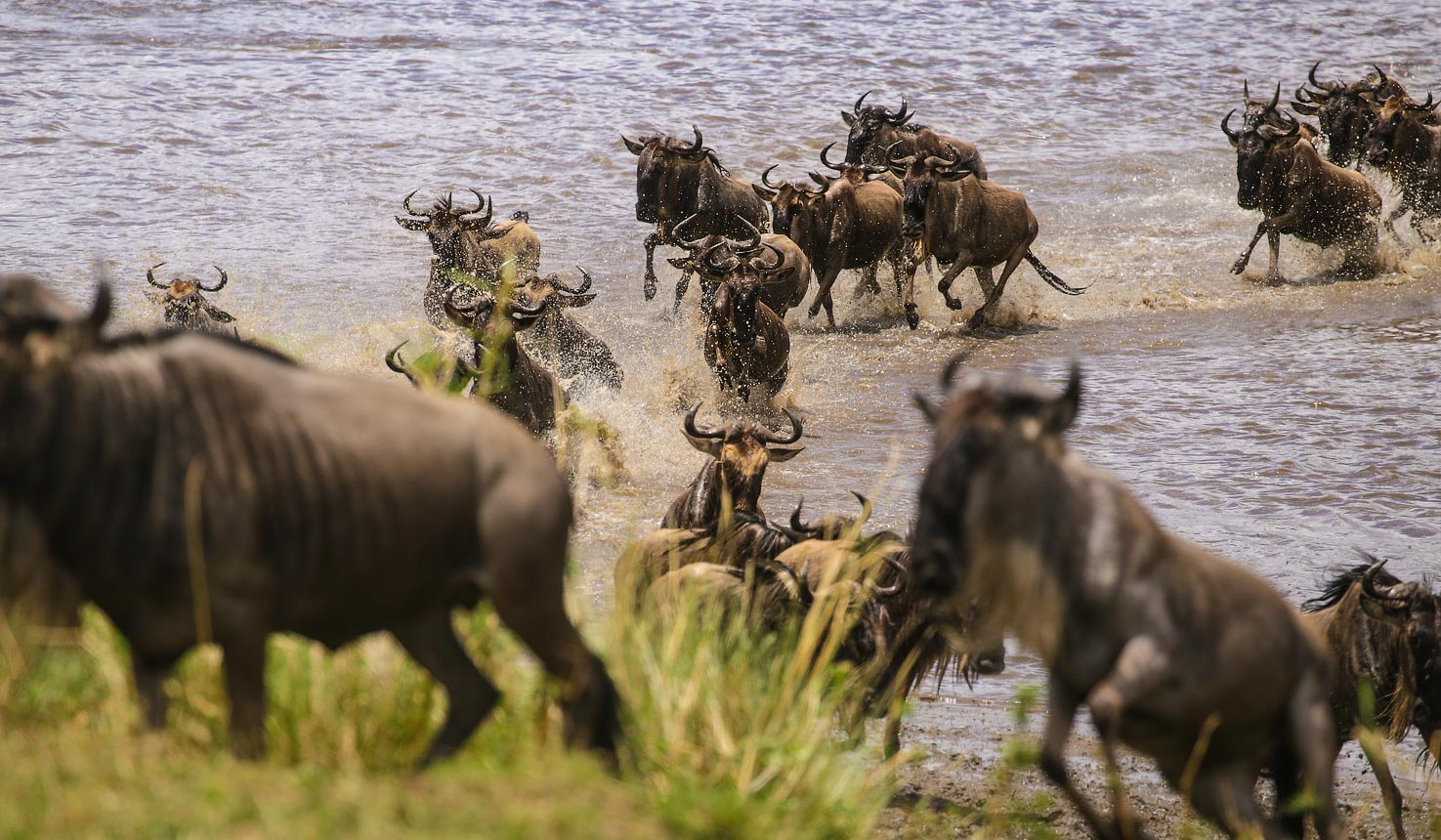
Watching the Mara River crossing represents safari’s pinnacle moment—an intense, heart-pounding spectacle as thousands gather nervously at riverbanks, hesitating for hours before one courageous individual finally leaps, triggering a thunderous, chaotic charge.
What Makes It Unforgettable
Watching the Mara River cross
- Herds mill nervously, building tension palpably
- Sudden explosive surge forward creates chaos
- Massive dust clouds obscure visibility
- Splashing water erupts as bodies plunge
- Thundering hooves create deafening roar
- Hesitant stragglers crowd banks desperately
- Emotional intensity builds with each crossing attempting represents safari’s pinnacle moment—an intense, heart-pounding spectacle as thousands gather nervously at riverbanks, hesitating for hours before one courageous individual finally leaps, triggering a thunderous, chaotic charge.
Extreme Dangers Wildebeest Face
- Giant Nile Crocodiles – Lurking predators capable of pulling down adult wildebeest
- Strong Currents – Fast-moving waters sweep away weaker individuals
- Steep Banks – Trampling occurs as panicked animals scramble up muddy slopes
- Riverbank Predators – Lions, leopards, and hyenas ambush emerging wildebeest
- Drowning Risk – Exhausted animals succumb to relentless currents
Why the Kenyan Side Dominates
The Maasai Mara side attracts most travelers for compelling reasons:
- Better Accessibility – Well-maintained roads lead directly to prime viewing points
- Dramatic Landscapes – Wide, open plains and natural viewing platforms
- Close Proximity – Spectacular vantage points ensure incredible photo opportunities
- More Frequent Crossings – Migration patterns favor Kenyan side crossing frequency
- Superior Accommodations – Wider variety of luxury camps and lodges nearby
- Expert Guides – Kenyan guides excel at predicting crossing timing and locations
Return Journey
Wildebeest cross the Mara River again during southward return to Serengeti, typically October to November. For many wildlife enthusiasts, this Mara River crossing epitomizes the Great Migration—nature’s most dramatic and awe-inspiring event.
Best For: Travelers seeking the ultimate wildebeest migration river crossing experience with maximum drama and photographic opportunities.
Secure your July-August Mara River crossing safari now.
Minor River Crossings: Intimate Migration Moments
Sand River (Maasai Mara, Kenya) - June to July
The Sand River runs along the southern Maasai Mara National Reserve edge near the Tanzania border. As a Mara River tributary, it plays supporting roles in migration journeys.
While less dramatic than the Mara River—featuring gentler banks and fewer crocodiles—Sand River offers spectacular sightings when large herds cross during northward migration around June to July.
Some wildebeest cross back during southward migration (October-November), but the main impressive movement occurs during their Kenyan entry.
Seronera River (Central Serengeti, Tanzania) - April to June
Located in central Serengeti’s Seronera Valley, this river provides essential water and grazing during migration.
Wildebeest typically cross or pass near Seronera River between April and June (northward) and October-November (southward). Though not as dramatic as major crossings, Seronera offers excellent game viewing due to exceptionally high predator and wildlife concentrations in this region.
Lake Ndutu and Southern Plains - Calving Grounds
Lake Ndutu, located in southern Serengeti near the Ndutu plains, plays critical roles during southward migration. Wildebeest typically cross the lake returning from Maasai Mara between October and November.
This crossing marks one of the final obstacles before reaching calving grounds in southern plains. Giving birth ends the migration cycle, after which wildebeest begin their northward journey, renewing the cycle once again.
Mating Season (The Rut) and Calving Season
The Circle of Life Continues
Mating Season - May to July
Wildebeest mating season, known as “the rut,” occurs from mid-May to early July, shortly after rainy seasons when animals reach peak physical condition. This timing ensures strong, healthy offspring.
Mating occurs while herds move through western and central Serengeti, with dominant bulls establishing territories and competing for breeding rights.
Calving Season - January to February
The calving season happens in southern Serengeti, particularly around Ndutu plains. During this extraordinary period, hundreds of thousands of calves are born almost simultaneously—an evolutionary strategy overwhelming predators through sheer numbers.
This synchronized calving creates one of the migration cycle’s most dramatic wildlife spectacles as lions, cheetahs, hyenas, and jackals converge on vulnerable newborns.
Experience the incredible calving season with our specialized safaris.
Best Times to Witness Migration Events
Optimal Viewing Windows
Grumeti River Crossing
Dates: May 15 – June 16
Location: Western Serengeti corridor, Tanzania
Experience: Intimate crossings with fewer crowds
Mara River Crossing (Peak Drama)
Dates: July 20 – August 15
Location: Maasai Mara National Reserve, Kenya
Experience: Ultimate migration spectacle with maximum action
Wildebeest Calving Season
Dates: January 15 – February 15
Location: Southern Serengeti (Ndutu plains), Tanzania
Experience: Hundreds of thousands of births with intense predator action
Planning Your Great Migration Safari
Expert Guidance for Unforgettable Experiences
Going on an African safari represents an adventure of a lifetime. If you’re pursuing the Great Migration safari experience, this detailed information makes planning straightforward. Understanding river crossing timing, locations, and characteristics helps you choose the perfect safari timing matching your interests.
Whether you prioritize:
- Maximum dramatic action (Mara River crossing, July-August)
- Fewer crowds (Grumeti crossing, May-June)
- Newborn wildlife (Calving season, January-February)
- Comprehensive migration coverage (Multi-week safaris)
Each phase offers unique advantages for different traveler preferences and photographic goals.
Ready to Witness Nature's Greatest Show?