
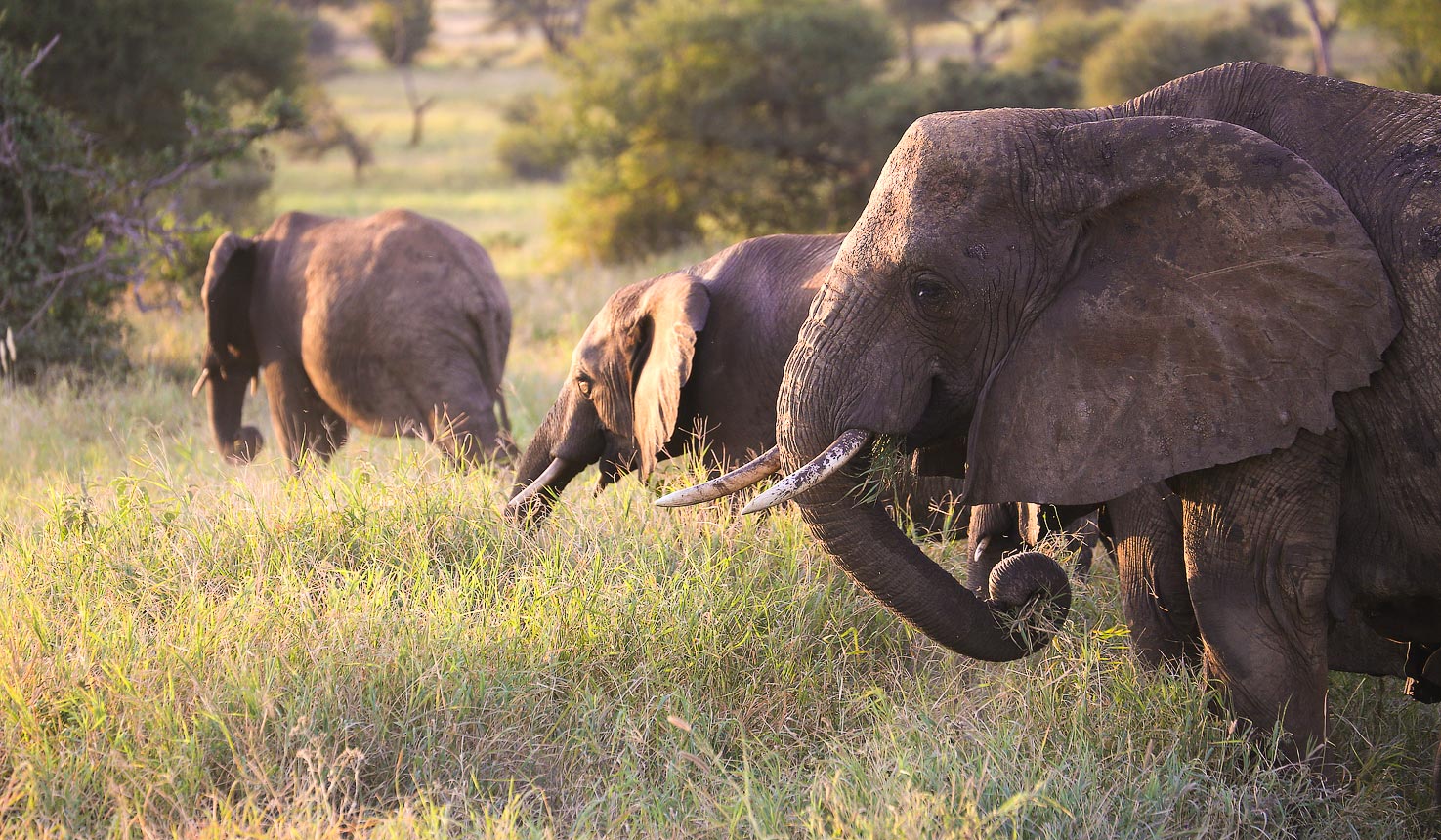
There’s something almost otherworldly about watching an elephant emerge from the bush on your first safari. The ground actually trembles beneath your feet. You’re suddenly very aware of your own size, or lack of it, as this six-ton giant moves past with surprising grace, its trunk swaying like a pendulum, those massive ears catching every sound.
But here’s what gets me every time: despite being the largest land animal on Earth, African elephants are disappearing. Since the 1970s, we’ve lost over 90% of forest elephants and 70% of savanna elephants. That’s not just a statistic, it’s a crisis unfolding right before our eyes.
So whether you’re planning your African adventure or simply captivated by these incredible creatures, let’s dive deep into the world of African elephants. Trust me, the more you learn about them, the more remarkable they become.
Quick African Elephant Facts (Know Before You Go)
Scientific Names: Loxodonta africana (Savanna) and Loxodonta cyclotis (Forest)
Size: Savanna males up to 13 feet tall; Forest elephants smaller at 8-10 feet
Weight: Bulls can reach 13,000 lbs (6.5 tons); Cows around 6,000-8,000 lbs
Trunk: Contains approximately 40,000 muscles (more than your entire body!)
Lifespan: 60-70 years in the wild
Daily Food Intake: Up to 300-350 lbs (that’s like eating 875 cans of beans daily)
Pregnancy: 22 months—longest of any mammal
Conservation Status: Savanna (Endangered), Forest (Critically Endangered)
Population: Approximately 415,000 remaining across 37 African countries
Are There TWO Species of African Elephants?
Yep! This surprised me too when I first learned it. For the longest time, we thought there was just one African elephant species, but in 2021, science officially recognized what researchers had suspected for years: African elephants are actually two distinct species.
The Savanna Elephant (Bush Elephant)
These are the elephants most people picture, the ones roaming the open plains of East and Southern Africa. They’re the true giants of the elephant world, with males standing up to 13 feet at the shoulder. Their tusks curve outward in that classic elephant silhouette, and their ears are absolutely massive, shaped like the African continent itself (seriously, check a map and compare).
You’ll find savanna elephants in places like the Serengeti, Tarangire National Park, Chobe, and Amboseli. They’re adapted to open grasslands and light woodlands, where they spend their days creating pathways through the bush and reshaping the landscape.
The Forest Elephant
These individuals are the Congo Basin’s best-kept secret. Forest elephants are smaller and stockier, with straighter tusks that point downward, perfect for navigating dense rainforest. Their ears are more rounded, and they’re darker in color, almost appearing brown in the dappled forest light.
However, the most heartbreaking aspect is that forest elephants are critically endangered, having declined by approximately 90% since the 1960s. They’re harder to study, harder to protect, and facing some of the most intense poaching pressure on the continent.
The Incredible African Elephant Trunk: Nature’s Swiss Army Knife
Let’s talk about what might be evolution’s most impressive achievement: the elephant trunk. Imagine if your nose and upper lip fused, grew seven feet long, and contained 40,000 muscles. That’s basically what we’re dealing with here.
To put that in perspective, your entire human body has only about 600 muscles. The trunk alone has 40,000. Let that sink in.
What Can an African Elephant Trunk Actually Do?
The list is honestly ridiculous:
Drinking: An elephant can suck up 2.5 gallons of water into its trunk at once, then spray it into its mouth. They don’t drink through their trunk—it’s more like a really long, flexible bucket.
Breathing: It’s a nose, after all. Elephants can also use it as a snorkel when crossing deep water, which is both practical and adorable.
Eating: Those two finger-like projections at the tip (African elephants have two; Asian elephants have one) can pluck a single berry from the ground or strip entire branches from trees. The dexterity is mind-blowing.
Communication: Elephants greet each other by intertwining trunks—think of it as a handshake and hug combined. They also use trunks to comfort distressed calves and maintain social bonds.
Showering: After a good drink, elephants spray themselves with water to cool off, then often follow up with a dust bath. The trunk is basically a built-in shower head and powder puff.
Weapon: An elephant trunk can lift up to 770 pounds. One swing from an angry elephant can absolutely send you flying. Don’t make elephants angry.
Tool: Need to scratch that hard-to-reach spot? Pick up a stick with your trunk and use it. Elephants regularly use their trunks to manipulate tools.
I once watched an elephant delicately pick up a feather, then five minutes later use that same trunk to uproot a small tree. The range of capability is just absurd.
Those Massive Ears Aren’t Just for Hearing
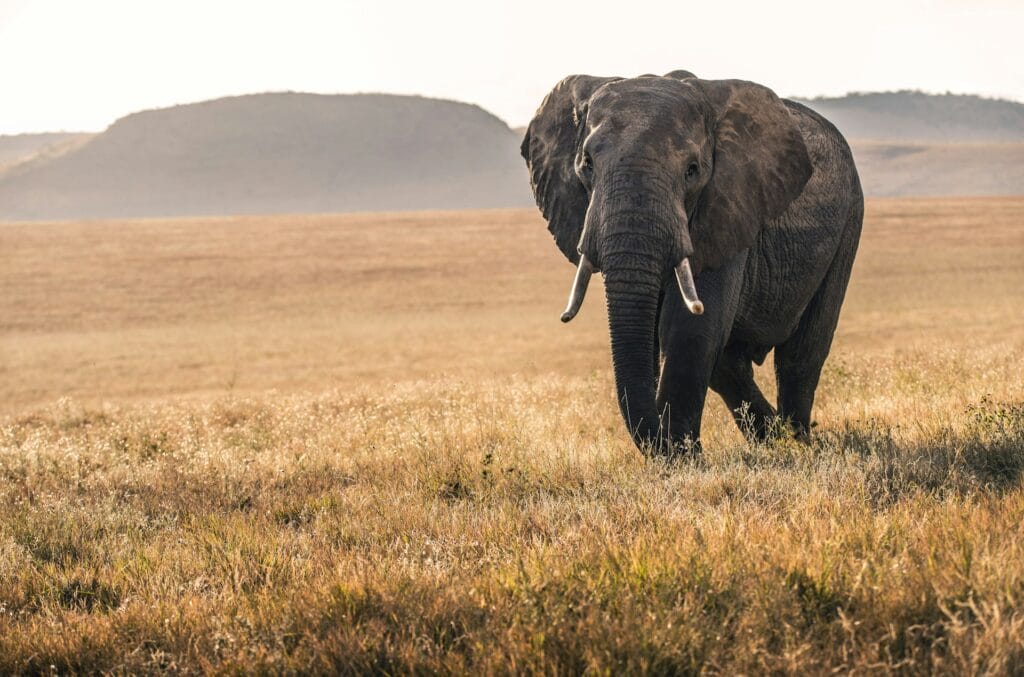
Yes, African elephant ears are enormous, up to 6 feet across in savanna elephants. But they’re not just for picking up sounds (though they’re excellent at that too). Those ears are actually sophisticated cooling systems.
See, elephants don’t sweat. They can’t pant like dogs. When you weigh six tons, and you’re standing under the African sun where temperatures regularly hit 100°F+, you need a cooling strategy. Enter: the ears.
Elephant ears are filled with blood vessels. When they flap those ears (which they do constantly in the heat), they’re basically pumping blood through a radiator. The breeze cools the blood, which then circulates back through the body, bringing the elephant’s temperature down. It’s incredibly efficient.
Fun fact: You can tell African elephants from Asian elephants by their ears. African elephant ears are shaped like the African continent. Asian elephant ears look like India. Nature has a sense of geography, apparently.
Why Those Tusks Are Both Magnificent and Tragic
Elephant tusks are actually elongated incisor teeth that grow throughout their lifetime. Both male and female African elephants have them (unlike Asian elephants, where typically only males have prominent tusks).
Males develop particularly impressive tusks, some exceeding 10 feet and weighing over 200 pounds. They use these tusks for digging up roots, stripping bark, defending territory, and competing with other males.
But here’s where things get dark. Those tusks are made of ivory, and human greed for ivory has nearly wiped elephants off the planet.
In the 1970s, there were an estimated 1.3 million African elephants. Today? We’re down to about 415,000. That’s a 68% decline in just 50 years. During the worst years of the ivory crisis in the 1980s, poachers killed an estimated 100,000 elephants annually.
The international ivory trade ban in 1989 helped, but poaching surged again in the 2000s as Asian demand grew. Between 2007 and 2014, savanna elephant populations declined by 30%. Forest elephants? They crashed by 64% between 2002 and 2011.
Some elephant populations are now showing interesting adaptations. In areas with intense poaching, a higher percentage of elephants are being born tuskless—evolution responding to selection pressure in real time. It’s fascinating from a scientific perspective, but tragic in its implication.
The Elephant Social Network (It’s Complicated)
Elephants have one of the most complex social structures in the animal kingdom. And yes, it’s basically a matriarchy—females run the show.
The Matriarch System
Elephant herds are led by the oldest, most experienced female—the matriarch. She’s not just the boss because she’s big; she’s the keeper of knowledge. She knows where water sources are during droughts, she remembers migration routes, she recognizes threats, and she makes decisions for the entire herd.
Studies have shown that herds led by older matriarchs have higher survival rates during droughts. That accumulated knowledge—decades of experience—literally keeps elephants alive.
The herd typically consists of the matriarch, her daughters, their calves, and sometimes sisters or cousins. It’s a multi-generational family unit where everyone helps raise the young. When a calf is born, aunts and older sisters immediately pitch in with childcare.
Where Are the Males?
Bull elephants are a different story. Young males stay with their mother’s herd until puberty, usually around 12-15 years old, then they either leave or get kicked out. After that, they typically roam alone or form loose bachelor groups.
Mature bulls only seek out female herds when they’re in “musth”, a periodic condition of heightened testosterone and aggression tied to breeding readiness. During musth, a bull’s temporal glands secrete fluid, and he becomes more aggressive and more attractive to females. It’s basically elephant puberty on steroids.
The most successful breeding males are typically between 35 and 50 years old, those big, experienced bulls with the genes that female elephants prefer.
Communication Beyond Words
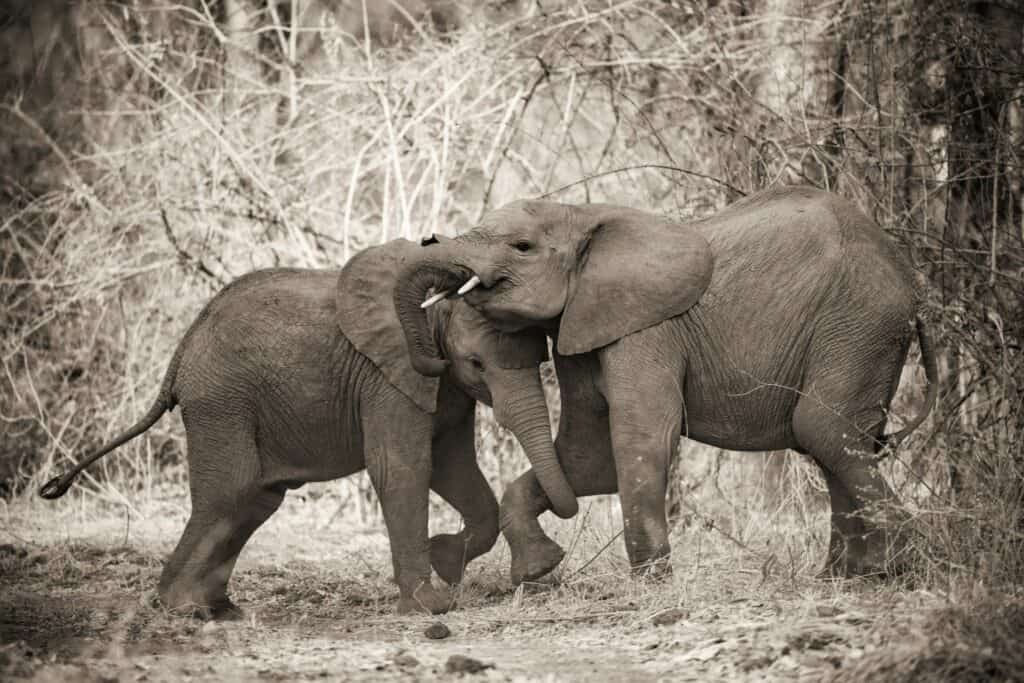
Elephants communicate through a symphony of methods:
Vocalizations: From rumbles to trumpets, bellows to roars. Some of their calls are infrasound, below the range of human hearing but traveling for miles through the ground.
Body Language: Ear position, trunk movements, posture, all convey information. A full ear spread means “I’m angry.” Ears pinned back means “I’m scared or submissive.”
Touch: Trunk embraces, leaning on each other, touching faces. Elephants are incredibly tactile and affectionate with family members.
Seismic Signals: Elephants can detect vibrations through their feet and trunks, sensing other elephants’ calls through the ground from miles away.
The emotional depth is remarkable. Elephants have been documented mourning their dead, visiting skeletal remains, and displaying what certainly appears to be grief. Their temporal lobes, the brain region associated with memory, are larger and denser than ours. Hence the saying: elephants really don’t forget.
Ecosystem Engineers: How Elephants Shape Africa
Here’s something most people don’t realize: elephants aren’t just living in Africa’s ecosystems, they’re actively creating and maintaining them. Scientists call them “keystone species” or “ecosystem engineers” because their very presence shapes the entire landscape.
In the Savanna
When elephants push over trees, strip bark, and munch on saplings, they’re preventing woodland from overtaking grasslands. This creates the classic African savanna mosaic, that mix of open plains and scattered trees that supports zebras, wildebeest, gazelles, and countless other species.
During the dry season, elephants use their tusks to dig into dry riverbeds, accessing underground water. These newly created waterholes become lifelines for dozens of other species.
Their pathways, worn smooth by generations of elephants following the same routes, become highways for other animals. Many of these ancient elephant paths are now paved roads used by humans.
In the Forest
Forest elephants are the rainforest’s master gardeners. As they move through dense vegetation, they create clearings that allow sunlight to reach the forest floor, promoting new plant growth.
But here’s the really cool part: elephant dung. Up to 30% of tree species in Central African forests depend on elephants for seed dispersal. Elephants eat fruits, walk for miles, then deposit the seeds in their dung—perfectly fertilized and ready to germinate.
Studies show that forests without elephants lose biodiversity and carbon storage capacity. When elephants disappear, the entire ecosystem suffers.
The Nutrient Highway
An adult elephant produces about 220-330 pounds of dung every single day. Before you say “gross,” understand that this dung is absolutely vital. It’s packed with partially digested vegetation and seeds, creating food and habitat for dung beetles, birds, smaller mammals, and countless insects.
Elephants transfer nutrients from one area to another, essentially fertilizing the landscape as they move. Without them, these nutrient cycles break down.
The Daily Life of an African Elephant
So what does a typical day look like for an elephant? Well, it mostly involves eating. Like, a lot of eating.
Breakfast, Lunch, Dinner, and Everything In Between
Adult elephants need to consume 4-7% of their body weight daily. For a 6-ton elephant, that’s 300-350 pounds of vegetation. Every. Single. Day.
Here’s the catch: elephants only digest about 50% of what they eat. They’re not particularly efficient eaters, which means they need to eat constantly to get enough nutrition. Most elephants spend 12-18 hours a day feeding.
What’s on the menu? Grasses, leaves, bark, roots, fruits, twigs—basically anything plant-based they can reach. During the dry season when fresh grass is scarce, they’ll eat more bark and woody vegetation. Those tusks are handy for stripping bark and digging up roots.
The Water Requirement
Elephants need 30-50 gallons of water daily. In the dry season, they’ll travel up to 50 miles to reach water sources. This is why elephant migration routes and access to water are so crucial—block those routes, and you’ve got a crisis.
Sleep? Not Much
Elephants only sleep about 2-4 hours per day, usually in short naps while standing or lying down. They’re constantly on the move, constantly feeding, constantly alert for threats.
The Reproduction Reality Check
Want to understand why elephant populations struggle to recover? Look at their reproduction rate.
Elephant pregnancies last 22 months—almost two years. That’s longer than any other mammal on Earth. A female typically gives birth to one calf (twins are extremely rare) every 4-5 years.
Do the math: even under perfect conditions, a female elephant might produce 7-8 offspring in her lifetime. Compare that to animals that have multiple offspring annually, and you see the problem. Elephant populations can’t bounce back quickly from declines.
Newborn calves weigh about 200-250 pounds and can stand within 20 minutes of birth. Within an hour, they’re walking. Within two days, they can keep up with the herd—because they have to. The African bush is unforgiving, and predators like lions and hyenas target vulnerable calves.
The entire herd helps raise calves, teaching them everything: where to find water, what to eat, how to use their trunk (calves are hilariously clumsy at first), and how to navigate the social hierarchy.
Conservation: The Complicated Picture
The African elephant situation is simultaneously hopeful and devastating, depending on where you look.
The Bad News
According to recent comprehensive studies analyzing 53 years of survey data, forest elephant populations have declined by approximately 90% since the 1960s, while savanna elephants have dropped by about 70%. Combined, that’s a 77% average decline.
Current threats include:
Poaching: Despite the 1989 ivory ban, illegal killing continues. Organized criminal networks drive the trade, and enforcement is challenging across vast, remote elephant ranges.
Habitat Loss: Human populations are expanding. Farmland replaces wilderness. Elephants lose both space and access to traditional migration routes. When they raid crops (which they do—remember, they need 300 pounds of food daily), conflicts with humans escalate.
Climate Change: Changing rainfall patterns affect water availability. Droughts are becoming more frequent and intense. Elephants are already stressed ecosystems are pushed to the breaking point.
Fragmentation: Isolated populations become genetically vulnerable and more susceptible to local extinction from poaching or natural disasters.
The Good News
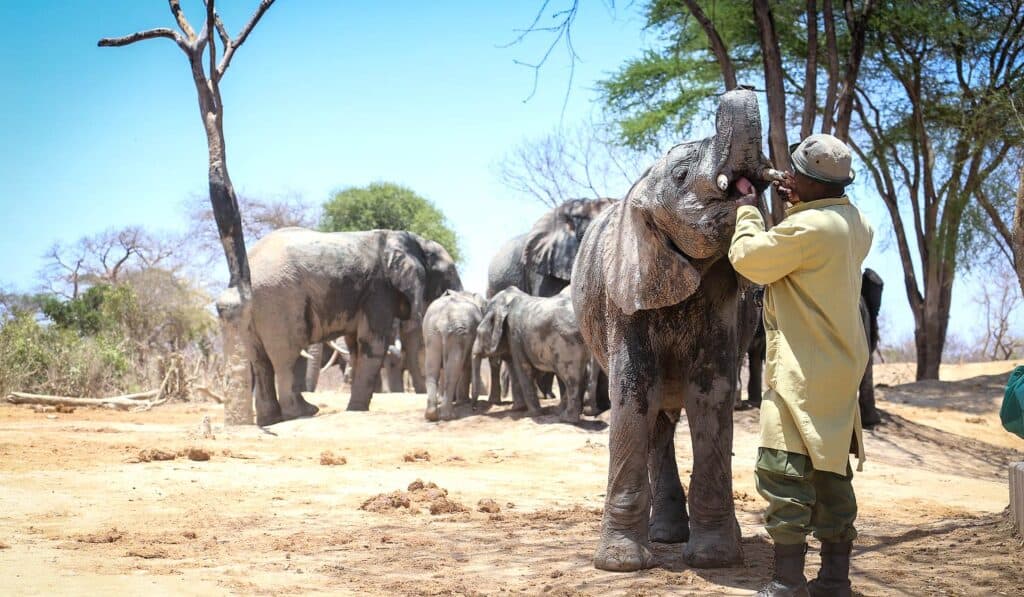
Despite everything, there are genuine success stories:
Some southern African countries—Botswana, Zimbabwe, and Namibia—have relatively stable or even growing elephant populations thanks to strong anti-poaching efforts and protected habitats.
Community-based conservation programs are showing promise. When local communities benefit from wildlife tourism and are involved in conservation decisions, poaching decreases and human-elephant conflict reduces.
Technology is helping. GPS collars track elephant movements, allowing rangers to respond quickly to threats. Drones assist with monitoring. DNA forensics help prosecute ivory traffickers.
Public awareness has shifted dramatically. People care about elephants, and that matters. Tourism generates revenue that funds conservation, creating economic incentives to protect elephants rather than poach them.
Seeing Elephants on Safari: What You Need to Know
If you’re heading to Africa, you’re probably hoping for incredible elephant encounters. Here’s how to do it responsibly:
Best Destinations for Elephant Viewing
Chobe National Park, Botswana: Home to one of Africa’s largest elephant populations, over 50,000 individuals. River cruises offer phenomenal viewing opportunities.
Amboseli National Park, Kenya: Iconic views of elephants against Mount Kilimanjaro’s backdrop. Well-habituated elephants and excellent research opportunities.
Serengeti-Mara Ecosystem, Tanzania/Kenya: Elephants roaming endless plains, the classic African safari experience.
Tarangire National Park, Tanzania: Incredible elephant concentrations during the dry season.
Kruger National Park, South Africa: Accessible infrastructure, high elephant densities, and good year-round viewing.
Addo Elephant National Park, South Africa: Originally established specifically for elephant conservation, now home to over 600 elephants.
George Nchau has spent over 20 years guiding guests through Amboseli, Tarangire, and the Maasai Mara — the same parks where the elephant encounters in this guide happen. If you’d like an itinerary built specifically around ethical elephant viewing, share your travel dates and we’ll design the safari around you.
Ethical Viewing Guidelines
Keep Distance: Maintain at least 30-50 meters from elephants. If they’re approaching you, it means you’re too close.
Stay in Vehicles: Unless your guide explicitly says it’s safe, remain in your safari vehicle. Elephants can outrun you, outthink you, and absolutely overpower you.
Read Body Language: Spread ears, raised trunk, head shaking, mock charges—these are warnings. Back off immediately.
Never Feed Elephants: It disrupts natural behavior and creates dangerous associations between humans and food.
Support Responsible Operators: Choose safari companies committed to conservation and ethical wildlife viewing. Kwezi Safaris, for instance, prioritizes responsible tourism that directly supports elephant conservation.
What You Can Do to Support Conservation
Feeling inspired to make a difference? Here’s how:
Support Conservation Organizations: Groups working on the ground to protect elephants and their habitats need funding.
Choose Responsible Tourism: Your tourism dollars vote for conservation when you select ethical operators.
Never Buy Ivory: Not even antiques. Any ivory purchase fuels demand and incentivizes poaching.
Spread Awareness: Share what you learn. The more people understand and care about elephants, the more political will exists for protection.
Support Anti-Poaching Efforts: Many organizations fund ranger programs, equipment, and technology to combat poaching.
Final Thoughts
Standing in the presence of an African elephant is transformative. It’s one thing to read statistics about six-ton animals with 40,000-muscle trunks. It’s entirely another to feel the ground shake as one walks past, to watch a mother tenderly guide her calf with her trunk, to witness the intelligence behind those expressive eyes.
But here’s the uncomfortable truth: we’re living in a time when these magnificent creatures could vanish within our lifetime. The choices we make now—the tourism companies we support, the products we buy, the conservation efforts we fund—will determine whether future generations can experience what we’re privileged to witness today.
African elephants aren’t just the world’s largest land animals. They’re architects of their ecosystems, repositories of ancient knowledge, symbols of wisdom and family, and reminders of what’s possible when evolution has millions of years to create something extraordinary.
They’ve survived for millions of years. They shouldn’t disappear on our watch.
Ready to experience Africa’s elephants in the wild? Kwezi Safaris offers expertly guided safari experiences across East Africa’s premier elephant habitats. Our commitment to conservation-focused tourism means your adventure directly supports the protection of these incredible animals and their habitats. Let’s plan your journey into the heart of elephant country—responsibly, sustainably, and unforgettably.