Here’s a statistic that should stop you cold: African wild dogs have an 80% hunting success rate. Eighty percent. For context, lions succeed about 30% of the time. Leopards? Around 38%. Cheetahs manage roughly 58%.
But painted wolves, as they’re increasingly called in recognition of their wolf-like intelligence and cooperative nature, are operating on an entirely different level. When they target prey, four out of five times, they bring it down. It’s the highest success rate of any large predator on Earth.
Yet despite being nature’s most efficient killing machines, African wild dogs are disappearing. From an estimated 500,000 individuals roaming across 39 countries a century ago, fewer than 6,500 remain today, clinging to existence in just 14 countries. They’ve lost 93% of their historical range, and of those remaining dogs, only about 1,400 are breeding adults.
The painted wolf, revered by ancient Egyptians as a symbol of order over chaos, respected by indigenous San people as the ultimate hunter, is now Africa’s second most endangered carnivore after the Ethiopian wolf.
Let’s explore what makes these remarkable canids so extraordinary, why they’re vanishing, where you can still see them, and what’s being done to save them.
Quick African Wild Dog Facts
Scientific Name: Lycaon pictus (literally “painted wolf-like animal”)
Other Names: Painted wolf, painted dog, African hunting dog, Cape hunting dog
Conservation Status: Endangered (IUCN Red List)
Population: Approximately 6,500 adults (only ~1,400 breeding individuals)
Historical Range: 39 countries / Current Range:** 14 countries (93% range loss)
Pack Size: Typically 7-15 members (historically up to 100)
Hunting Success Rate: 80% (highest among large predators)
Top Speed: 44 mph (71 km/h) for extended distances
Lifespan: Up to 11 years in the wild
Unique Feature: No two individuals have identical coat patterns
The “Painted Wolf”: What Makes Them Unique?
Nature’s Abstract Art
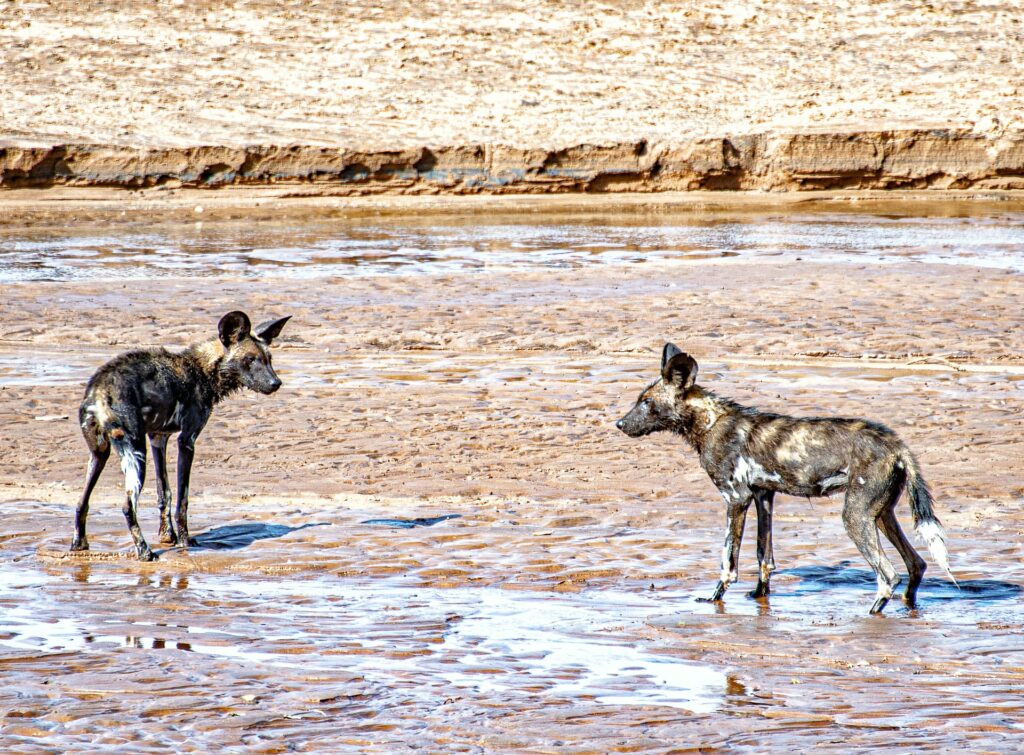
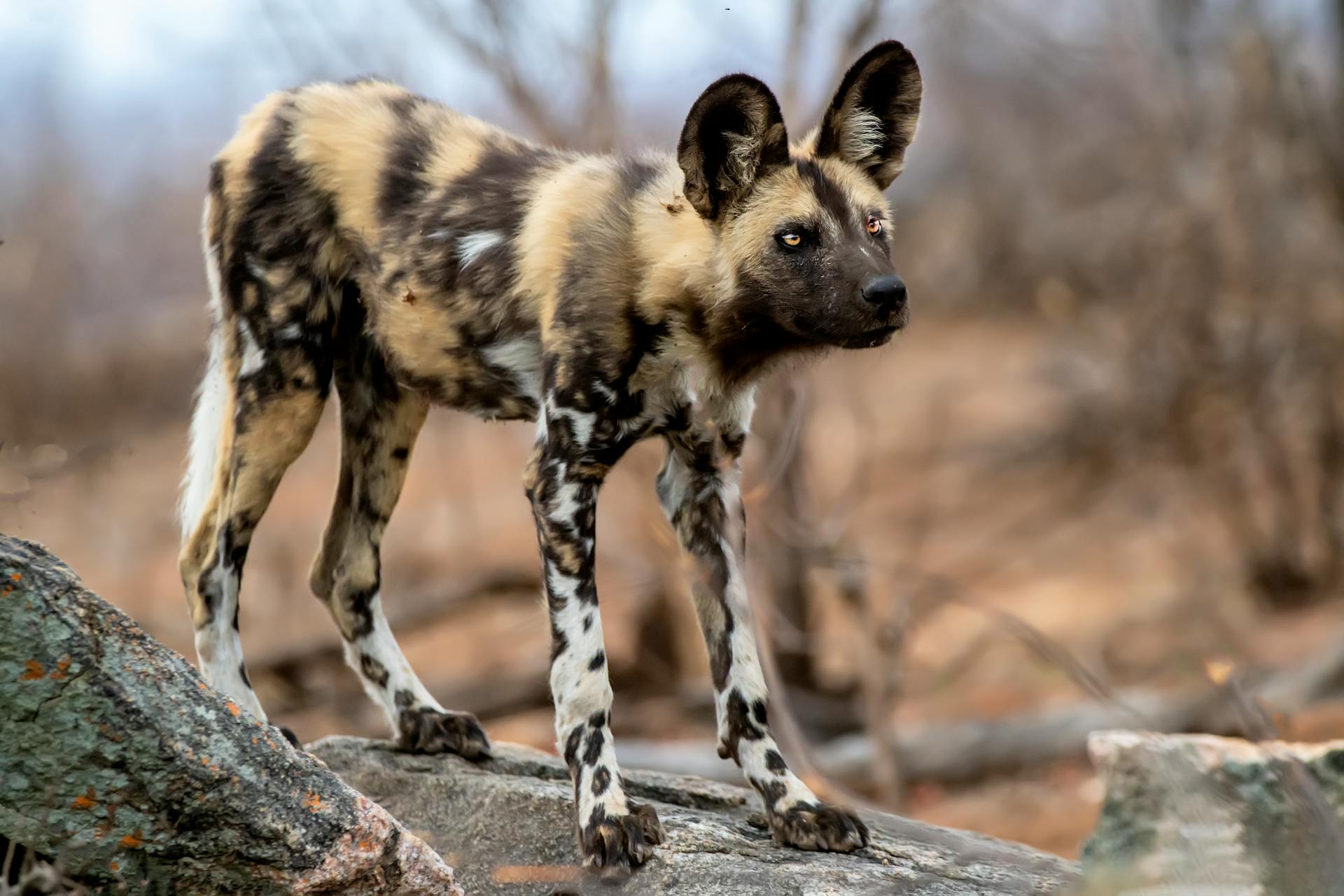
The name “painted dog” or “painted wolf” isn’t marketing fluff; it’s an accurate description. Each wild dog sports a unique coat pattern of black, white, yellow, and brown splotches that look like someone threw paint at a canvas. No two dogs share identical markings, making individuals easy to identify (crucial for researchers tracking populations).
This distinctive coat serves multiple purposes:
Camouflage: Broken patterns disrupt visual recognition in dappled savanna light
Individual identification: Pack members recognize each other instantly
Pack cohesion: The white-tipped bushy tail acts as a visual flag during hunts
Built for the Marathon, Not the Sprint
Unlike cheetahs (built for explosive 70 mph sprints lasting seconds), wild dogs are endurance athletes. They’ll maintain 35-44 mph for miles, wearing down prey through relentless pursuit.
Physical adaptations:
Large, rounded ears: Not just for hearing—they radiate heat, cooling the body during extended chases
Long legs and lean build: Built for sustained running, not power
Only four toes per foot: They lack dewclaws (the “thumb” most canids have), streamlining their stride
Large, powerful jaws: Largest premolars relative to body size of any living carnivore except spotted hyenas
No underfur: Just stiff bristle hairs—less insulation means better heat dissipation during hunts
Specialized Carnivores
Wild dogs are hypercarnivorous, meaning over 70% of their diet is meat. Unlike opportunistic predators that supplement with vegetation or insects, painted wolves are committed meat-eaters with teeth specifically adapted for shearing flesh.
The Pack: A Highly Evolved Social System
If you think lions are social, wait until you meet wild dogs. Their pack structure is not only complex but remarkably altruistic, something almost unheard of in the world of predators.
Cooperative Culture
Wild dog packs typically consist of 7-15 members (historically up to 100 before population collapse), usually:
- Related males (brothers, fathers, sons)
- Related females (sisters, mothers, daughters)
- Their pups
Unlike many social predators with strict hierarchies maintained through aggression, wild dog packs show minimal dominance displays. They’re remarkably egalitarian.
The Alpha Pair
Only the alpha male and female breed, but here’s where it gets interesting. The pack doesn’t just tolerate the breeding pair’s pups; they actively invest in raising them.
Pack-wide parenting:
After a hunt, adults regurgitate meat for nursing mothers and pups. It’s not just the parents feeding their young, the entire pack contributes. Subordinate adults babysit, guard dens, and bring food. In some cases, “helper” adults can dramatically improve pup survival rates.
This cooperative breeding is rare among carnivores and speaks to the species’ highly evolved social intelligence.
Democracy in Action
Wild dogs make group decisions. Seriously. When considering whether to hunt, pack members participate in a “rally”—an elaborate greeting ritual with twittering, whining, and physical contact.
During rallies, individuals essentially “vote” on hunting through specific vocalizations (a unique call researchers describe as a twitter or bell-like contact call). The more dogs that join the chorus, the more likely the pack moves to hunt.
It’s democracy among predators.
Altruistic Feeding
Here’s something remarkable: after a kill, wild dog pups and nursing mothers eat first. Not the largest, most dominant males. Not the hunters who brought down the prey. The most vulnerable pack members get priority.
Injured or sick adults are also fed by the pack—an almost unique behavior among wild predators. It’s cooperative survival taken to an extraordinary level.
The African Wild Dog Hunt: Teamwork Perfected
Watching wild dogs hunt is witnessing millions of years of evolution creating a nearly perfect cooperative hunting machine.
Target Selection
Wild dogs prefer medium-sized antelopes, impala, springbok, Thomson’s gazelles, generally no more than twice their weight. They’ll also take warthogs, wildebeest calves, and opportunistically catch smaller prey like hares and birds.
The Chase
Once prey is selected, the hunt begins:
- Silent approach: Pack spreads out, positioning members strategically
- The burst: One dog initiates the chase with explosive acceleration
- Relay system: Hunters take turns leading, fresh dogs moving forward as others fall back
- Communication: Throughout the chase, dogs maintain contact through vocalizations
- The takedown: Multiple dogs grab the prey simultaneously—legs, flanks, throat
- Quick kill: Death usually comes within minutes
Why 80% Success?
Cooperative tactics: Unlike solitary hunters or even lion prides, wild dogs coordinate with incredible precision. They communicate constantly, adjust strategy mid-hunt, and work as a seamless unit.
Endurance: They’ll chase prey for 3-5 km (sometimes longer), maintaining speeds that wear down even fast prey.
Adaptation: If initial tactics fail, they adjust strategy immediately—showing remarkable cognitive flexibility.
The Controversial Reality: Eating Prey Alive
Wild dogs are notorious for beginning to feed while prey is still alive. It sounds brutal, and it is, but there’s practical reasoning.
They must eat fast. Lions, hyenas, and other larger predators routinely steal kills from wild dogs. To survive, they’ve evolved to consume meat rapidly before competitors arrive. The faster they eat, the less they lose.
It’s a harsh reality of life as a medium-sized predator in Africa’s competitive ecosystem.
Where to See Wild Dogs in Africa
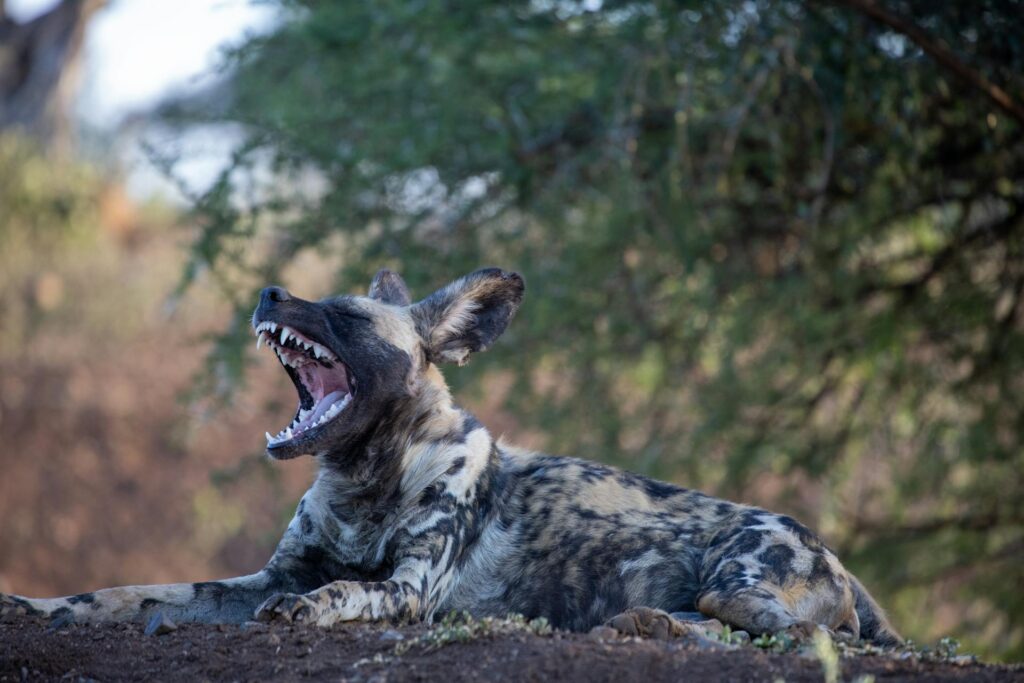
Wild dogs now persist in fragmented populations across 14 countries, primarily in southern and eastern Africa. Here are your best chances:
Kenya (Population: ~200-300)
Laikipia Plateau: Important population in community conservancies.
Samburu National Reserve: Occasional sightings; monitored by African Wild Dog Conservancy.
Meru National Park: Small population with conservation efforts underway.
Tsavo National Parks: Rare sightings in vast landscape.
Tanzania (Population: 1,000-1,500+)
Ruaha National Park: Tanzania’s wild dog stronghold. The Selous-Niassa ecosystem (which includes Ruaha and Nyerere/Selous) is considered one of Africa’s most important remaining populations.
Serengeti National Park: Historically important population, though numbers fluctuate.
Tarangire National Park: Occasional sightings, especially during dry season.
Botswana (Population: ~1,500)
Okavango Delta: One of Africa’s most reliable wild dog destinations. Moremi Game Reserve and private concessions offer excellent sightings.
Chobe National Park: Good population, particularly in Linyanti and Savuti areas.
Zimbabwe (Population: ~700-1,000)
Hwange National Park: Significant population with regular sightings.
Mana Pools National Park: Known for quality sightings and photographic opportunities.
South Africa (Population: ~500+)
Kruger National Park: Good population in isolated areas, though sightings can be challenging due to park size.
Madikwe Game Reserve: Managed wild dog population with good viewing opportunities.
Hluhluwe-iMfolozi Park: KwaZulu-Natal population with active conservation.
The Crisis: Why is the African Wild Dog Disappearing?
Habitat Loss and Fragmentation
Wild dogs need enormous territories, ranges of 400-1,500 km² for a single pack. As human populations expand with agriculture, settlements, and infrastructure, these territories shrink and fragment.
Isolated populations can’t interact, preventing genetic exchange and leaving small groups vulnerable to local extinction.
Human-Wildlife Conflict
Farmers often blame wild dogs for livestock losses (sometimes accurately, often incorrectly); leopards and hyenas are frequent culprits. Retaliatory killings through shooting and poisoning have devastated populations.
Disease
Contact with domestic dogs transmits fatal diseases:
- Rabies: Can wipe out entire packs
- Canine distemper: Highly contagious, often fatal
- Canine parvovirus: Especially lethal to pups
Isolated small populations are particularly vulnerable; one disease outbreak can wipe out entire local populations.
Snaring and Bycatch
Wild dogs fall victim to snares set for bushmeat. Their curious, investigative nature and wide-ranging behavior increases snare encounter rates.
Competition from Larger Predators
Lions kill wild dogs opportunistically, eliminating competition. In areas with high lion densities, wild dog populations struggle.
Conservation: Rays of Hope
Despite the dire situation, dedicated conservation efforts show promising results.
Protected Area Expansion
Organizations are establishing and expanding reserves where wild dogs can roam safely. The Kavango-Zambezi (KAZA) Transfrontier Conservation Area spanning five countries provides crucial connected habitat.
Wildlife Corridors
Creating corridors between protected areas allows isolated populations to interact, maintaining genetic diversity and population viability.
Community-Based Conservation
Programs like African Wild Dog Conservancy in Kenya employ local community scouts who:
- Monitor wild dog movements
- Alert herders when packs are nearby (preventing conflict)
- Provide employment and conservation incentives
When communities benefit from wild dog presence (through tourism revenue and employment), they become conservation partners rather than adversaries.
Vaccination Programs
Vaccinating domestic dogs in areas surrounding wild dog habitat prevents disease transmission—protecting both wild and domestic animals.
Reintroduction Programs
Successful reintroductions like Gorongosa National Park (Mozambique) demonstrate that wild dogs can recover in suitable habitat with proper management. The Gorongosa population grew from zero to over 50 individuals through careful reintroduction.
Sperm Banking Initiative
Cutting-edge conservation: collecting and storing wild dog genetic material to combat genetic bottlenecks in small populations. This ensures genetic diversity for future reintroductions.
Tourism as Conservation Tool
Safari tourism generates revenue justifying wild dog conservation. When wild dogs have economic value alive, landowners and communities have incentives to protect them.
Fascinating Wild Dog Facts
Unique Vocalizations: Wild dogs have an extensive vocal repertoire—short alarm barks, rallying howls, bell-like contact calls audible over long distances, and the famous greeting “twitter.”
Greeting Rituals: Pack reunions involve elaborate ceremonies—circling, touching, twittering, and whining. These rituals reinforce social bonds.
Pup Survival Challenges: Litters can contain up to 20 pups (average 10), but mortality is high. Flooded dens, disease, exposure, and insufficient food when pack numbers are low all threaten pups.
Marathon Runners: They can maintain 35 mph for 3-5 km—few prey animals can match that endurance.
No Territoriality (Mostly): Unlike most carnivores, wild dogs don’t defend strict territories. They’re nomadic, moving through vast home ranges.
Respect for Wounded: Injured pack members receive food from hunters—remarkable altruism rare among predators.
The Future: Can We Save the Painted Wolf?
The Painted Wolf Foundation’s 2022 report “Securing the Future of the Painted Wolf” proposed a best-case scenario: doubling wild dog populations by 2050.
It’s ambitious but achievable through:
- Expanded protected areas
- Wildlife corridors connecting populations
- Community engagement and conflict mitigation
- Disease management through domestic dog vaccination
- Increased conservation funding
- Habitat restoration in former range
- Continued reintroduction programs
Success requires collaboration between governments, NGOs, local communities, and the safari industry. It requires viewing wild dogs not as “vermin” but as the extraordinary evolutionary success stories they are—apex predators who perfected cooperation when most carnivores chose solitary lives.
Final Thoughts
The African wild dog represents something rare in nature: a predator that succeeded not through size or strength, but through cooperation, endurance, and social intelligence.
They’re proof that teamwork, communication, and mutual support can overcome individual weakness. They show that altruism—caring for pack members, feeding the vulnerable first, sharing resources—isn’t weakness but evolutionary strength.
And they’re vanishing.
From 500,000 to 6,500 in a century. From 39 countries to 14. From packs of 100 to packs struggling to reach double digits.
But unlike some conservation stories, this one isn’t over. Wild dogs adapt quickly. They recover when given space and protection. Populations in Botswana, Zimbabwe, and Tanzania prove they can thrive with support.
Every safari that includes wild dog viewing generates revenue justifying their protection. Every community scout employed to monitor packs creates conservation incentives. Every successful reintroduction proves recovery is possible.
The painted wolf’s fate isn’t sealed. It’s being written right now by the choices we make—where we travel, what we support, and whether we value cooperation and intelligence as much as size and strength.
Ready to witness Africa’s most efficient predators? Kwezi Safaris offers expertly guided wildlife experiences in Tanzania and Kenya’s prime wild dog territories. From Ruaha’s stronghold populations to Laikipia’s conservation success stories, we create safaris that maximize your chances of encountering painted wolves while supporting the conservation efforts protecting them. Our guides don’t just show you wildlife, they explain the ecology, behavior, and conservation challenges these remarkable animals face. Let’s plan your journey to meet nature’s most successful hunters.