Mikumi National Park: Tanzania’s Hidden Gem Where the Serengeti Meets Accessibility
There’s a moment—usually mid-morning when the light turns honey-gold and dust hangs suspended in the air—when you round a bend along the Mkata River floodplains and encounter your first elephant super-herd in Mikumi National Park. Not ten elephants. Not fifty. But hundreds, stretching across the golden grasslands like a living, breathing tapestry of gray, their massive forms silhouetted against the dramatic backdrop of the Uluguru Mountains rising like ancient sentinels to the east.
This is Mikumi, Tanzania’s fourth-largest national park and arguably its most underrated, a 3,230-square-kilometer wilderness that delivers wildlife concentrations rivaling the famous northern circuit parks yet receives a mere fraction of the visitors. Here, just four hours from Dar es Salaam along the tarmac highway connecting Tanzania’s coast to its southern highlands, lies a landscape so spectacular and wildlife-rich that it feels almost criminal how few travelers discover it.
The Serengeti of the South
Mikumi National Park Tanzania occupies the northern tip of the vast Selous ecosystem—one of Africa’s largest wilderness areas—creating a landscape remarkably reminiscent of the Serengeti’s endless plains. The Mkata River floodplains dominate the park’s northern section, their golden grasslands punctuated by scattered acacia trees and baobabs creating that quintessential African savannah scenery that has graced countless documentaries and coffee table books.
But here’s what makes Mikumi special: you experience Serengeti-quality wildlife viewing without the Serengeti’s crowds, vehicle congestion, or high-season chaos. During peak northern circuit seasons when dozens of safari vehicles jostle for position around single lion prides, you might have entire Mikumi herds to yourself—that elephant congregation, that giraffe family, that buffalo herd numbering thousands—witnessed in solitude that transforms wildlife viewing from spectator sport into intimate communion with nature.
The landscape’s openness enables exceptional game viewing. Unlike parks where dense vegetation conceals wildlife, Mikumi’s grasslands offer visibility extending kilometers. Scan the horizon and you’ll spot herds grazing in the distance, predators stalking through tall grass, giraffes browsing acacia canopies against mountain backdrops, and during the dry season (June-October), wildlife concentrations around the Mkata River and remaining waterholes that rival anywhere in East Africa.
Wildlife Abundance: The Complete East African Cast
Mikumi wildlife encompasses virtually every iconic East African species. Elephants dominate—the park supports substantial populations moving freely between Mikumi and the greater Selous ecosystem via wildlife corridors. During the dry season, herds numbering hundreds congregate along the Mkata River, creating spectacles that leave even experienced safari-goers speechless.
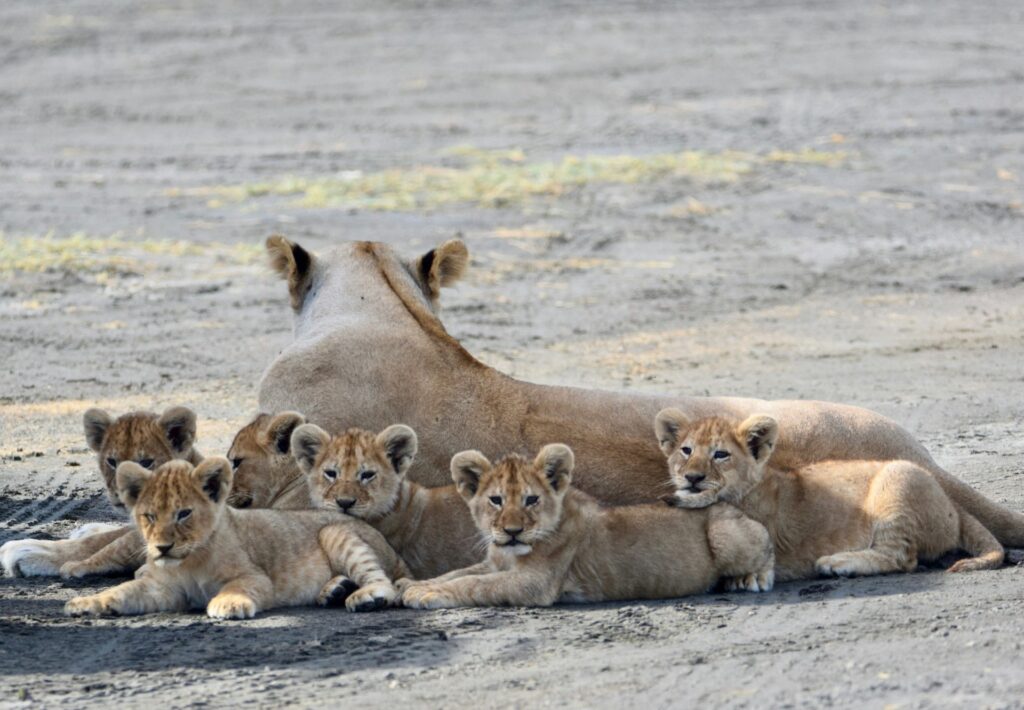
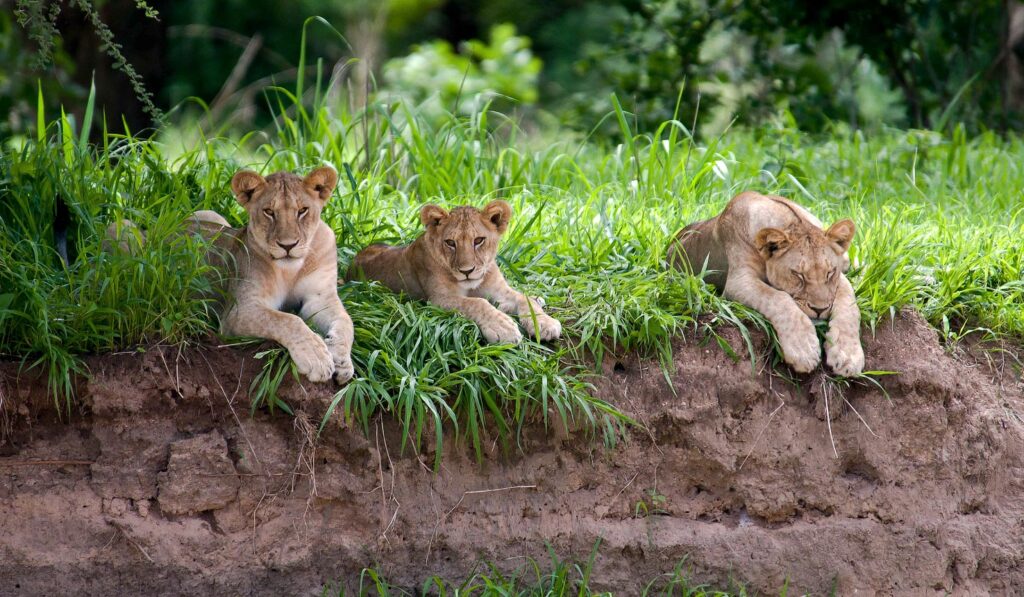
Lions patrol the grasslands in healthy populations, their prides often visible lounging beneath acacia shade or atop termite mounds surveying their domains. The open terrain provides excellent opportunities to observe these apex predators hunting—watching a pride coordinate an attack on zebras or wildebeest delivers wildlife drama at its most intense and authentic.
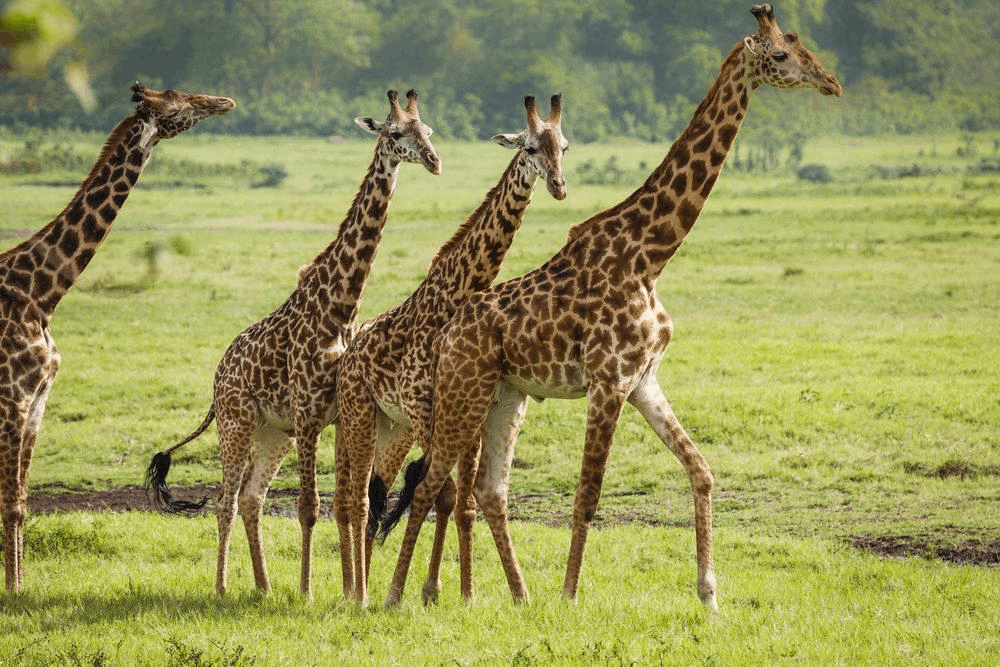
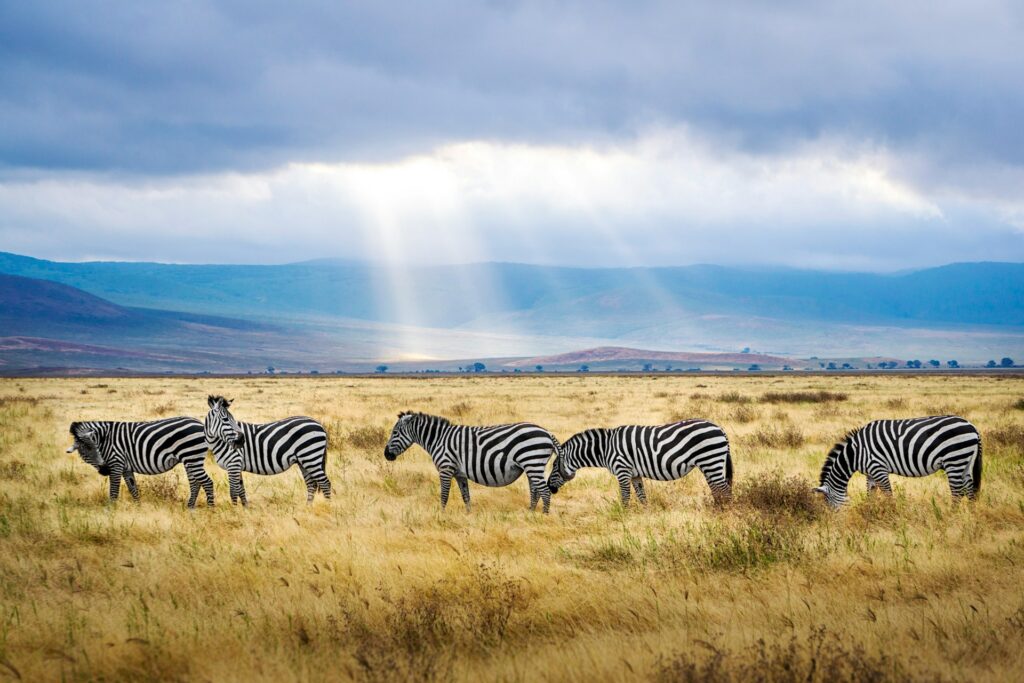
Giraffes tower above the landscape, their distinctive reticulated patterns creating elegant silhouettes against dramatic skies. Buffalo herds—sometimes numbering thousands—dominate the floodplains, their collective movements raising dust clouds visible for kilometers. Zebras stripe the grasslands in classic safari imagery, while various antelope species—greater kudu with their magnificent spiral horns, sable antelope displaying rich dark coats, impala, hartebeest, and eland—provide the herbivore diversity supporting healthy predator populations.
Hippos wallow in the Mkata River and seasonal pools, their massive bodies barely visible except for eyes, ears, and nostrils breaking the surface. Crocodiles bask on muddy banks, their prehistoric forms unchanged for millions of years. And if fortune truly favors, you might glimpse the endangered African wild dog—these spectacular pack hunters occasionally appear in Mikumi, their presence testament to the park’s connection to the vast Selous wilderness.
Leopards, though secretive and solitary, maintain healthy populations, occasionally revealing themselves during early morning or evening drives when they emerge to hunt. The park’s mixture of riverine forests, rocky outcrops, and open grasslands provides ideal leopard habitat—offering both the cover they require and the prey abundance they need.
Avian Paradise: 400+ Species
Mikumi National Park supports over 400 recorded bird species, creating ornithological richness that attracts serious birders from worldwide. The habitat diversity—from grasslands and acacia woodlands to riverine forests and seasonal wetlands—enables this remarkable avian variety.
Notable species include lilac-breasted rollers displaying iridescent plumage, yellow-throated longclaws with their distinctive calls, bataleur eagles performing their characteristic rocking flight displays, and countless others representing nearly every East African bird family. European winter brings migrant species swelling diversity dramatically as thousands of birds escape northern hemisphere cold for African warmth.
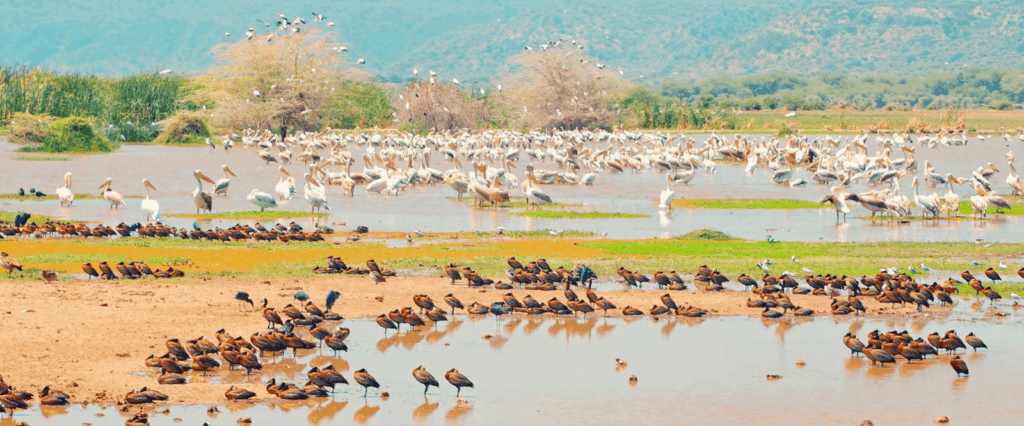
The seasonal pools and Mkata River attract spectacular waterbird concentrations: various heron species, storks wading through shallows, kingfishers diving for fish, and countless ducks and waders exploiting aquatic resources.
The Uluguru Mountains: Dramatic Backdrops
The Uluguru Mountains rising dramatically along Mikumi’s eastern boundary create spectacular backdrops transforming ordinary wildlife photography into extraordinary compositions. These ancient mountains—part of the Eastern Arc range harboring exceptional biodiversity and endemic species—add vertical dimension to Mikumi’s predominantly horizontal landscape.
During clear mornings and evenings, the mountains reveal themselves in stunning detail, their forested slopes creating layered silhouettes receding toward distant horizons. Wildlife silhouetted against these mountain backdrops—elephants crossing the plains with the Ulugurus beyond, giraffes browsing with mountains framing the scene—creates images impossible in flatter parks.
Accessibility: Tanzania’s Most Convenient Southern Park
What truly distinguishes Mikumi from other exceptional Tanzanian parks is remarkable accessibility. The park straddles the Dar es Salaam-Iringa highway—the main road connecting Tanzania’s coast to its southern highlands—meaning you literally drive through the park along tarmac road. This positioning enables various visit scenarios impossible with more remote parks:
Day Trips from Dar es Salaam: Though four hours each direction makes for long days, motivated visitors can experience genuine Mikumi safari without overnight stays, perfect for cruise passengers, business travelers, or Dar residents seeking weekend wildlife escapes.
En Route Stops: Travelers journeying between the coast and southern highlands (Ruaha National Park, the Southern Highlands, or overland routes to Malawi/Zambia) can break journeys with Mikumi game drives, transforming tedious transfer days into exciting safari experiences.
Short Safaris: Two or three-day Mikumi itineraries deliver authentic Tanzania wildlife experiences for time-limited travelers unable to commit to week-long northern circuit safaris.
The excellent road access also means Mikumi costs less than remote parks requiring expensive charter flights, making it exceptional value for budget-conscious travelers seeking quality wildlife viewing without northern circuit price tags.
Seasons and Wildlife Viewing
Mikumi dry season (June-October) delivers peak wildlife viewing as animals concentrate around permanent water sources. The Mkata River and Hippo Pool become wildlife magnets, the short grass enables excellent visibility, and predator activity increases around concentrated prey.
The wet season (November-May) transforms the landscape to emerald green, migratory birds arrive in spectacular numbers, and while wildlife disperses somewhat, the lush scenery and reduced visitor numbers create different but equally rewarding experiences. Photography particularly benefits from dramatic storm light and verdant landscapes contrasting with dry season’s golden browns.
Your Southern Circuit Gateway Awaits
Mikumi National Park represents Tanzania’s southern circuit at its most accessible—delivering Serengeti-quality wildlife viewing, spectacular mountain backdrops, exceptional birding, and genuine wilderness experiences without the northern circuit’s crowds or costs.
This is Tanzania’s magnificent secret waiting four hours from Dar es Salaam—where elephants roam in hundreds, where lions hunt across open plains, and where you might have it all gloriously to yourself.
Your accessible Tanzania wilderness adventure awaits in Mikumi’s golden grasslands.