Tsavo West National Park: Where Volcanic Fire Met Water and Created Paradise
There’s something profoundly humbling about standing on the edge of the Shetani Lava Flow, a frozen river of black volcanic rock stretching eight kilometers across Tsavo West National Park, knowing that just 200 years ago, this entire landscape erupted in fire. The lava cooled into grotesque sculptures: tortured waves frozen mid-crash, tunnels where molten rock once flowed like underground rivers, and razor-sharp surfaces that shimmer like obsidian in the African sun. This is where earth’s violent past meets its peaceful present, where geological drama creates the stage for one of Kenya’s most spectacular wildlife sanctuaries.
Tsavo West refuses to be categorized. Unlike its flatter, more open sibling Tsavo East, or the endless grasslands of the Maasai Mara, this 9,065-square-kilometre wilderness weaves together volcanic moonscapes, crystal-clear springs, dense acacia thickets, rolling savannahs, swampy wetlands, and rocky outcrops into a landscape so varied it feels like multiple parks occupying the same space. Here, nature reveals its full creative palette, painting with lava and water, rock and vegetation, fire and life.
Mzima Springs: An Underwater Miracle
Imagine this: fifty million liters of crystal-clear water bubbling daily from underground aquifers, creating oasis pools so transparent you can see every pebble on the bottom, every fish gliding through the depths, every hippo moving with unexpected grace in their aquatic realm. This is Mzima Springs—Tsavo West’s liquid crown jewel and one of Kenya’s most magical natural wonders.
The springs’ water originates from rain falling on the Chyulu Hills, those distinctive volcanic cones visible on clear days to the park’s north. The rainwater percolates through porous volcanic rock, filtering slowly through natural geological processes until emerging here, purified and life-giving, creating year-round water sources that sustain entire ecosystems during brutal droughts when everything else desiccates.
But Mzima’s true magic reveals itself underwater. The park installed an underwater viewing chamber—a submerged glass room allowing visitors to observe aquatic life from the perspective of the water itself. Press your face to the glass and watch hippos performing underwater ballet, their massive bodies moving with surprising elegance as they walk along the pool bottom. Crocodiles glide past like living prehistoric submarines. Fish dart through beams of sunlight that penetrate the crystal water. And occasionally, if fortune favors, elephants approach the banks to drink, their trunks creating ripples above your head.
The springs create ribbon-like riparian forests downstream—lush green corridors through otherwise arid landscapes where waterbucks browse, crocodiles bask, and countless bird species congregate. Walking these shaded paths, with water trickling musically beside you and African sky visible through the canopy, creates meditative experiences quite unlike typical safari activities.
Shetani Lava Flow: Walking on Fire’s Legacy
The Shetani Lava Flow—”shetani” means “devil” in Swahili—erupted approximately 200 years ago from a vent that explosively opened along a fissure. Local legend holds that people witnessed this eruption, fleeing in terror as molten rock poured across the landscape, destroying everything in its path, creating the desolate black expanse that remains today.
Walking across this surreal landscape feels extraterrestrial. The lava cooled into bizarre formations: pressure ridges where molten rock buckled as it flowed, caves where underground streams of lava drained away leaving hollow tubes, and surfaces so sharp they can shred boots if you’re not careful. Vegetation slowly reclaims the flow’s edges—pioneer plants finding purchase in cracks, their roots gradually breaking the rock into soil—but the flow’s heart remains barren, a permanent reminder of earth’s volatile power.
Sunrise or sunset transforms the Shetani. The black rock glows russet in angled light, shadows creating dramatic contrasts, and the temperature differential between sun-heated rock and cool air creates shimmering mirages. It’s simultaneously beautiful and slightly unsettling—nature’s power made visible in frozen stone.
Chaimu Crater: Climbing into Volcanic History
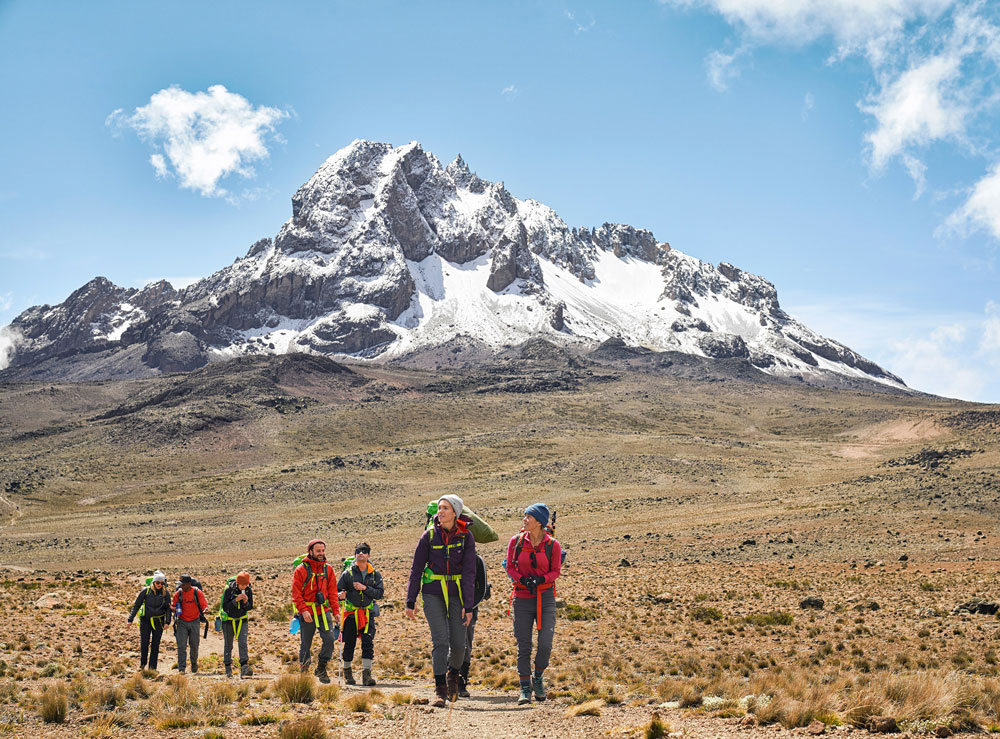
Unlike many volcanic craters protected behind fences with “no entry” signs, Chaimu Crater welcomes visitors. You can hike to its rim, peer into the ash cone within, and on clear days, witness panoramic views stretching across Tsavo’s vastness toward Kilimanjaro’s distant snow-capped peak.
The climb—though not technically difficult—proves sweaty work, especially during midday heat. But reaching the rim rewards effort magnificently. The crater interior creates a perfect circle of volcanic ash and rock, its geometry so precise it seems artificially constructed. Beyond, the landscape unfolds in layers: the park’s rolling plains, distant mountains, and sky so vast it feels like you could fall upward into its blue infinity.
From this elevated perspective, you grasp Tsavo West’s scale and diversity. Those dark patches are lava flows. The green ribbons are riverine forests. The scattered rocky outcrops—kopjes—serve as lion lookouts and leopard lairs. And occasionally, you spot wildlife movement far below—elephant herds crossing plains, dust clouds marking buffalo congregations, or if exceptionally fortunate, predators stalking across the savannah.
The Ngulia Rhino Sanctuary: Hope for the Endangered
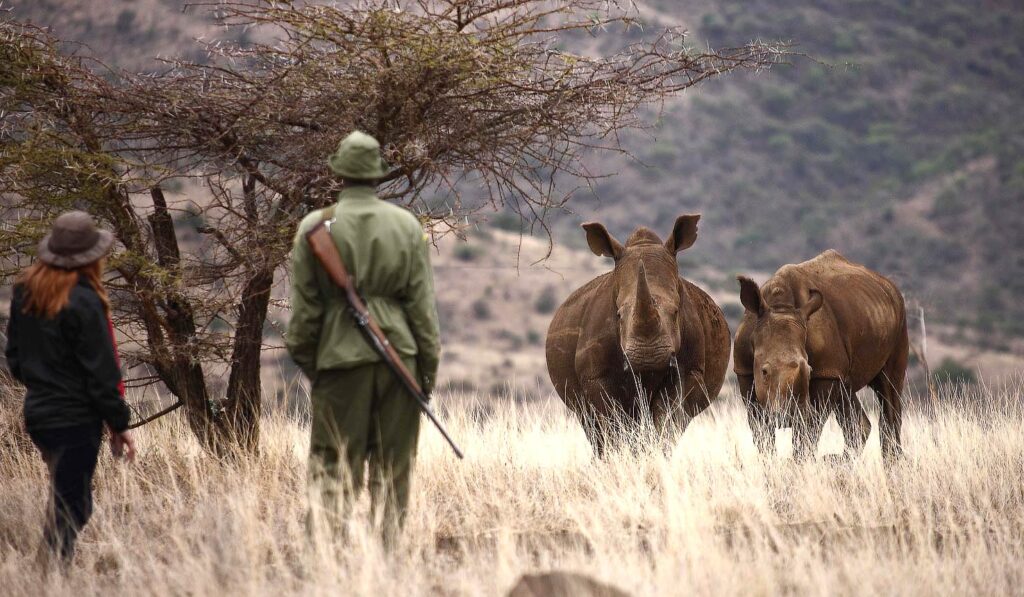
Tsavo West protects one of Kenya’s most important black rhino populations within the 90-square-kilometer Ngulia Rhino Sanctuary—a fenced, heavily guarded reserve-within-a-reserve where these critically endangered creatures receive round-the-clock protection from poaching.
Black rhinos once roamed Tsavo by the thousands. Catastrophic poaching in the 1970s-80s reduced their numbers to near-zero, pushing the species toward extinction. The sanctuary, established in 1986, represents conservation’s fightback—intensive protection creating safe space where rhinos can breed and populations can slowly recover.
Seeing a black rhino, even from distance, proves profoundly moving. These magnificent prehistoric creatures—unchanged for millions of years, surviving ice ages and continental drift—nearly vanished forever due to human greed for their horns. Every living individual represents conservation victory and reminder of what we nearly lost.
Wildlife in the Thickets
Tsavo West National Park Kenya harbors the complete Big Five roster, though the denser vegetation makes sightings more challenging than in open grassland parks. This difficulty enhances reward—that leopard glimpsed in thick acacia, that elephant family emerging from woodland shadows, that buffalo herd suddenly appearing from dense thicket all feel more like genuine discoveries than guaranteed sightings.
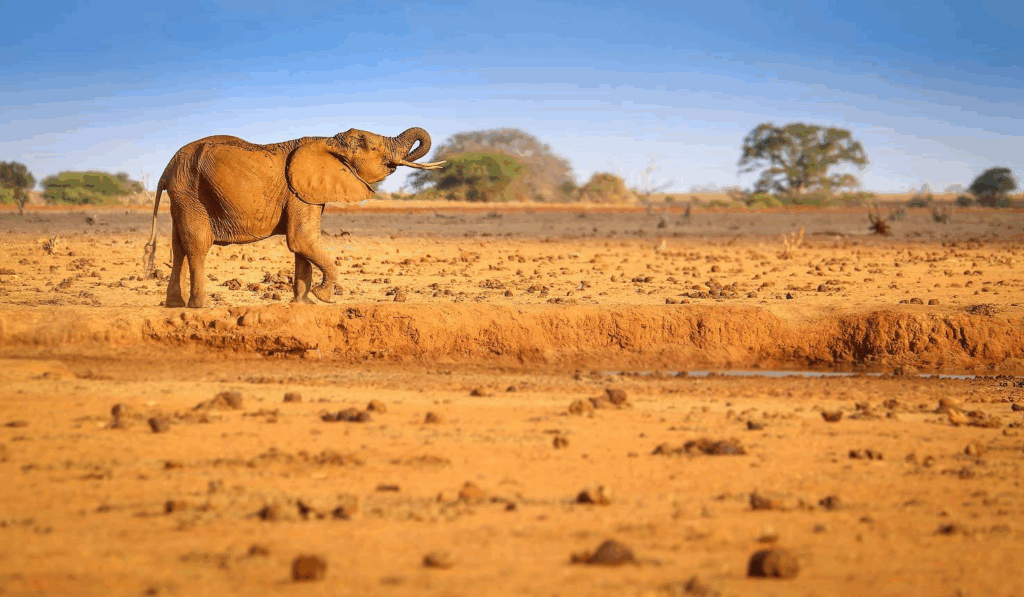
The park supports healthy lion populations, including prides that have adapted to hunting in thicker cover. Leopards thrive here, the rocky outcrops and dense vegetation providing perfect ambush terrain and daytime refuges. Elephants move through in family groups, their red dust-coating (from Tsavo’s distinctive soil) creating the famous “red elephants” tourists seek.
Lesser kudu—those elegant, spiral-horned antelopes more common in Tsavo than most Kenyan parks—browse the thickets. Giraffes tower above acacia canopies. Zebras stripe the plains. And hippos wallow in permanent pools along the Tsavo River.
Avian Paradise: 600+ Species
With over 600 recorded bird species, Tsavo West ranks among Africa’s premier birding destinations. The habitat diversity creates niches for specialists: forest birds in riverine thickets, waterbirds at Mzima Springs, raptors soaring over open plains, and countless others exploiting specific microhabitats.
Notable species include the endemic golden-breasted starling, Secretary birds stalking through grasslands, Fish eagles calling territorially, and during European winter, countless migrant species escaping northern hemisphere cold.
Roaring Rocks and Lake Jipe: Hidden Treasures
Roaring Rocks—wind-sculpted rock formations where wind creates eerie whistling sounds—offer spectacular viewpoints and excellent picnic spots. Lake Jipe, on the Tanzania border, supports different ecosystems and waterbird concentrations, its tranquil waters contrasting with the park’s volcanic drama.
Your Volcanic Safari Awaits
Tsavo West National Park delivers experiences impossible elsewhere: walking on lava flows, viewing hippos underwater, climbing volcanic craters, and discovering wildlife in landscapes where fire once ruled and water now sustains life.
This is Kenya beyond the ordinary—where geological drama meets biological diversity, where every sighting feels earned, where wilderness rewards patience.
Your volcanic adventure awaits in Tsavo’s dramatic landscapes.