Tsavo East National Park: The Theatre of the Wild Where Red Elephants Roam
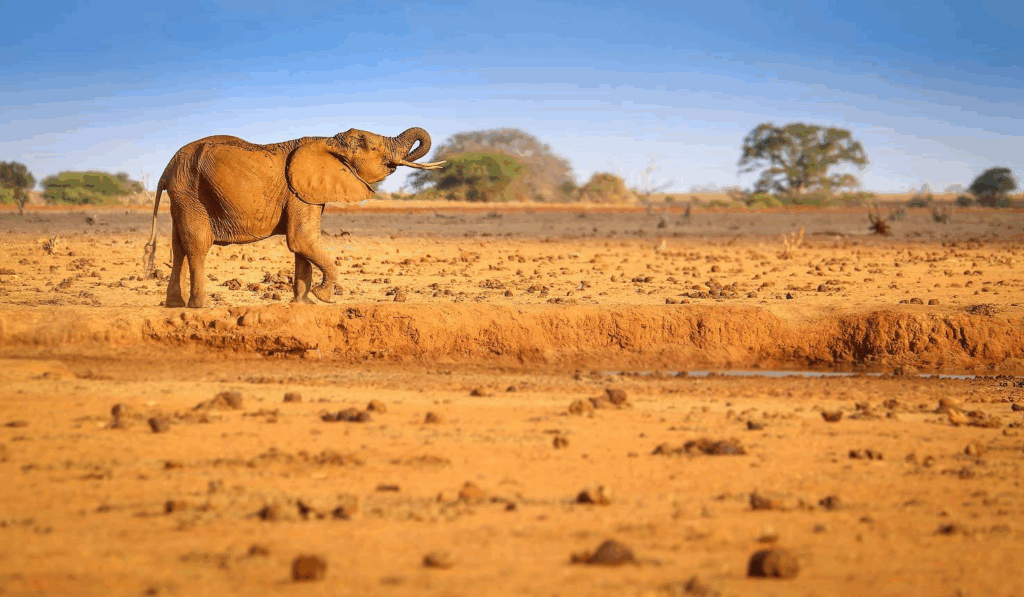
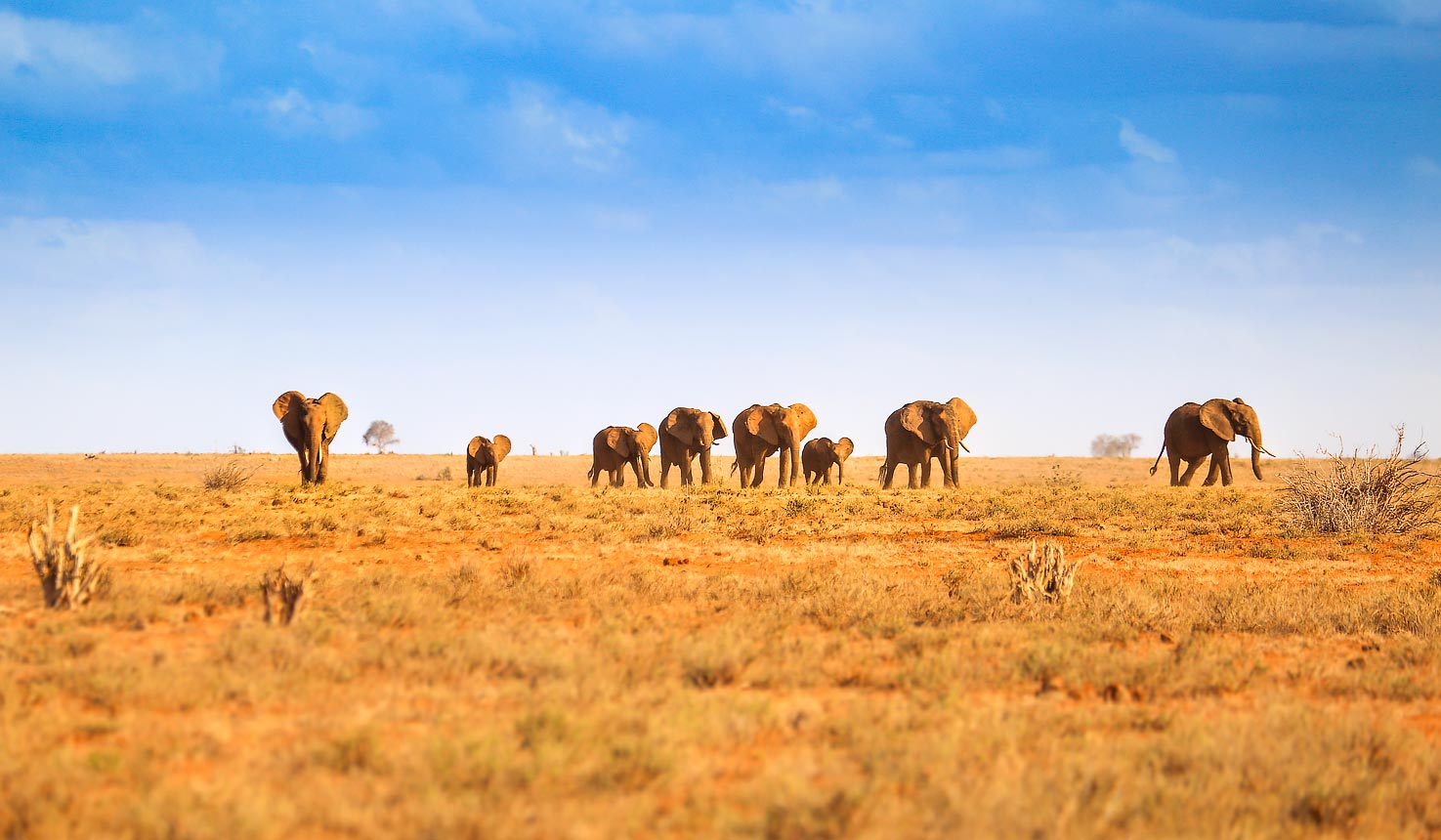
There’s a particular shade of red that exists nowhere else on Earth, a russet-ochre that transforms elephants from their familiar gray into creatures seemingly sculpted from the African soil itself. In Tsavo East National Park, Kenya’s largest protected area sprawling across 13,747 square kilometers of untamed wilderness, elephants emerge from dust baths looking like terracotta warriors come to life, their massive forms glowing copper against golden grasslands and azure skies.
This is the “Theatre of the Wild”, a name that captures Tsavo East’s essence perfectly. Here, on one of Africa’s largest wilderness stages, nature performs its eternal dramas on a scale that humbles human perspective. Elephant herds numbering hundreds traverse endless plains. Lions patrol territories so vast they might go weeks without encountering boundaries. And the landscape itself—from the world’s longest lava flow to waterfalls carved through ancient rock—creates scenery so dramatic it seems designed specifically for maximum visual impact.
The Legend of the Man-Eaters
Every great wilderness holds dark stories, and Tsavo East claims one of Africa’s most famous: the man-eating lions of Tsavo. In 1898, during construction of the Kenya-Uganda Railway, two male lions terrorized the workers’ camps for nine months, killing an estimated 35 people (some accounts claim over 100) and halting construction of the bridge over the Tsavo River.
These weren’t ordinary lions. They hunted with intelligence that suggested almost human cunning—dragging victims from tents, learning to avoid traps, and continuing their reign of terror despite increasingly desperate efforts to stop them. Lieutenant Colonel John Henry Patterson finally killed both lions, their mounted remains now displayed at Chicago’s Field Museum, still drawing crowds over a century later.
The man-eaters’ story has spawned books, documentaries, and Hollywood films, transforming these two lions into legends. But their legacy extends beyond entertainment—they represent the complex, sometimes terrifying relationship between humans and wilderness, reminding us that in wild Africa, humans aren’t always apex predators.
Today’s Tsavo East lions are less dramatic but equally fascinating. The park supports healthy lion populations, including prides adapted to the semi-arid conditions, their behaviors and hunting strategies perfectly suited to Tsavo’s unique environment.
The Red Elephants: Tsavo’s Living Sculptures
The Tsavo East elephants have become iconic—not for size or tusk length, but for their distinctive coloring. The park’s soil contains high iron oxide content, creating that characteristic red-dust that elephants enthusiastically coat themselves with during dust baths. These aren’t different subspecies; they’re ordinary African elephants transformed into russet masterpieces by their environment.
Watching a Tsavo elephant herd dust-bathing proves mesmerizing. They use their trunks like precision instruments, sucking up fine red soil and spraying it across their backs, sides, and heads. The younger elephants throw themselves bodily onto dust patches, rolling and writhing until completely coated. This isn’t vanity—the dust provides sun protection, insect repellent, and temperature regulation, but the visual effect transforms them into living artwork.
Tsavo’s elephants have endured dramatic population fluctuations. Poaching in the 1970s-80s devastated herds, reducing populations by over 90%. The recovery since then represents conservation triumph—anti-poaching measures, community engagement, and habitat protection enabling populations to rebound to healthy levels. Today, encountering these red giants represents witnessing conservation success, each individual a victory against the forces that nearly destroyed them.
Yatta Plateau: Earth’s Longest Lava Flow
The Yatta Plateau—stretching approximately 290 kilometers from north to south—holds the distinction of being the world’s longest lava flow. This ancient geological formation, created millions of years ago when molten rock flowed down a river valley before cooling into this massive rampart, now creates a distinctive feature visible from space.
From ground level, the plateau appears as a long, low ridge running parallel to the Athi-Galana-Sabaki River. Its volcanic origins created unique soils supporting different vegetation than surrounding areas, attracting specific wildlife species. The plateau’s ecological significance extends beyond its impressive dimensions—it creates microclimates, provides mineral licks, and serves as a natural highway for animal movements across the vast park.
Geologically minded visitors appreciate the Yatta as a window into East Africa’s volcanic past, when the entire region experienced tectonic upheavals that created the Great Rift Valley, shaped Mount Kenya and Kilimanjaro, and transformed landscapes through fire and pressure.
Galana River: Liquid Lifeline
The Galana River—formed by the confluence of the Tsavo and Athi rivers—provides Tsavo East National Park’s primary permanent water source. During the dry season, when seasonal waterholes evaporate and the land cracks under relentless sun, the Galana becomes magnetic, drawing wildlife from across the park’s vastness.
Lugard Falls—actually a series of rapids rather than a single waterfall—showcases the Galana’s geological artistry. The river has carved through bedrock, creating channels, potholes, and sculpted rock formations that during high water transform into churning white water. During the dry season, exposed rock reveals the intricate patterns water has etched over millennia.
The falls area proves excellent for wildlife observation. Crocodiles bask on rocks, hippos wallow in calmer pools, and animals approach cautiously to drink—aware that predators also know prey must eventually risk approaching water.
Mudanda Rock: Nature’s Observation Platform
Mudanda Rock—a 1.6-kilometer-long inselberg (isolated rock outcrop) rising from the plains—provides natural viewpoints offering panoramic vistas across Tsavo East’s wilderness. The rock face attracts water, creating seasonal seeps where wildlife congregates, particularly during dry seasons.
Climbing Mudanda Rock at sunset creates magical experiences. As the sun descends toward the horizon, painting the sky in progressively deeper shades of orange and crimson, elephant herds cross the plains below, their red-dust coating glowing in the angled light. Buffalo congregations darken the landscape. And if fortune favors, predators emerge for evening hunts.
The rock also provides excellent birdwatching vantage points, with raptors riding thermals overhead and countless species visible in the vegetation below.
Aruba Dam: Wildlife Magnet
The man-made Aruba Dam creates a permanent waterhole that has become one of Tsavo East’s most reliable wildlife viewing areas. During the dry season, animals congregate here in impressive numbers—elephants, buffalo, various antelope species, zebras, and the predators that follow prey to water.
The dam area allows patient observation of animal behaviors and interactions impossible during mobile game drives. Watch elephants teaching youngsters to swim, buffalo bulls engaging in dominance battles, and the careful approach-and-retreat dance herbivores perform at waterholes where crocodiles lurk.
The Wilderness Experience
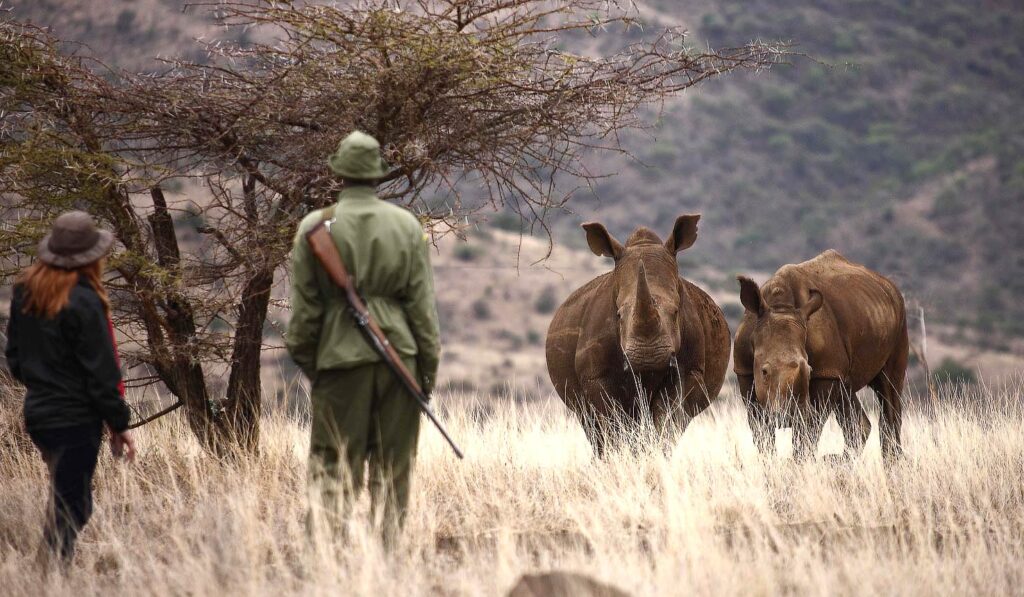
What truly distinguishes Tsavo East National Park Kenya from more famous parks is its raw wilderness character. The park receives significantly fewer visitors than the Maasai Mara or Amboseli, creating genuine isolation. You might drive entire days encountering only one or two other vehicles, experiencing wildlife in solitude increasingly rare in modern African tourism.
The vegetation—primarily commiphora and acacia woodlands interspersed with open grasslands—creates different viewing challenges than open savannah parks. Wildlife appears and disappears into thickets, sightings feel more like discoveries, and patience proves essential. But this difficulty enhances reward—that lion pride emerging from woodland shadows, that cheetah atop a termite mound scanning for prey, that elephant herd materializing from dust and vegetation all feel like personal discoveries rather than guaranteed checklist items.
Over 500 Bird Species: Avian Diversity
Tsavo East supports over 500 recorded bird species, exploiting the park’s habitat diversity. Notable species include the endemic golden-breasted starling, Secretary birds stalking grasslands, various hornbills, rollers displaying brilliant plumage, and countless raptors soaring on thermals.
The Galana River attracts waterbirds—kingfishers, herons, Egyptian geese, and during European winter, countless migrants escaping northern cold.
Your Raw Africa Awaits
Tsavo East National Park delivers authentic wilderness for those willing to trade guaranteed sightings for genuine exploration, crowds for solitude, manicured experiences for raw Africa.
This is Kenya’s largest stage, where red elephants perform, where legends still echo, where wilderness still rules. Your theatre of the wild awaits.