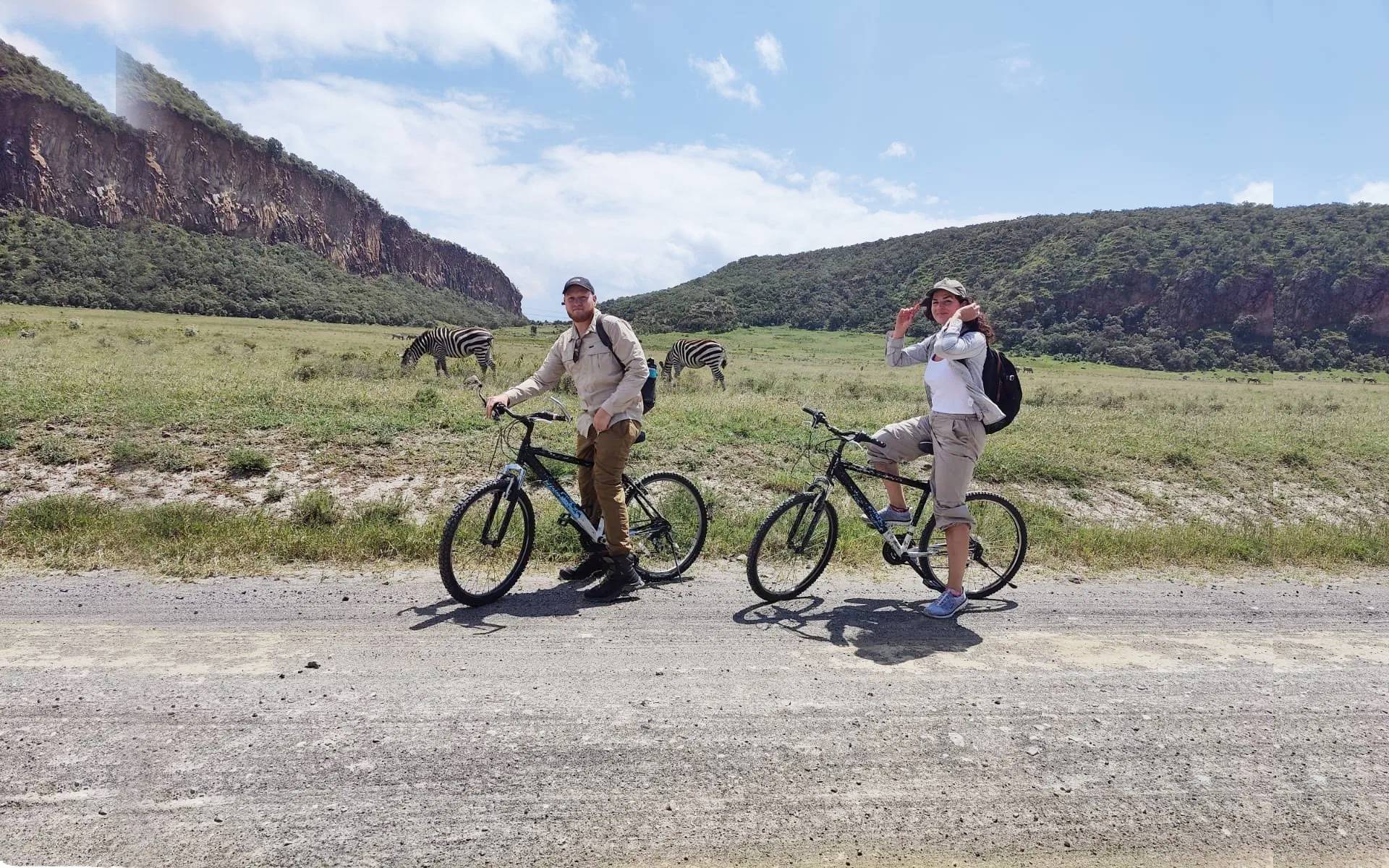
Nairobi National Park: Where Giraffes Graze Against Skyscraper Backdrops
There’s a moment every first-time visitor to Nairobi National Park experiences, usually around mid-morning when the light becomes perfect, when you’re photographing a pride of lions lounging beneath an acacia tree, and suddenly a jetliner descends overhead, its landing gear extended, preparing to touch down at Jomo Kenyatta International Airport mere kilometers away. You lower your camera, processing this surreal juxtaposition: wild African lions, completely unbothered by civilization’s intrusion, resting peacefully while skyscrapers shimmer in the heat haze beyond and Boeing 787s roar overhead on final approach.
Welcome to the world’s only wildlife capital, where wilderness and metropolis don’t merely coexist but intertwine so intimately that the boundary between wild and urban becomes beautifully, bewilderingly blurred.
An Impossible Paradox That Somehow Works
Nairobi National Park Kenya shouldn’t exist. By every logical measure, a functional wildlife sanctuary supporting lions, leopards, rhinos, giraffes, and over 400 bird species simply cannot thrive just seven kilometres from a capital city of 4.5 million people. The noise alone should drive animals away. The light pollution should disrupt nocturnal behaviors. The proximity to human populations should create insurmountable human-wildlife conflict.
Yet here we are, decades after the park’s establishment in 1946 (making it Kenya’s first national park), and not only does it survive—it thrives. Black rhino populations have rebounded spectacularly. Lions hunt successfully despite airplane noise. Giraffes browse peacefully with the Nairobi skyline creating backdrops no other park on Earth can match. And migratory wildlife continue using ancient corridors, moving freely between the park and the adjacent Athi-Kapiti plains despite the city’s relentless expansion.
This 117-square-kilometer miracle represents conservation’s triumph over seemingly impossible odds, proving that with sufficient protection, proper management, and community cooperation, wildlife and urban development can occupy the same landscape without mutual destruction.
Rhino Sanctuary: Conservation’s Greatest Success
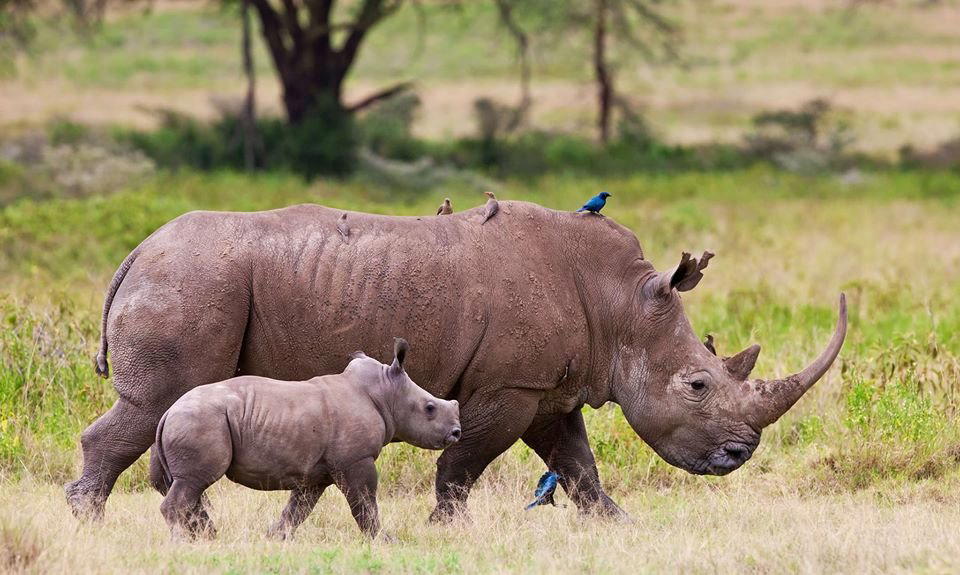
If Nairobi National Park were to claim a single conservation achievement above all others, it would be rhino protection. The park harbors over 50 black rhinos, the world’s densest concentration of these critically endangered creatures anywhere on the planet. Think about that: the highest density of one of Earth’s rarest large mammals exists not in remote wilderness but practically in a capital city’s suburbs.
This success didn’t happen accidentally. It required decades of intensive protection: electric fencing securing boundaries, round-the-clock armed patrols deterring poachers, sophisticated monitoring tracking every individual rhino, veterinary interventions when needed, and community engagement ensuring local people benefit from rather than suffer from wildlife presence.
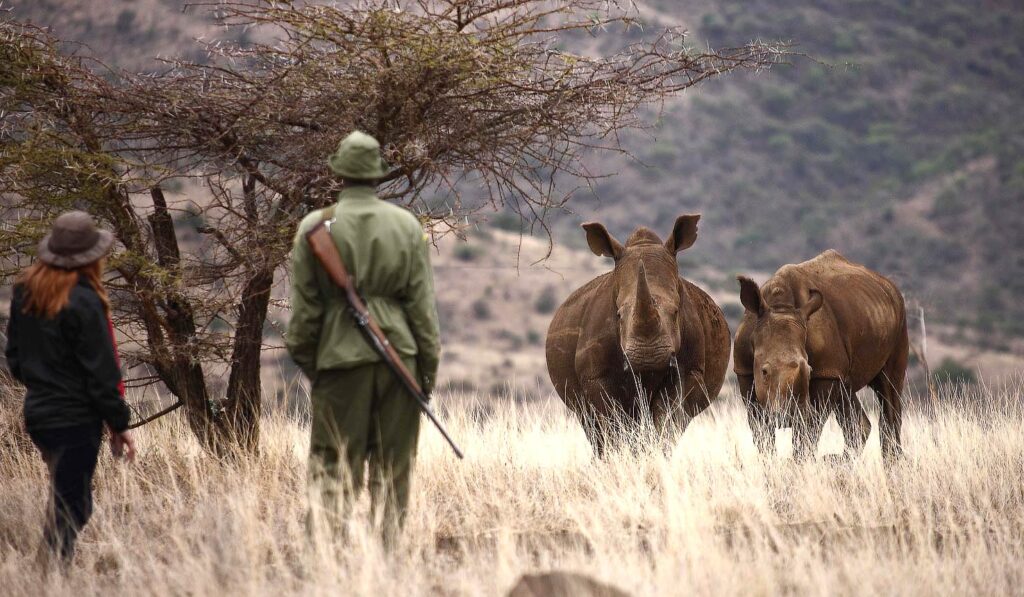
Walking the rhino sanctuary trails—yes, you can walk here under ranger guidance—you might encounter these prehistoric giants browsing peacefully mere meters away. Their calm demeanor, their apparent comfort despite human proximity, testifies to protection so effective that rhinos no longer associate humans with danger. It’s profoundly moving, especially knowing that elsewhere across Africa, rhinos still face poaching crises that continue pushing them toward extinction.
The park’s rhino populations serve another crucial function: they’re a source population. When other Kenyan parks need rhino reinforcements, Nairobi National Park supplies them, literally seeding rhino recovery across the country. This “rhino factory” role multiplies the park’s conservation significance far beyond its modest boundaries.
Lions in the City: The Ultimate Urban Predators
Nairobi National Park lions have adapted to their unique circumstances with remarkable flexibility. These aren’t timid, habituated cats cowering from human presence. They’re confident apex predators who’ve learned that humans in vehicles pose no threat, allowing them to hunt, rest, and raise cubs with remarkable indifference to nearby civilization.
The park supports multiple prides whose territories, hunting patterns, and social dynamics have been studied intensively, providing invaluable insights into lion ecology. Researchers can observe these prides more consistently than in vast wilderness areas where lions might disappear for weeks, making Nairobi an outdoor laboratory for lion conservation science.
And yes, occasionally these lions do what lions do—they hunt. Watching a Nairobi pride stalk zebras with skyscrapers visible beyond creates cognitive dissonance that never quite resolves. Your brain knows lions belong in remote savannahs, yet here they are, hunting successfully against urban backdrops, reminding you that “wilderness” exists in the animal’s behavior more than the setting’s remoteness.
Avian Paradise: 400 Species in 117 Square Kilometers
The Nairobi National Park bird list exceeds 400 recorded species—more than the entire United Kingdom supports despite Britain being over 2,000 times larger. This extraordinary diversity results from habitat variety packed into modest space: wetlands attract waterbirds, grasslands support larks and bustards, acacia woodlands harbor hornbills and barbets, and the park’s position along migration routes brings European species escaping northern winters.
Between March and May, the park transforms into avian Grand Central Station as migrants arrive: countless warblers, flycatchers, swallows, and others fleeing European cold for African warmth. The wetland areas particularly explode with activity—herons stalking shallows, kingfishers diving for fish, ibises probing mud, and occasionally, the magnificent African fish eagle calling territorially, its distinctive cry echoing across the marsh.
Serious birders can easily record 100+ species during full-day visits, while casual observers appreciate the colorful diversity without needing encyclopedic identification skills.
Wildlife Against Urban Backdrops: Photography Like Nowhere Else
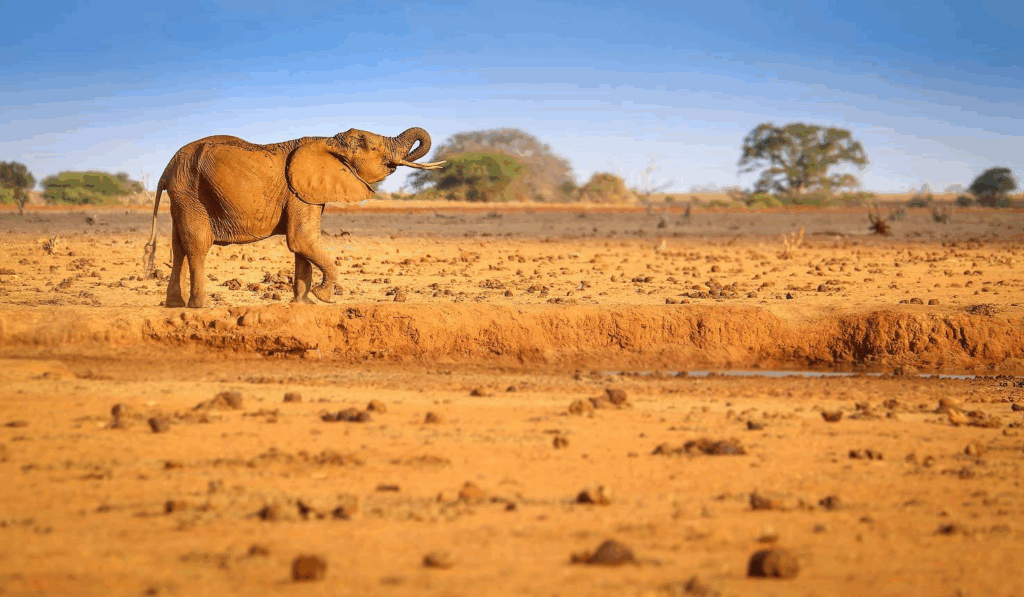
Nairobi National Park offers photographic opportunities literally impossible anywhere else. Where else can you frame giraffes browsing acacia trees with modern glass-and-steel skyscrapers creating geometric counterpoint? Where else do elephants appear with jetliners descending overhead? Where else does the urban-wild juxtaposition create such surreal yet beautiful compositions?
These aren’t gimmicky photos—they’re powerful visual statements about conservation in the 21st century, about coexistence possibilities, about nature’s resilience when given half a chance. They challenge assumptions that wilderness must be remote, that wildlife requires complete separation from humanity, that conservation and development inevitably conflict.
Perfect Grounds for Celebration
Beyond wildlife viewing, Nairobi National Park offers exceptional venues for events: bush weddings where giraffes photobomb ceremonies, corporate team-building combining wildlife viewing with professional development, picnic sites where families gather with zebras grazing nearby, and the historic ivory burning site monument where Kenya dramatically demonstrated its anti-poaching commitment by incinerating confiscated tusks.
The Impala Observation Point, Kingfisher Picnic Site, and park clubhouse provide facilities transforming simple gatherings into extraordinary experiences where nature becomes not just backdrop but active participant.
Your Urban Wildlife Adventure Awaits
Nairobi National Park proves that conservation isn’t about choosing between development and nature—it’s about creating frameworks where both flourish. Just seven kilometers from downtown, accessible within 30 minutes from most Nairobi accommodations, requiring no overnight stays or extensive planning, this remarkable park delivers authentic safari experiences to anyone with a few hours available.
Your impossible wildlife capital awaits, where lions roar, rhinos browse, and jetliners descend overhead in perfect, improbable harmony.