



Lewa Wildlife Conservancy: Kenya’s Premier Conservation & Luxury Safari Destination
Rising from the arid plains of northern Kenya to the forested foothills of Mount Kenya, Lewa Wildlife Conservancy represents conservation excellence at its finest, a 62,000-acre protected area where endangered species recovery, community empowerment, and world-class safari experiences converge to create one of Africa’s most successful conservation models. Established in 1995 but with conservation roots extending back to the 1980s, Lewa has transformed from a cattle ranch into a UNESCO World Heritage Site recognized globally for pioneering approaches linking wildlife protection with tangible community benefits.
The Lewa Wildlife Conservancy Kenya experience delivers what discerning safari travelers increasingly seek: intimate wildlife encounters in pristine wilderness, meaningful engagement with conservation science, authentic cultural interactions, and the satisfaction of knowing your visit directly funds both wildlife protection and community development. Here, conservation isn’t abstract concept—it’s visible in thriving rhino populations, empowered communities, and landscapes where people and wildlife genuinely coexist.
Conservation Leadership: The Rhino Sanctuary Story
Lewa Wildlife Conservancy achieved international prominence through its extraordinary black rhino conservation success. When conservation efforts began in the 1980s, black rhinos faced catastrophic population declines—poaching reduced Kenya’s population from approximately 20,000 in the 1970s to fewer than 300 by the late 1980s. Extinction loomed.
Black Rhino Recovery: From Crisis to Success
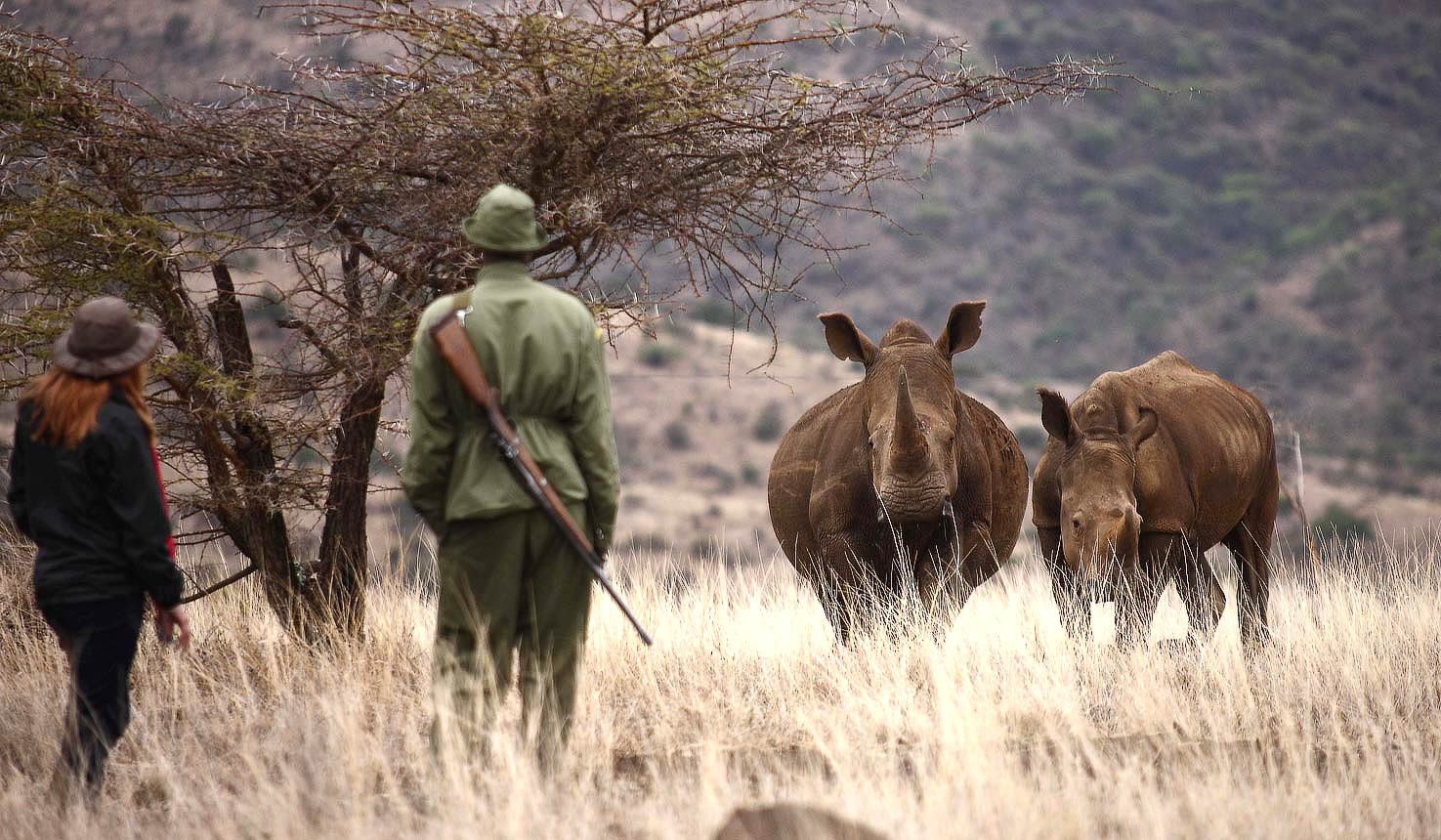
The Lewa rhino sanctuary approach combined intensive protection with careful population management. Round-the-clock armed ranger patrols, advanced monitoring technology, community intelligence networks, and rapid response units created security enabling rhino populations to recover spectacularly.
Today, Lewa protects over 180 black rhinos—representing approximately 15% of Kenya’s entire population concentrated within this relatively compact area. This success required decades of patient work: creating predator-proof fencing, establishing vegetation management ensuring adequate browse, implementing sophisticated monitoring tracking every individual, and maintaining anti-poaching vigilance preventing the losses that devastated populations elsewhere.
The conservancy’s breeding success proves equally remarkable. Lewa-born rhinos have been translocated to establish new populations across Kenya and Tanzania, spreading genetic diversity and creating insurance populations against catastrophic events. This “source population” status represents conservation’s ultimate validation—your conservation area is so successful it exports animals to restore degraded ecosystems elsewhere.
White Rhino Introduction
Beyond black rhinos, Lewa protects significant white rhino populations introduced to diversify the ecosystem and demonstrate both species can coexist when properly managed. The larger, grazing-specialist white rhinos occupy different ecological niches than browsing black rhinos, enabling both species to thrive without excessive competition.
Grevy’s Zebra: Protecting the World’s Rarest Zebra
While rhinos receive deserved attention, Lewa Wildlife Conservancy plays equally critical roles protecting Grevy’s zebra—the world’s largest and most endangered zebra species. With global populations below 3,000 individuals (down from approximately 15,000 in the 1970s), every Grevy’s zebra population proves essential for species survival.
Lewa harbors Kenya’s highest Grevy’s zebra density, with approximately 350 individuals—over 10% of the total global population. These striking equids—identified by narrow vertical stripes, large rounded ears, and white bellies—prefer the semi-arid grasslands characterizing Lewa’s lower elevations.
Conservation efforts include habitat management maintaining the open grasslands Grevy’s zebras require, water provision during droughts, monitoring individual movements and reproductive success, and research programs studying population dynamics informing management decisions. The conservancy’s Grevy’s zebra success demonstrates that species can recover when threats are addressed systematically through science-based management.
Diverse Wildlife Beyond Flagship Species
Lewa Wildlife Conservancy wildlife extends far beyond rhinos and Grevy’s zebras, encompassing over 70 mammal species and creating comprehensive safari experiences:
The Big Five (Including Both Rhino Species)
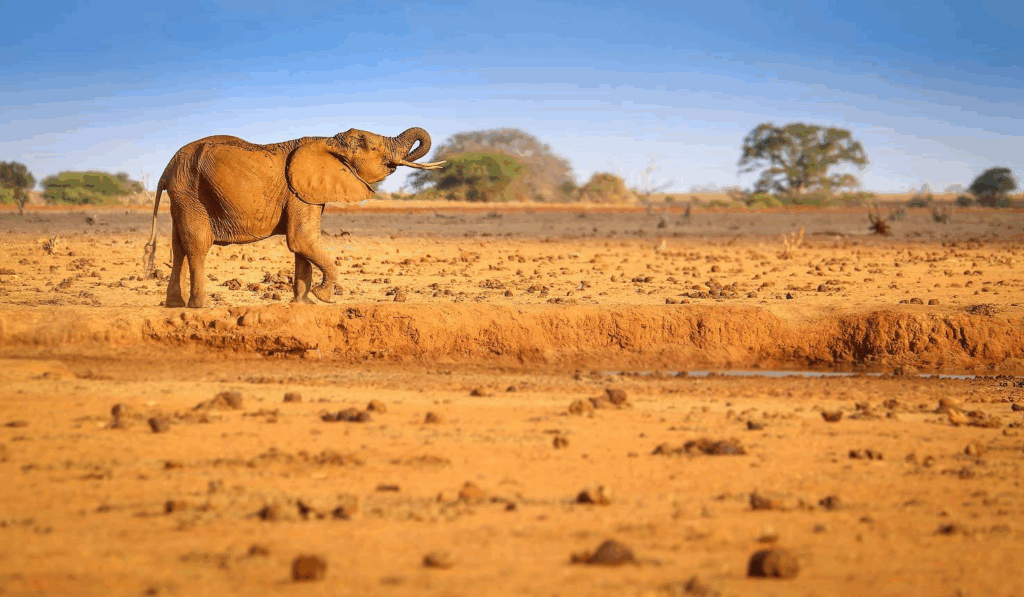
Lewa delivers complete Big Five viewing—lions, leopards, African elephants, Cape buffalo, plus both black and white rhinos. Lion prides patrol the conservancy, leopards utilize rocky outcrops and riverine forests, elephant herds traverse between Lewa and Mount Kenya forests via protected corridors, and buffalo congregate in substantial numbers.
The rhino concentrations transform “Big Five” from checklist exercise into profound conservation encounter—observing multiple rhino species, witnessing successful breeding, and understanding the intensive protection enabling their survival.
Diverse Herbivore Communities
The conservancy supports reticulated giraffes with their distinctive geometric coat patterns, common zebras (plains zebras) alongside the rare Grevy’s, various antelope species including oryx, eland, impala, Grant’s gazelles, and numerous others creating the prey base supporting healthy predator populations.
Predator Populations
Beyond lions and leopards, Lewa harbors spotted hyenas, cheetahs utilizing open grasslands for high-speed hunts, jackals, and various smaller carnivores completing the predator guild.
Exceptional Birdwatching: 400+ Species
Lewa Wildlife Conservancy supports over 400 recorded bird species, benefiting from habitat diversity spanning semi-arid grasslands to Mount Kenya’s montane forests. This ecological variety creates ornithological richness attracting serious birders worldwide.
Notable species include ostriches striding across grasslands, secretary birds stalking prey, various eagles and hawks, vibrant starlings and sunbirds, and during European winter, countless migrant species swelling diversity dramatically.
Community Conservation: The Lewa Model
What truly distinguishes Lewa Wildlife Conservancy is the pioneering community conservation model demonstrating that wildlife protection and human development are complementary rather than competitive goals.
Comprehensive Community Programs
Education: Lewa funds schools, provides scholarships, builds classrooms, and supports teacher training—recognizing that education empowers communities making informed decisions about conservation and development.
Healthcare: Community health programs, medical clinics, and water-borne disease prevention initiatives improve quality of life while reducing pressures on natural resources that occur when communities struggle with basic needs.
Water Projects: Boreholes, water pipelines, and sustainable water management provide reliable access to clean water—reducing conflict over resources and enabling agricultural productivity supporting livelihoods.
Women’s Empowerment: Micro-enterprise programs, beadwork cooperatives, and skills training create income opportunities particularly benefiting women, redistributing conservation’s economic benefits broadly across communities.
Creating Conservation Stakeholders
This comprehensive approach transforms communities from conservation adversaries into active stakeholders. When local people benefit tangibly from wildlife through employment, community development, and economic opportunities, they become conservation’s most effective advocates and protectors—reporting poaching, supporting anti-poaching efforts, and viewing wildlife as assets rather than threats or resources for exploitation.
Wildlife Corridors: Landscape-Scale Conservation
Lewa Wildlife Conservancy recognizes that isolated protected areas cannot sustain viable wildlife populations long-term. The conservancy maintains and protects wildlife corridors connecting to neighboring conservancies and Mount Kenya forests, enabling elephants, predators, and other wide-ranging species to move freely across the broader landscape.
This landscape-scale approach—coordinating with neighboring properties through the Northern Rangelands Trust—creates effective conservation area many times larger than Lewa alone, demonstrating how private conservancies and community lands can collectively protect ecosystems.
Conservation Challenges and Ongoing Efforts
Despite remarkable successes, Lewa faces continuing challenges:
Poaching Threats: Rhino horn’s black market value creates constant pressure requiring eternal vigilance and sophisticated security operations.
Human-Wildlife Conflict: As human populations expand around conservancy boundaries, conflicts over crops, livestock, and water intensify, requiring constant management and community engagement.
Funding Sustainability: Conservation operations—anti-poaching patrols, community programs, infrastructure—require substantial ongoing funding, making tourism revenue and donor support essential.
Climate Change: Increasing drought frequency and intensity challenges water provision, habitat management, and community livelihoods.
Yet Lewa continues demonstrating that these challenges are surmountable through science-based management, community partnership, and sustainable funding models where tourism plays essential roles.
Luxury Safari Experiences
Beyond conservation significance, Lewa offers exceptional safari experiences through exclusive lodges and camps providing world-class accommodations, expert guides, diverse activities (game drives, horseback safaris, camel treks, walking safaris), and the satisfaction that your visit directly funds conservation and community development.
Your transformative Kenya conservation safari supporting both wildlife and communities awaits at Lewa Wildlife Conservancy.