Aberdare National Park: Where Mist Crowns Mountains and a Princess Became Queen
There’s something profoundly magical about waking in a treehouse perched above an African waterhole, watching dawn break over moorlands that could pass for Scottish highlands, and witnessing a bongo antelope, one of Earth’s rarest and most beautiful creatures, emerge ghost-like from bamboo thickets into early morning mist. This isn’t the Africa of tourist brochures, of endless savannahs and acacia-dotted plains. This is Aberdare National Park—a 767-square-kilometre mountain wilderness where Africa reveals its highland soul, where forests drip with moisture, where waterfalls thunder down volcanic cliffs, and where a young princess once went to sleep and woke as a queen.
The Aberdare Mountains rise like a natural fortress from Kenya’s central highlands, their peaks sometimes dusted with snow despite sitting practically on the equator, their slopes cloaked in forests so dense and primeval they feel transported from another age entirely. Here, at elevations ranging from 2,000 to 4,000 meters, nature operates by different rules, creating ecosystems more reminiscent of temperate rainforests than tropical Africa.
The Night a Princess Became Queen
February 5, 1952. Treetops Lodge, a simple treehouse hotel overlooking a waterhole in the Aberdare Forest. A young Princess Elizabeth, just 25 years old, climbed the ladder into this wooden structure for a night of wildlife watching, a brief respite during a Commonwealth tour following her ailing father’s illness.
That night, while she watched elephants and rhinos gather at the waterhole below, far away in England, King George VI died peacefully in his sleep. Princess Elizabeth had ascended the ladder as a princess; she descended the next morning as Queen Elizabeth II, though she wouldn’t learn of her father’s death and her accession to the throne for several more hours.
The famous note in Treetops’ guestbook commemorates this momentous transition: “For the first time in the history of the world, a young girl climbed into a tree one day a Princess and after having what she described as her most thrilling experience she climbed down from the tree the next day a Queen.”
Today’s Treetops (rebuilt after the original burned down) and its sister lodge, The Ark, continue this tradition of elevated wildlife viewing, their architecture designed to place guests literally among the trees, watching as Africa’s mountain wildlife congregates below in scenes unchanged since that historic night.
Waterfalls That Thunder and Forests That Drip
Aberdare National Park showcases some of Kenya’s most spectacular waterfalls, their drama amplified by the frequent mists that give these highlands their ethereal character.
Karuru Falls—plunging 273 meters in three distinct drops—ranks among Kenya’s highest waterfalls. The trail to the viewpoint winds through dense forest where colobus monkeys crash through canopy and the air smells of wet earth and growing things. When you finally reach the viewing platform, the falls reveal themselves through perpetual mist, their roar drowning conversation, their spray creating permanent rainbows when sunlight manages to penetrate the clouds.
Gura Falls, while slightly shorter at 305 meters total drop, proves equally impressive, its narrow gorge amplifying the thunder of falling water. And Chania Falls, though more modest, offers easier access and equally beautiful forest approaches.
These aren’t the seasonal trickles of drier parks. The Aberdare highlands receive substantial rainfall year-round, feeding rivers that flow perpetually, waterfalls that never cease their cascade, and forests that remain eternally green and dripping with moisture.
Bamboo Zones and the Elusive Bongo
The Aberdare bamboo forests—vast stands of these giant grasses covering entire mountain slopes—create habitat for one of Africa’s most secretive and beautiful antelopes: the bongo. These magnificent creatures—with their rich chestnut coats marked by thin white vertical stripes, their spiral horns carried by both sexes, and their white leg markings like elegant stockings—rank among Africa’s most challenging animals to observe.
Bongos are ghosts. They move through bamboo with uncanny silence despite their size (bulls can weigh 400 kilograms), they’re most active at night, and they possess almost supernatural ability to detect and avoid humans. Many wildlife enthusiasts visit Aberdare National Park Kenya specifically hoping for bongo encounters, knowing that even glimpsing one represents extraordinary fortune.
The bamboo zones serve other purposes beyond bongo habitat. Elephants feed voraciously on bamboo shoots when they emerge seasonally. The bamboo’s dense growth creates microclimates supporting specialized plant and insect communities. And from human perspectives, walking through these forests—where bamboo stalks creek and rustle mysteriously in the wind—creates atmospheric experiences quite unlike any other African habitat.
Moorlands: Africa’s Highland Mystery
Above the bamboo zones, the landscape transforms dramatically into open moorlands and alpine heath—ecosystems that feel decidedly un-African. Giant lobelias and groundsels grow to improbable sizes, their Dr Seuss-like forms creating surreal botanical gardens. Tussock grasses carpet the high plateaus. And when mist rolls in—which it does frequently—the moorlands become otherworldly realms where visibility drops to meters and every sound becomes amplified and mysterious.
These high-altitude zones support specialized wildlife. The rare Aberdare mole rat burrows through volcanic soils. Mountain reedbucks bound across the tussocks. And occasionally, leopards patrol these open areas, their spotted coats remarkably effective camouflage even in the sparse vegetation.
The moorlands also birth Kenya’s major rivers. The Aberdares function as critical water catchment—their perpetual mists and frequent rains feeding streams that eventually become the Tana and Athi rivers, supplying water to millions of Kenyans downstream. Conservation here isn’t merely about wildlife; it’s about protecting the very source of water that enables human civilization in central Kenya.
Rare Wildlife: The Forest’s Secrets
Beyond bongos, Aberdare National Park harbors exceptional wildlife diversity, including species rarely seen elsewhere:
Giant Forest Hogs—Africa’s largest wild pigs, weighing up to 275 kilograms—forage in family groups through the forest understory. Unlike their more familiar warthog cousins, these imposing creatures inhabit dense forest, their dark coloration and secretive habits making them challenging to observe.
African Golden Cats—among Africa’s least-known felids—hunt through the forests. Roughly twice domestic cat size, these beautiful predators prove so elusive that even park rangers consider sightings exceptional fortune.
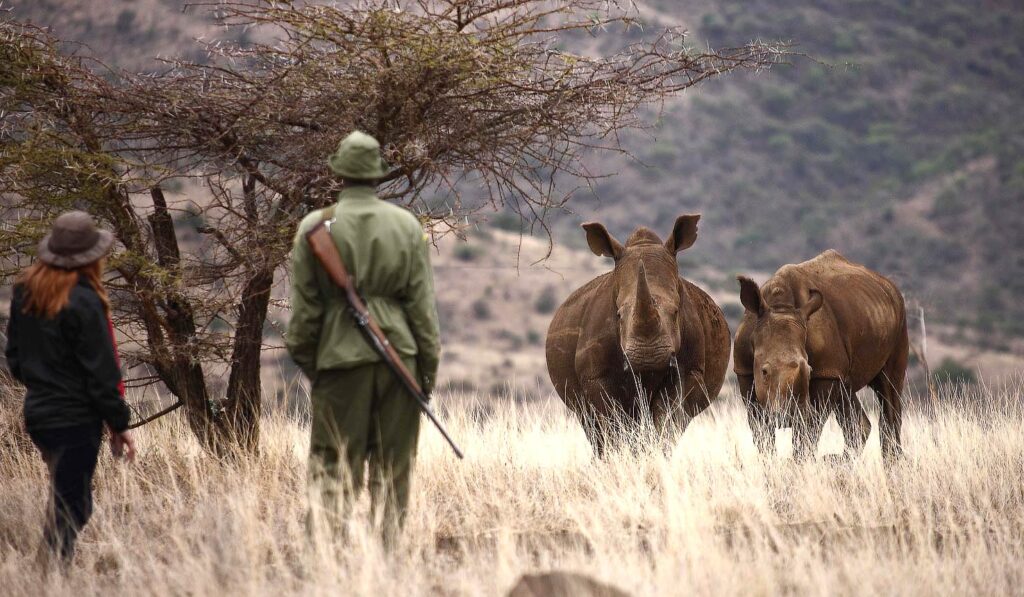
Black Rhinos maintain small populations in the park, protected within sanctuary areas where intensive anti-poaching efforts continue the fight to save these critically endangered creatures.
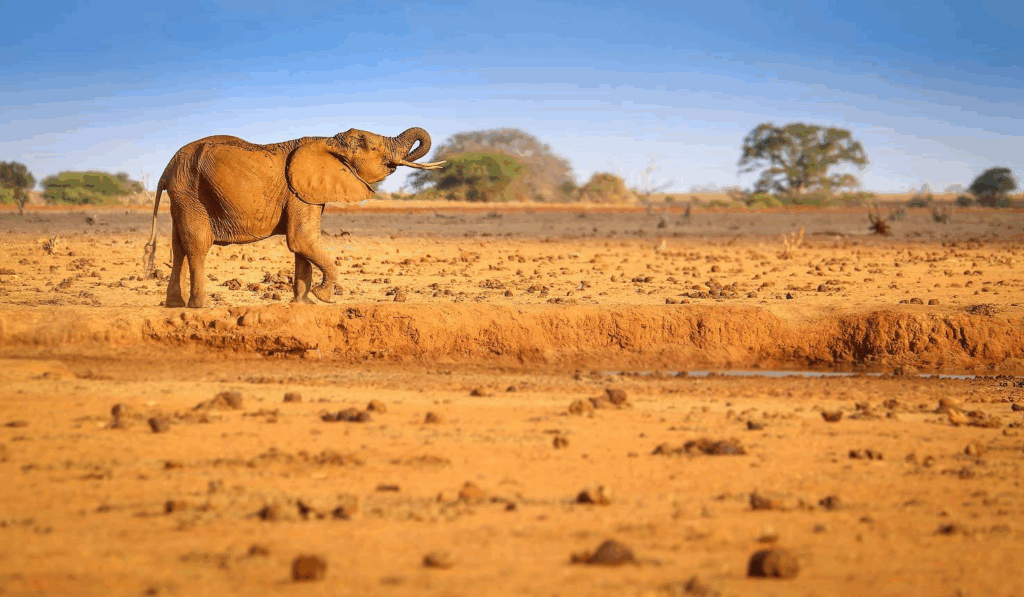
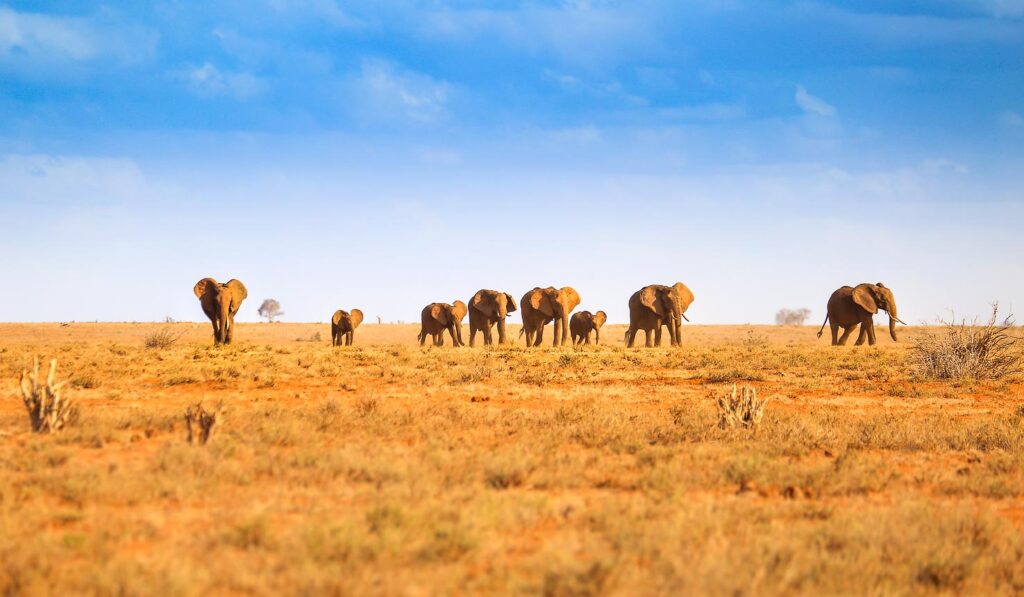
Elephants and Buffalos move between the Aberdares and neighboring protected areas through wildlife corridors, their presence testament to landscape-scale conservation connecting mountain and lowland habitats.
Colobus and Sykes’ Monkeys provide more reliable primate viewing, their troops crashing through forest canopies in spectacular acrobatic displays.
The Lodge Experience: Wildlife at Your Window
The Aberdare lodges—Treetops and The Ark—offer safari experiences fundamentally different from traditional game drive-based tourism. Built directly overlooking waterholes and salt licks, these elevated structures allow wildlife watching from comfortable lounges, dining rooms, and viewing decks.
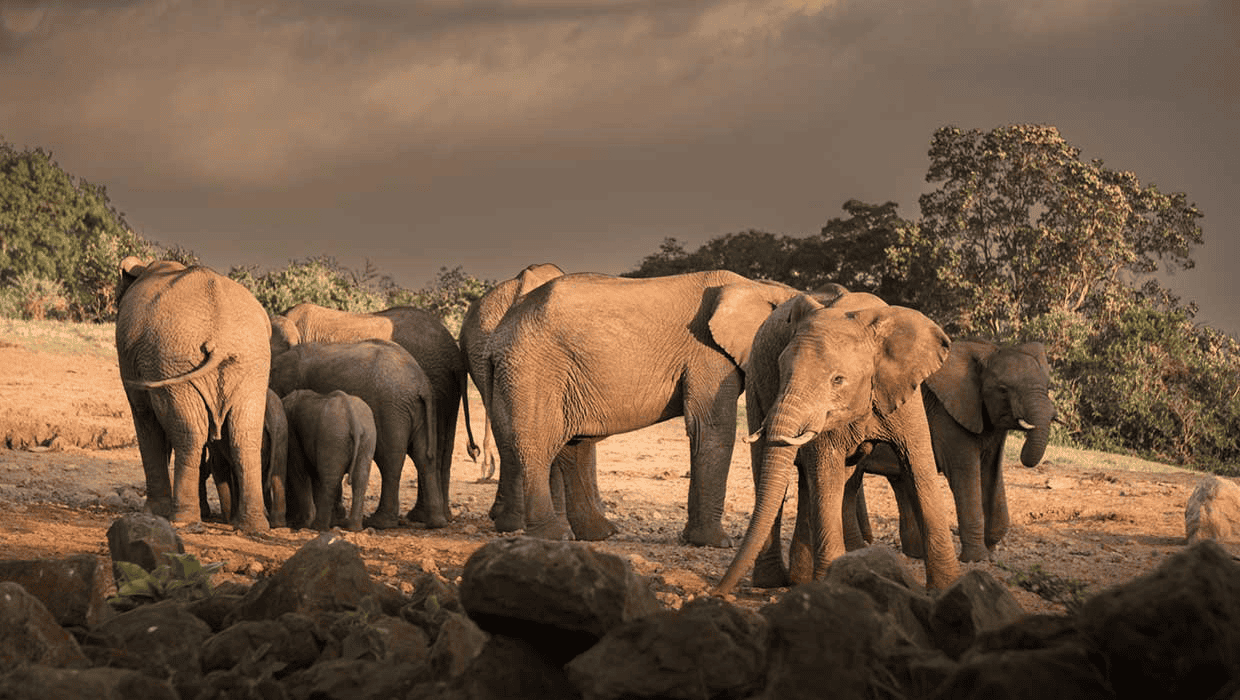
As dusk falls, floodlights illuminate the waterholes, revealing nocturnal visitors invisible during daylight hours. Elephants arrive for evening drinks, their massive forms moving silently from the forest. Buffalos gather in impressive numbers. And if fortune truly smiles, bongos might materialize from the bamboo, their shy nature slightly overcome by the attraction of mineral-rich salt licks.
The lodges provide buzzers in guest rooms—when particularly interesting animals appear, staff alert guests, creating midnight scrambles to viewing decks where rhinos, leopards, or rare forest species might be visible. It’s safari inverted—wildlife comes to you rather than you seeking wildlife.
Trout Fishing and Mountain Adventures
Beyond wildlife viewing, Aberdare National Park offers activities unusual for African parks. The cold, clear mountain streams support introduced brown and rainbow trout, creating fly-fishing opportunities in decidedly un-African settings. Anglers wade mountain streams surrounded by bamboo and forest, casting for trout while colobus monkeys observe curiously from overhead branches.
Hiking trails traverse the moorlands, offering multi-day trekking adventures for properly equipped and fit visitors. The trails reveal the park’s dramatic topography, its botanical diversity, and occasionally, spectacular wildlife encounters far from any vehicles.
Your Mountain Wilderness Awaits
Aberdare National Park proves that Kenya offers far more than savannah safaris. This is Africa’s highland soul—mist-shrouded, forest-covered, waterfall-adorned, and rich with rare wildlife found nowhere else.
From royal history to bongo mysteries, from thundering waterfalls to elevated lodges, your mountain adventure awaits in the Aberdares.