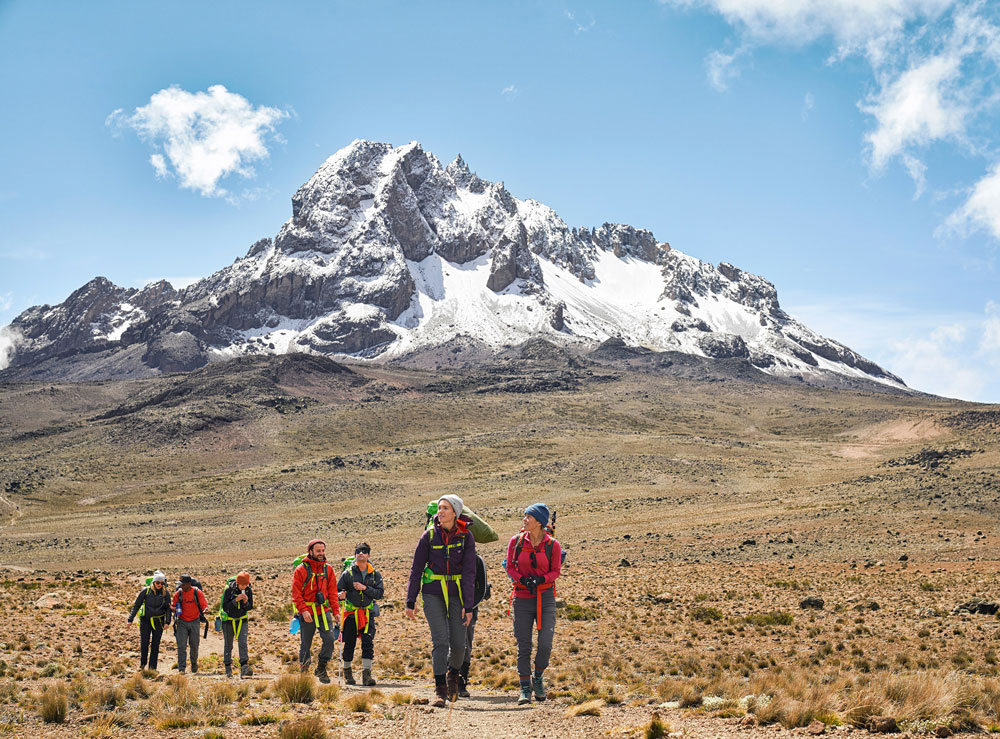
Mount Kenya National Park: Where Ice Crowns Africa’s Sacred Mountain
There’s a peculiar magic that happens when you wake at 3 a.m. at 4,800 meters altitude, step from your tent into air so cold it burns your lungs, and begin climbing through darkness toward Point Lenana’s summit. Your headlamp creates a small bubble of light in the overwhelming darkness. Stars blaze overhead with intensity impossible at lower elevations, the Milky Way so brilliant it casts shadows. And gradually—so slowly you almost don’t notice—the eastern horizon begins glowing: first gray, then pink, then progressively deeper shades of amber and gold.
Then you summit. And as the sun breaks the horizon, its first rays illuminate not just the landscape below but the ice-encrusted summit of Batian—Mount Kenya’s highest peak—just meters away, its glaciers glowing rose-gold in the dawn light. In that moment, standing on Africa’s second-highest mountain watching sunrise paint the sky while equatorial glaciers shimmer nearby, you understand why the Kikuyu people consider this mountain sacred, why it was named Kirinyaga—”place of light”—and why Mount Kenya National Park represents far more than geographical superlative.
Three Peaks: The Mountain’s Crown
Mount Kenya doesn’t present a single summit but rather a dramatic collection of peaks, each with distinct character and challenges:
Batian (5,199 meters)—the highest—stands as a technical climbing challenge requiring ropes, ice axes, and serious mountaineering skills. Its sheer faces and exposed ridges attract climbers worldwide seeking Africa’s ultimate alpine adventure.
Nelion (5,188 meters)—separated from Batian by the famous Gate of Mists—offers equally demanding routes, its dramatic spires creating silhouettes that define the mountain’s iconic profile.
Point Lenana (4,985 meters)—the third peak—provides the accessible summit experience for trekkers without technical climbing skills. Reaching Lenana requires determination and fitness but not ropes or ice axes, making it achievable for thousands who would never attempt Batian or Nelion’s technical routes.
Standing atop any of these peaks delivers profound satisfaction. You’ve ascended one of Africa’s highest mountains, experienced altitude that tests physical limits, and witnessed landscapes that exist in that rare space where tropical Africa meets alpine conditions creating ecosystems found nowhere else on Earth.
Glaciers on the Equator: A Vanishing Wonder
Mount Kenya’s glaciers—twelve remnant ice fields clinging to the highest peaks—create one of Earth’s most remarkable geographical paradoxes. These are equatorial glaciers, massive ice formations existing practically on the equator where logic suggests only heat and humidity should reign.
But mountains create their own climate rules. At 5,000+ meters, temperatures regularly drop below freezing despite the equatorial latitude. Precipitation falls as snow. And for millennia, these glaciers accumulated, shaped the landscape, fed rivers, and created the distinctive U-shaped valleys characteristic of glaciated terrain.
The tragedy: they’re disappearing. Climate change has accelerated glacial retreat dramatically—what took thousands of years to accumulate is vanishing within decades. Comparing historical photographs with current conditions reveals shocking losses. Some glaciers have disappeared entirely. Others cling precariously to the highest peaks, their retreat creating urgent reminders that climate change isn’t abstract future threat but present reality reshaping landscapes before our eyes.
Seeing these glaciers—touching ancient ice that fell as snow centuries ago—carries bittersweet poignancy. You’re witnessing natural wonders that may not survive another generation, glaciers that might exist only in photographs by the time your grandchildren visit this mountain.
Ecosystems Stacked Vertically
Mount Kenya National Park showcases remarkable ecological diversity resulting from dramatic elevation changes—from 2,000 meters at lower boundaries to over 5,000 meters at Batian’s summit. This 3,000-meter vertical gradient creates distinct vegetation zones stacked like ecological layer cake:
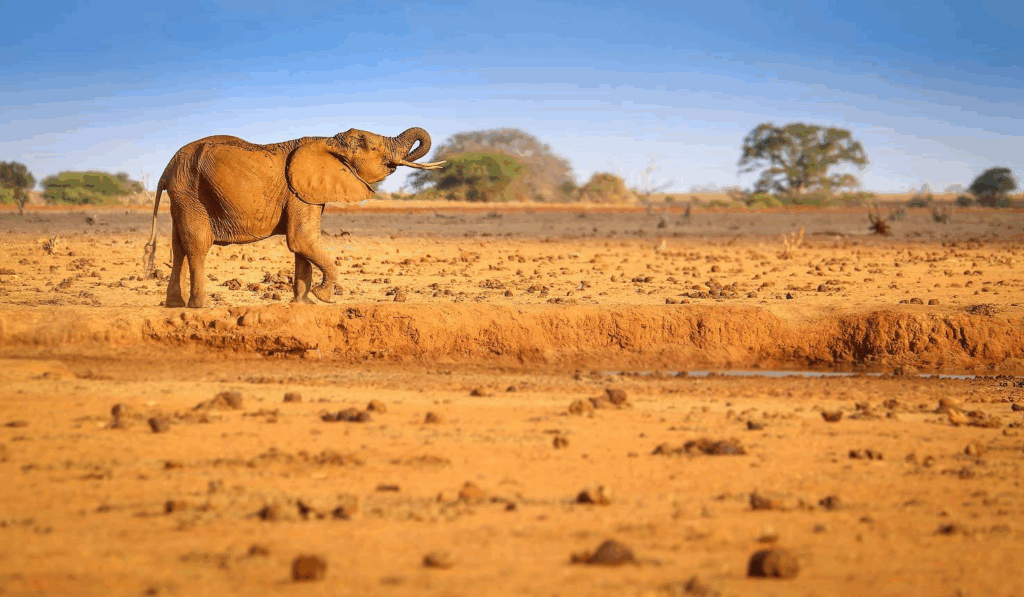
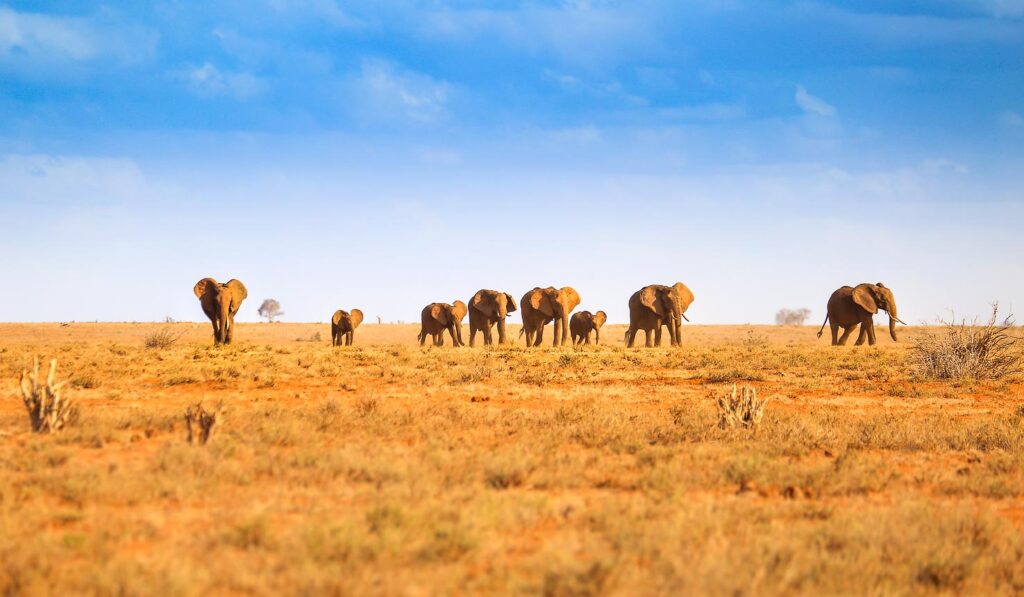
Montane Forest (2,000-3,000m) creates the mountain’s lush foundation. Dense rainforest dripping with moisture, ancient trees festooned with moss and epiphytes, and the constant sound of water trickling through undergrowth. Here, elephants browse, buffaloes wallow in forest streams, and colobus monkeys crash through the canopy.
Bamboo Zone (2,500-3,200m) transforms the forest into stands of giant bamboo creating cathedral-like spaces where sunlight filters through green canopy creating dappled patterns on the forest floor. This zone provides critical habitat for the elusive bongo—that magnificent, rare antelope whose chestnut coat and white stripes make it one of Africa’s most beautiful yet secretive creatures.
Afro-Alpine Moorland (3,200-4,500m) opens into landscapes that feel decidedly un-African. Giant groundsels and lobelias—plants that look like they escaped from Dr. Seuss illustrations—grow to improbable sizes. Tussock grasses carpet the high plateaus. And the temperature regularly drops below freezing at night, creating frost formations and occasionally even snow at these elevations.
Nival Zone (4,500m+) enters the realm of rock, ice, and snow where almost nothing grows, where oxygen becomes noticeably scarce, and where only the hardiest alpine specialists survive.
Wildlife at Altitude
Mount Kenya wildlife includes species adapted to conditions from tropical forest to alpine extremes. The lower forests harbor elephants, leopards, buffaloes, giant forest hogs, and various antelope species. Higher up, specialized creatures like rock hyraxes sun themselves on boulders, the endemic Mount Kenya mole rat burrows through volcanic soils, and occasionally, leopards patrol the moorlands hunting the rock hyraxes that form significant portions of their diet.
The birdlife proves equally diverse, with over 160 recorded species exploiting different elevation zones. The endemic Jackson’s francolin inhabits the moorlands, sunbirds visit the giant lobelias’ flowers, and various eagles ride the thermals created by the mountain’s topography.
The Sacred Mountain: Cultural Significance
For the Kikuyu people—Kenya’s largest ethnic group—Mount Kenya represents far more than geological feature. Kirinyaga, as they call it, is the dwelling place of Ngai, the supreme god. The mountain’s peaks point toward heaven, its glaciers shine with divine light, and its slopes provide the water sustaining life across central Kenya.
Traditional Kikuyu homesteads were built with doorways facing the mountain, prayers were offered toward Kirinyaga, and the mountain featured centrally in creation stories explaining the Kikuyu people’s origins. This cultural significance continues today, the mountain remaining a spiritual symbol even as modern life transforms surrounding landscapes.
Water Tower: Life-Giving Mountain
Beyond spiritual and recreational significance, Mount Kenya performs crucial ecological functions as water catchment. The mountain’s forests intercept moisture from passing clouds, its glaciers (while they last) store water, and its streams and rivers—fed by this captured moisture—flow outward in all directions, ultimately feeding the Tana and Ewaso Ng’iro river systems that provide water to millions of Kenyans.
This watershed function means Mount Kenya conservation isn’t merely about protecting climbing routes or wildlife habitat—it’s about safeguarding the very water sources enabling human civilization across central Kenya. Deforest the mountain’s slopes, and you reduce water capture. Destroy the moorlands, and you eliminate the natural sponges regulating water release. The mountain’s health directly determines water security for vast populations downstream.
Your Alpine Adventure Awaits
Mount Kenya National Park offers experiences spanning peaceful forest walks to challenging summit attempts, wildlife viewing to cultural exploration, comfortable lodge stays to wild camping above 4,000 meters.
Whether you summit Point Lenana, attempt Batian’s technical routes, or simply explore the lower forests, you’re engaging with one of Africa’s most iconic mountains—a UNESCO World Heritage Site where glaciers cling to equatorial peaks, where ecosystems stack vertically through multiple climate zones, and where the sacred and sublime intertwine.
Your journey to Africa’s place of light awaits.