
Elewana Tarangire Treetops
$ 486/ night
Tarangire Treetops Lodge by Elewana – Elevated Luxury on the Edge of Tarangire National Park

Tanzania · Tarangire
Tanzania's highest elephant density, with far fewer vehicles than the Serengeti, verified by a team that has stayed in every lodge on this list.




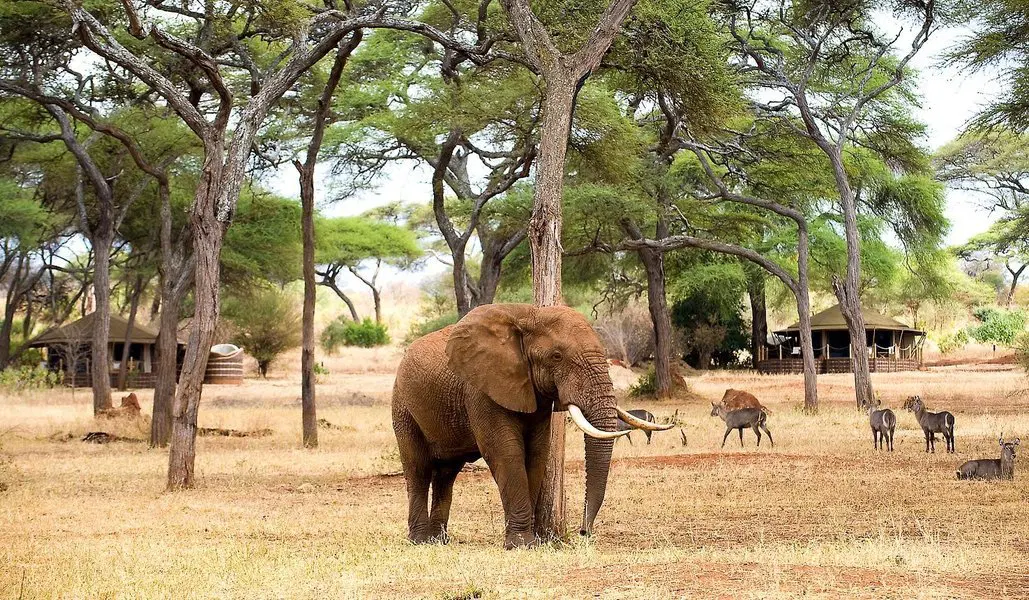
Tarangire gets treated as a warm-up act before the Serengeti and Ngorongoro, and that reputation undersells it badly. This park holds the highest elephant density anywhere in Tanzania, herds of 300 or more gathering along the Tarangire River in dry season, and the second-highest overall wildlife density in the country after the Serengeti itself. It just does this with a fraction of the vehicles.
We have stayed at properties across the park. Below is what makes Tarangire worth more than a single rushed day between bigger names.
Our full curated list, in one place.
3 properties in this collection
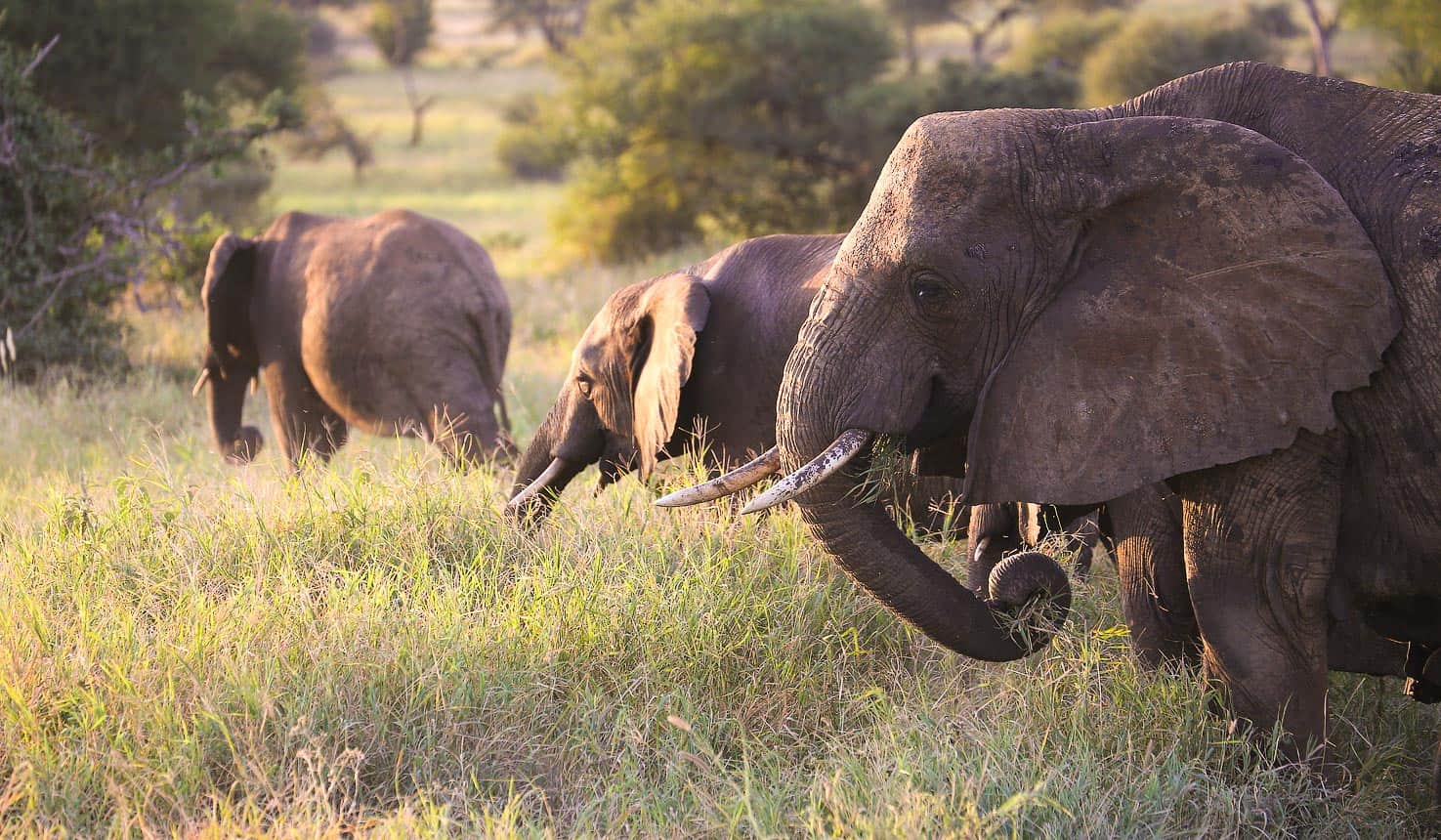
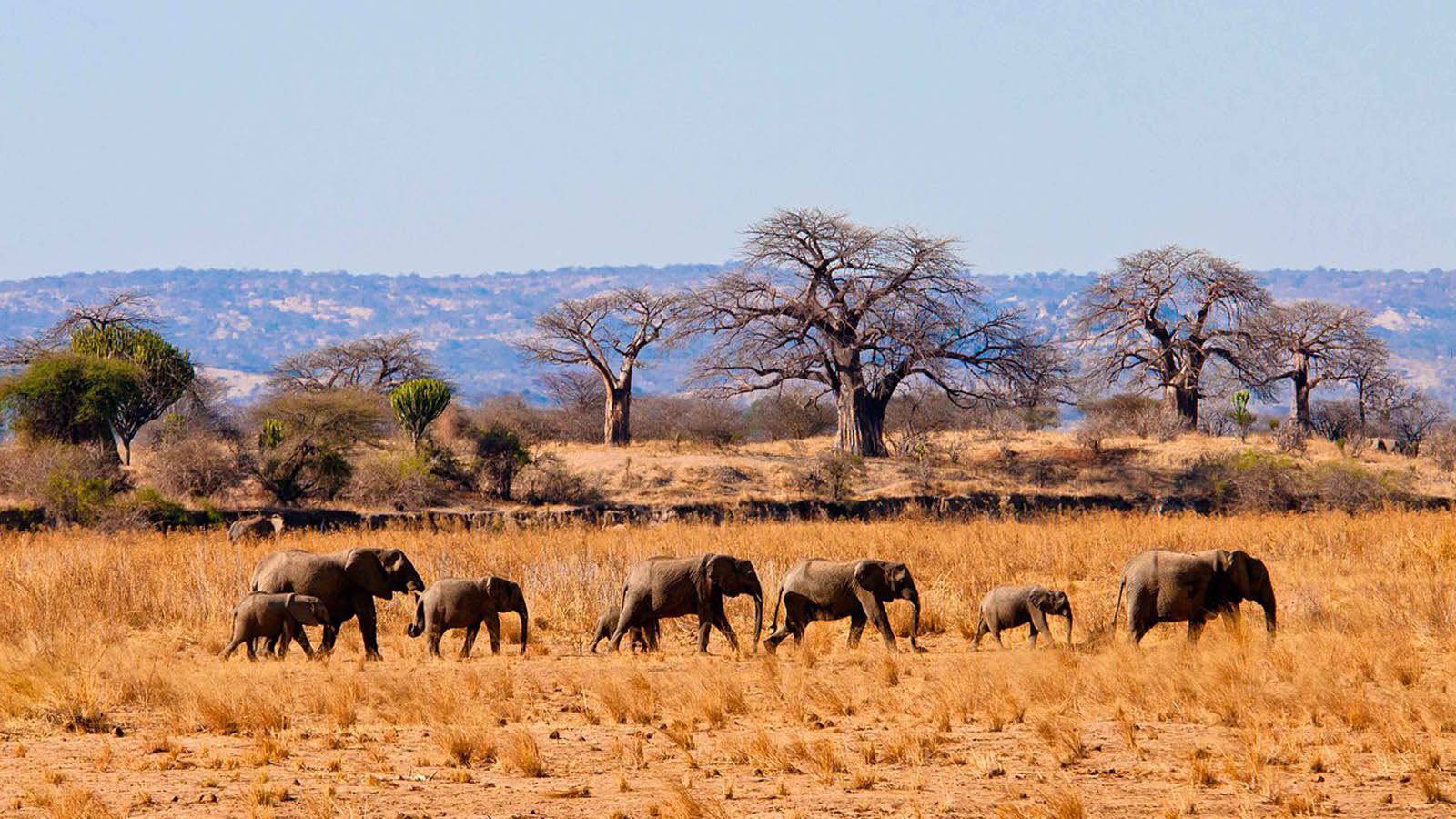
During dry season, herds of 300 or more elephants converge on the Tarangire River, the only permanent water source in the region, creating one of East Africa’s most reliable large-mammal gatherings outside the Serengeti’s migration system itself. Fewer vehicles mean you can often watch these herds without another car in sight, a genuinely different experience from a crowded Serengeti sighting.
Tarangire holds the highest density of baobab trees in East Africa, some estimated at over a thousand years old, their silhouettes becoming one of the park’s defining images at dusk. Around the Silale Swamp specifically, lions have been documented climbing into sausage trees to rest above the heat and insects below, a behaviour recorded in only a handful of places on the continent.
Tarangire has recorded over 550 bird species, genuinely more than the Serengeti, including the yellow-collared lovebird, found nowhere else, and the Kori bustard, one of the heaviest flying birds on Earth. For birders specifically, this park often outperforms its more famous neighbours
Tarangire does not hold a rhino population, the one gap in an otherwise strong wildlife list. Most itineraries solve this by pairing Tarangire with Ngorongoro Crater, which reliably delivers rhino sightings alongside the rest of the Big Five, rather than treating either park as sufficient on its own for a full Big Five checklist.
June through October brings the dry season and the strongest river concentrations of wildlife. January and February bring calving season, greener scenery and noticeably fewer visitors, along with lower rates. One practical detail worth knowing: Tarangire’s park entry fee is valid for 24 hours from the time you enter, not a calendar day, which affects how you plan an early-morning versus late-afternoon visit.
At roughly two hours from Arusha, Tarangire is the closest major park on the northern circuit, which tempts many itineraries into treating it as a single rushed day. Two days lets you actually slow down here, the park rewards unhurried observation more than a fast checklist of sightings.
Tell us how much time you have and whether rhinos matter to your trip. We will build a private itinerary, pairing Tarangire with Ngorongoro if it does.
Tell us which lodges you're considering and when you'd like to travel. We reply within 24 hours with a private itinerary built around it.