There’s a magical moment, usually around mid-afternoon, when the light transforms into a warm honey-gold and dust dances gently in the air. As you round a bend in Tarangire National Park, you’re greeted by your first elephant super-herd, not ten elephants, not fifty, but hundreds, perhaps a thousand, creating a magnificent, living tapestry of gray across the floodplains. With matriarchs guiding family groups, playful youngsters exploring their developing trunks, and massive bulls moving with unexpected grace, you can’t help but feel inspired by the ancient baobabs standing tall like botanical cathedrals, witnesses to the beauty of life unfolding on the African earth.
This is Tarangire, Tanzania’s magnificent secret, receiving a mere fraction of the Serengeti’s visitors despite wildlife concentrations that during dry season rival anywhere in Africa. While tourists crowd the northern circuit’s famous parks, those who discover Tarangire experience something increasingly precious: genuine exclusivity in landscapes so spectacular they feel almost mythical.
The Elephant Kingdom
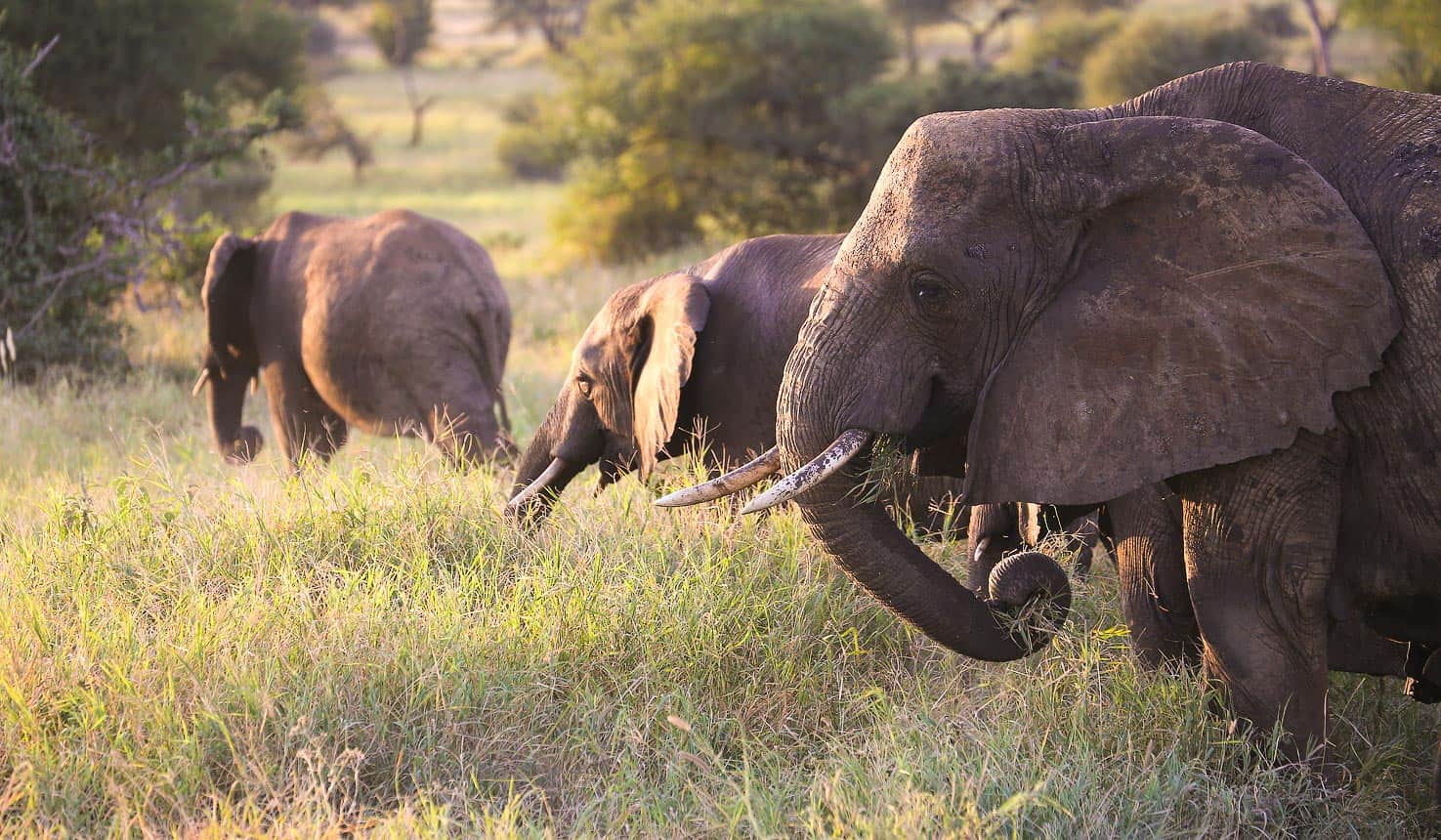
If Tarangire National Park were to choose a monarch, elephants would reign supreme. During the dry season (June-November), over 3,000 elephants converge on this 2,850-square-kilometer park, creating the largest elephant concentrations in Tanzania outside the Serengeti ecosystem. These aren’t merely numbers—they’re family reunions spanning generations, social networks more complex than most human organizations, and matriarchal societies where wisdom literally determines survival.
Watch an elephant family at a waterhole and you witness evolution’s masterpiece. The matriarch—perhaps 50+ years old, her tusks worn smooth from decades of digging for minerals—assesses the situation with intelligence that seems almost human. She determines when it’s safe to approach, which family members drink first, how long they can remain vulnerable at the water’s edge. Her decisions, accumulated over decades of dry seasons, droughts, and dangers, keep her family alive.
The youngsters provide endless entertainment. Baby elephants—all flapping ears, uncoordinated trunks, and unbounded curiosity—explore everything with the fearless enthusiasm of toddlers convinced the world exists solely for their amusement. They practice using trunks they haven’t quite mastered, attempting to spray water only to soak themselves instead. They challenge each other to play-fights that will establish dominance hierarchies years hence. And they stay remarkably close to protective mothers who can—and will—destroy anything threatening their offspring.
The bulls live differently. Some travel with family groups, but the largest males often move independently or in loose bachelor coalitions, their massive frames and impressive tusks declaring their status. During dry season, when bulls converge on the Tarangire River, you might witness dominance battles—two giants facing off, tusks locked, trunks intertwined in trials of strength that shake the ground.
Baobabs: Living Monuments to Time
The Tarangire baobabs deserve their own mythology. These impossibly ancient trees—some estimated at 600+ years old—dominate the landscape with trunks so massive that forty people linking hands couldn’t encircle them. Their distinctive silhouettes create Tarangire’s signature aesthetic: gnarled branches reaching skyward like arthritic fingers, smooth bark glowing silver in moonlight, hollowed trunks sometimes large enough to shelter entire safari groups.
The baobabs store between 300 and 900 liters of water in their spongy trunks—liquid reserves enabling survival through brutal droughts when everything else withers. Elephants know this, and during desperate dry seasons, they sometimes strip baobab bark to access this precious moisture. The trees bear these wounds stoically, their remarkable regenerative abilities eventually healing the scars, though sometimes attacks prove fatal, leaving massive dead baobabs standing like botanical ghosts across the savannah.
But living baobabs create ecosystems unto themselves. Their cream-colored flowers—pollinated by fruit bats in mutually beneficial relationships—bloom spectacularly. The fruits provide vitamin-rich sustenance for countless species. Cavities in their trunks shelter hornbills, owls, and occasionally even leopards. And beneath their shade, entire food chains flourish in the cooler microclimates their massive canopies create.
The Tarangire River: Liquid Lifeline
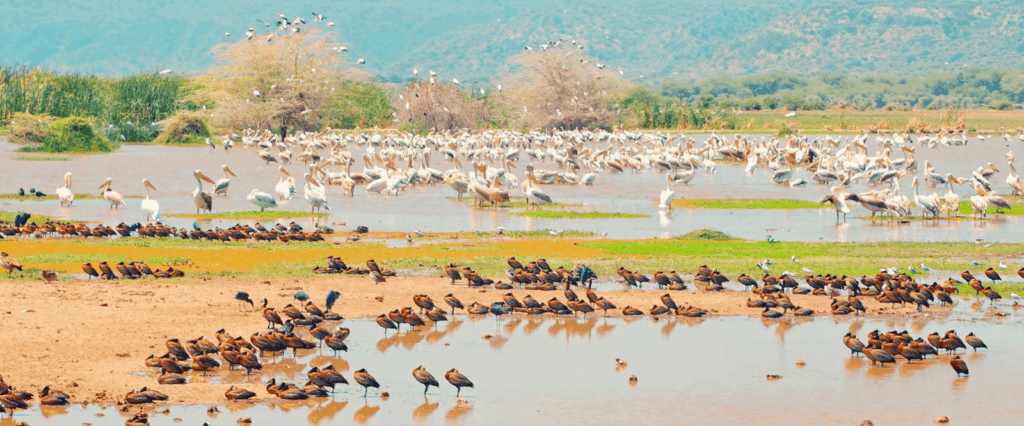
The permanent Tarangire River—the park’s namesake and defining feature—creates the magnetism drawing thousands of animals during the dry season. When surrounding areas desiccate completely, when seasonal waterholes evaporate into cracked mud, when other parks watch their wildlife disperse seeking water, Tarangire’s river continues flowing, creating an oasis that concentrates wildlife in spectacular densities.
The riverbanks become nature’s stage where life-and-death dramas play out daily. Zebras approach nervously, aware that crocodiles lurk in the murky water. Wildebeest herds thunder down to drink en masse, finding safety in numbers. Buffalo congregations—sometimes numbering thousands—monopolize choice spots, their collective aggression deterring most predators. And lions patrol the margins patiently, knowing thirsty prey must eventually risk approaching water.
The river creates ribbon-like aquatic forests—dense vegetation corridors supporting entirely different species than surrounding grasslands. Here, waterbucks browse, pythons sun themselves on overhanging branches, kingfishers dive for fish, and occasionally, leopards rest in the dappled shade before emerging at dusk to hunt.
Species Found Nowhere Else
Tarangire National Park Tanzania harbors several species rarely or never seen elsewhere in Tanzania, making visits essential for comprehensive wildlife checklists. The fringe-eared oryx—a distinctive subspecies with tasseled ears unique to northern Tanzania—grazes the open plains. Greater kudu, those magnificent spiral-horned antelopes typically associated with Southern Africa, browse the thickets. And the Ashy starling—an endemic bird found nowhere on Earth outside Tanzania—chatters in acacia woodlands.
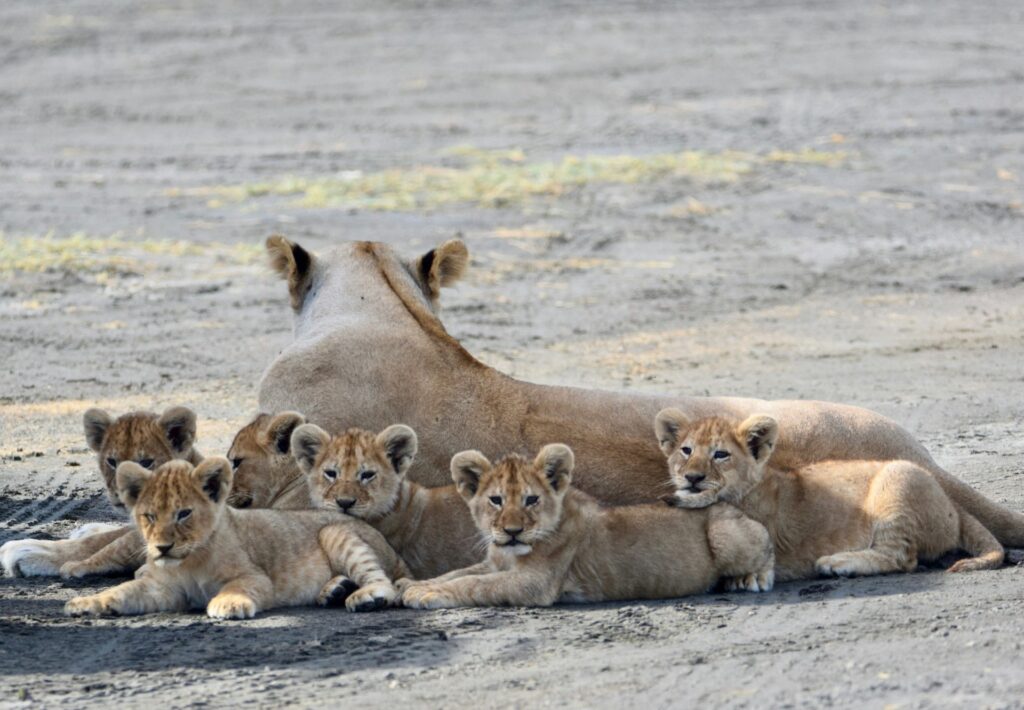
These specialties, combined with healthy populations of lions, leopards, cheetahs, and buffalos (four of the Big Five—rhinos are absent), create exceptional wildlife diversity. You might spend morning photographing a leopard lounging in a sausage tree, afternoon watching cheetahs hunting across open grasslands, and evening observing a lion pride attempting to bring down a buffalo—all in a single day.
Beyond the Vehicle: Alternative Adventures
Tarangire embraces adventure beyond traditional game drives. Walking safaris with armed rangers transform your perspective from passive observer to active participant. Suddenly, you’re tracking animals from spoor, identifying birds by call, learning about medicinal plants, and experiencing the visceral thrill of encountering buffalo on foot.
Hot-air balloon safaris at dawn offer aerial perspectives revealing wildlife patterns invisible from ground level—elephant migration routes worn into the landscape, seasonal waterholes, the intricate relationship between vegetation and topography.
Night drives reveal Tarangire’s nocturnal residents: civets, genets, porcupines, bat-eared foxes, hunting leopards, and the occasionally spine-chilling sight of lion eyes reflecting your spotlight, the predators actively hunting in darkness.
The Forgotten Migration
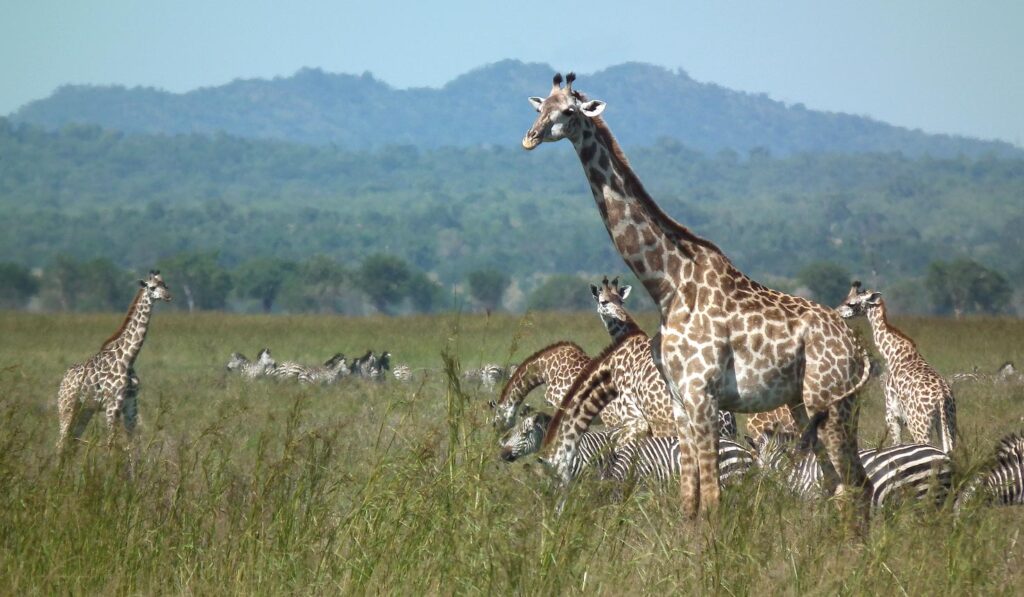
While the Serengeti’s Great Migration dominates Tanzania tourism marketing, Tarangire hosts its own impressive seasonal movement. During the dry season, wildebeest, zebras, gazelles, and countless other species converge on the park from surrounding areas. As rains arrive (November onwards), they disperse across the Maasai Steppe toward Lake Manyara, only to return when the next dry season arrives.
This migration—though less dramatic than the Serengeti’s—creates dynamic wildlife viewing where populations fluctuate seasonally, ensuring that Tarangire offers different experiences depending on when you visit.
Your Exclusive Elephant Paradise Awaits
Tarangire National Park delivers what thoughtful travelers increasingly value: exceptional wildlife without excessive tourism, spectacular landscapes unmarred by vehicle congestion, and the satisfaction of discovering a genuine gem overlooked by the masses rushing toward more famous destinations.
This is Tanzania beyond the crowds—where elephants roam by the thousands, baobabs stand like ancient monuments, and you might have entire herds to yourself.
Your Tarangire discovery awaits beneath those impossible baobabs.