Murchison Falls National Park: Uganda’s Largest Wildlife Sanctuary & Mighty Waterfall
Sprawling across 3,893 square kilometers of northwestern Uganda, Murchison Falls National Park stands as the country’s largest, oldest, and arguably most spectacular protected area. Established in 1952, this magnificent wilderness takes its name from the dramatic Murchison Falls—where the mighty Victoria Nile explodes through a narrow 7-meter gorge with such thunderous force that the ground trembles, permanent mist rises skyward, and rainbows dance in the spray. This geological marvel, combined with exceptional wildlife populations, diverse ecosystems, and the legendary Nile River bisecting the park, creates Uganda’s most comprehensive and iconic safari destination.
The Murchison Falls National Park Uganda experience delivers everything serious safari enthusiasts seek: the Big Four (lacking only rhinos from the complete Big Five), rare Rothschild’s giraffes found in few other locations, legendary boat cruises revealing hippos and enormous Nile crocodiles, chimpanzee trekking in ancient Budongo Forest, and over 450 bird species creating ornithological paradise. This is Uganda safari at its absolute finest—where dramatic landscapes, abundant wildlife, and the Nile’s timeless power combine memorably.
The Spectacular Murchison Falls: Nature’s Raw Power
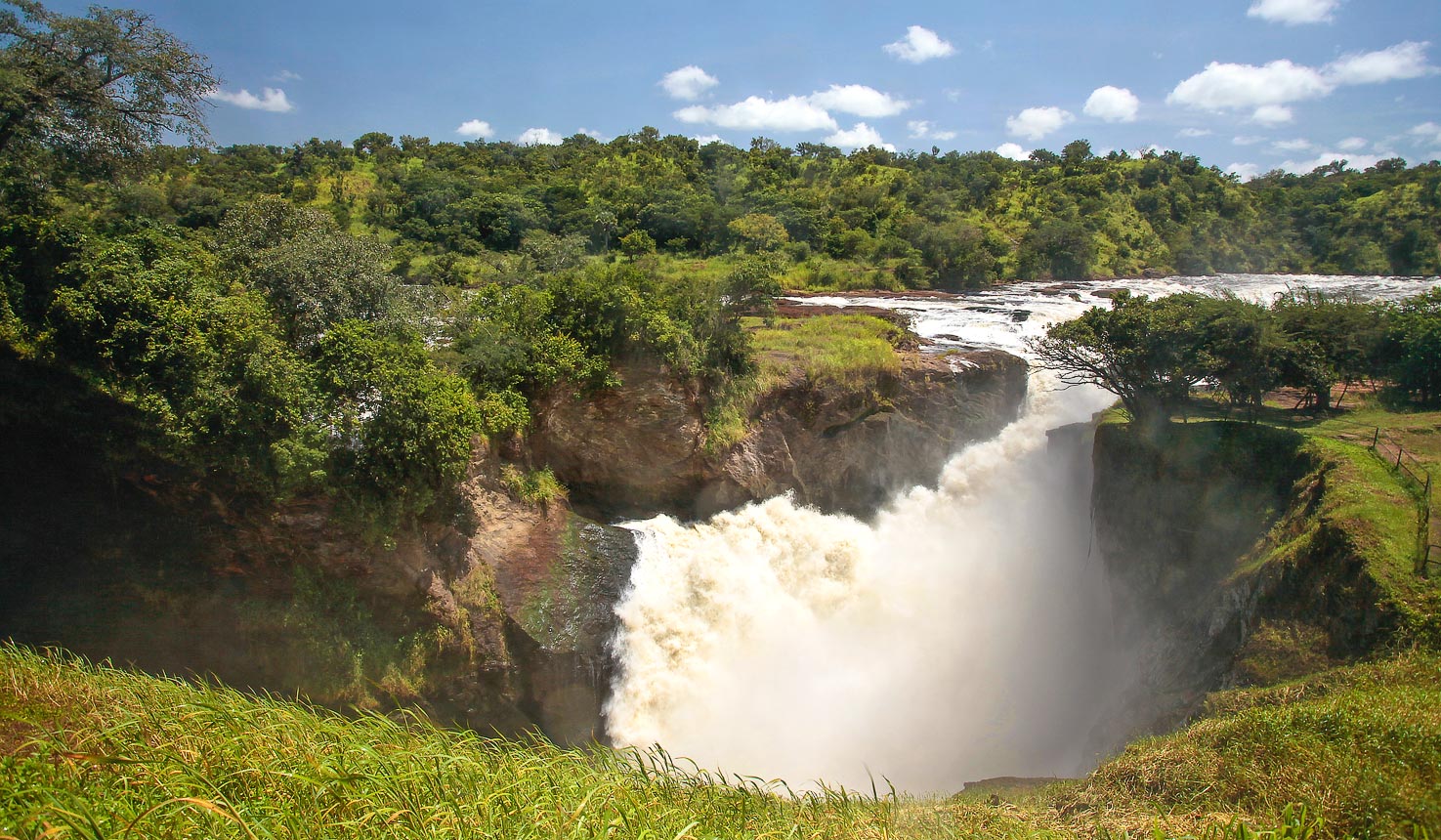
The Murchison Falls themselves justify visits to this remarkable park. Imagine the world’s longest river—the Nile—carrying the entire outflow from Lake Victoria and Lake Albert, suddenly forced through a rocky gorge barely seven meters wide. The result proves spectacular: approximately 300 cubic meters of water per second exploding through this narrow gap, plunging 43 meters in violent rapids, and creating a permanent cloud of mist visible for kilometers.
Sir Samuel Baker—the British explorer who “discovered” the falls for European audiences in 1864—named them after Sir Roderick Murchison, then president of the Royal Geographical Society. The local name “Kabalega Falls” honors Omukama Kabalega, the powerful Bunyoro king who resisted British colonization, though internationally the Murchison name persists.
Viewing the Falls: Multiple Perspectives
Murchison Falls National Park offers diverse viewpoints revealing different aspects of this natural wonder:
Top of the Falls: The most dramatic perspective positions you mere meters from where the Nile compresses into the narrow gorge. Feel the ground vibrate from water’s force, experience mist soaking your skin, hear the deafening roar drowning conversation, and watch the emerald-green Nile transform into white fury. The short hike from the road rewards with life-changing views and spectacular photography opportunities.
Bottom of the Falls: Boat cruises approach the falls from downstream, revealing the full 43-meter cascade from river level. This perspective emphasizes the falls’ power and scale while allowing observation of wildlife congregating along the Nile’s lower reaches—hippos, crocodiles, elephants drinking, and countless waterbirds.
Rainbow Viewpoint: A lesser-known vantage point offers oblique views where afternoon sun creates permanent rainbows in the falls’ mist—magical for photographers and romantics alike.
The Nile River: Uganda’s Ultimate Wildlife Highway
The Victoria Nile bisecting Murchison Falls National Park creates the defining feature shaping visitor experiences and wildlife distribution. This legendary river—flowing from Lake Victoria toward Lake Albert and eventually the Mediterranean Sea—provides permanent water attracting concentrated wildlife year-round.
Launch Trip to the Falls: Essential Experience
The Murchison Falls boat safari ranks among Africa’s greatest wildlife viewing experiences. These 3-hour journeys departing from Paraa—the park headquarters—cruise upstream toward the falls’ base, revealing extraordinary wildlife concentrations along both riverbanks:
Hippo Mega-Pods: The Nile supports one of Africa’s highest hippo densities, with pods sometimes exceeding 100 individuals. Boats approach remarkably close to these massive creatures wallowing in cool water, revealing their surprisingly delicate social interactions despite formidable size and aggression.
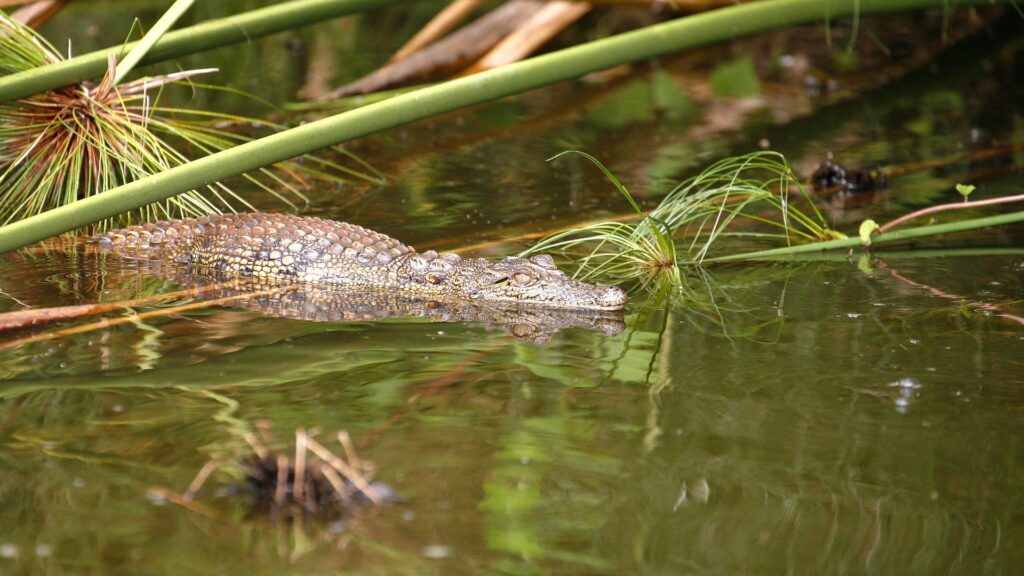
Nile Crocodile Concentrations: Massive Nile crocodiles—sometimes exceeding six meters in length—bask on muddy banks. These prehistoric predators, unchanged for millions of years, demonstrate the Nile’s productivity supporting apex predators at such densities.
Elephant River Crossings: Family groups approach riverbanks throughout the day—drinking deeply, bathing playfully, and sometimes swimming across between northern and southern park sectors. Observing elephants from water level provides unique perspectives impossible from safari vehicles.
Buffalo Herds: Massive buffalo congregations—sometimes numbering thousands—gather along the Nile during dry seasons, creating spectacular sighting opportunities.
Waterbird Paradise: The river attracts extraordinary avian diversity—African fish eagles calling territorially, countless kingfisher species, goliath herons standing over a meter tall, saddle-billed storks wading majestically, and the rare shoebill occasionally appearing in papyrus fringes.
Delta Boat Cruise: Birding Paradise
Alternative boat safaris explore the Victoria Nile’s delta where it enters Lake Albert. This vast wetland system—less visited than the falls cruise—proves exceptional for waterbird photography and offers different wildlife viewing opportunities in more remote settings.
Exceptional Wildlife: The Big Four Plus Rarities
Murchison Falls National Park wildlife includes impressive diversity and healthy populations of flagship species:
The Big Four
While lacking rhinos (locally extinct due to poaching decades ago, though reintroduction is discussed), the park hosts substantial populations of four Big Five members:
Lions: Multiple prides patrol the northern savannah, with the Buligi area particularly productive for lion sightings. Early morning and evening game drives regularly reveal these apex predators.
Leopards: Though secretive and solitary, leopards appear with surprising frequency—particularly along riverine forests and rocky outcrops providing ambush opportunities and daytime refuges.
African Elephants: The park supports over 1,200 elephants—a remarkable recovery from near-extinction during Uganda’s civil conflicts. Family herds and impressive bulls provide consistent sighting opportunities.
Cape Buffalo: Massive herds numbering thousands graze the Buligi Plains and Nile valley, while dangerous “dagga boys” (solitary old bulls) lurk in thickets.
Rothschild’s Giraffe: Rare Subspecies
Murchison Falls harbors significant populations of endangered Rothschild’s giraffe—one of Africa’s rarest giraffe subspecies with fewer than 3,000 individuals remaining globally. These distinctive giraffes—identified by white “stockings” extending above their knees and no markings on lower legs—browse acacia canopies across the northern savannah, their presence representing major conservation victories.
Diverse Herbivore Communities
The savannah supports Jackson’s hartebeest, oribi, Uganda kob (the park emblem), warthogs, bushbucks, waterbucks, and during wet seasons, the rare patas monkey inhabits grassland edges.
Budongo Forest: Chimpanzee Trekking Paradise
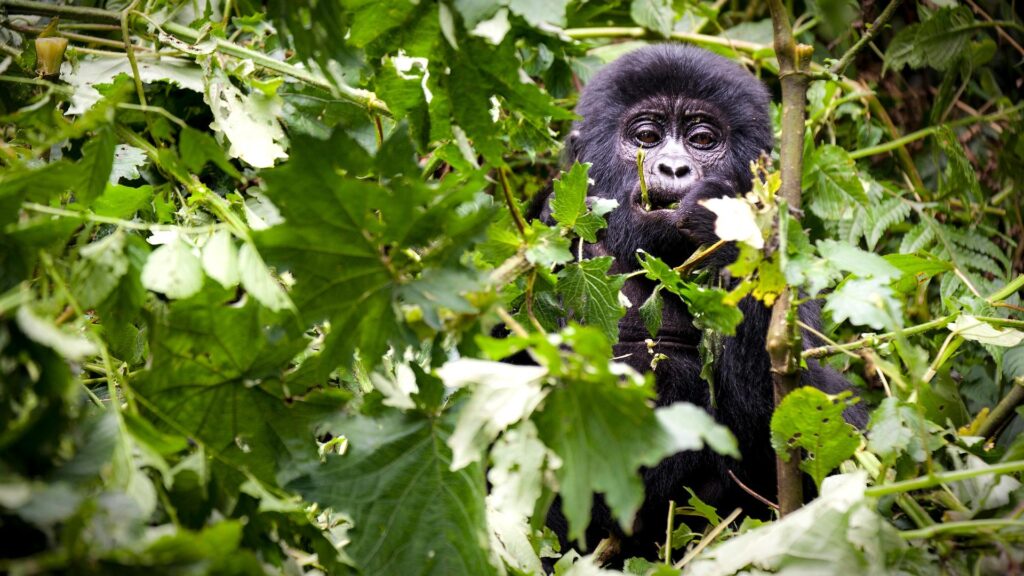
Adjacent to Murchison Falls National Park’s southern boundary, Budongo Forest Reserve protects one of East Africa’s largest mahogany forests and supports approximately 800 chimpanzees—making it Uganda’s second-most important chimp habitat after Kibale.
Chimpanzee Trekking Experiences
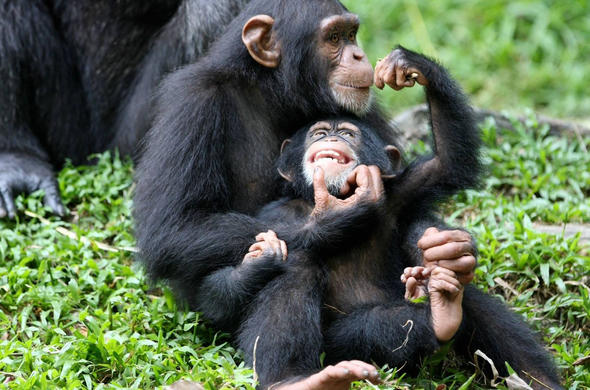
Chimpanzee trekking Murchison occurs in Budongo’s Kaniyo Pabidi sector, where several habituated communities tolerate human observation. Morning treks typically locate chimps feeding in fruit-laden trees, with allocated hours allowing observation of complex social behaviors, tool use, and family dynamics.
Budongo’s large mahogany trees—some exceeding 200 years old—create cathedral-like forest atmosphere, while the chimp communities’ size (sometimes 60+ individuals) enables observation of fascinating intra-group politics and cooperation.
Beyond chimpanzees, Budongo harbors blue monkeys, olive baboons, black-and-white colobus, and over 360 bird species including forest specialists rarely seen elsewhere in Uganda.
Diverse Landscapes Supporting Biodiversity
Murchison Falls National Park encompasses remarkable habitat diversity:
Savannah Grasslands: The northern Buligi Plains epitomize classic African savannah—golden grasslands dotted with acacia and borassus palms, perfect for wildlife observation and photography.
Riverine Woodlands: Dense forests along the Nile provide wildlife corridors, elephant feeding grounds, and leopard territories.
Wetlands: Seasonal and permanent swamps support specialized species and concentrate wildlife during dry periods.
Combretum Woodland: Southern park sections feature distinctive vegetation creating different wildlife viewing experiences.
Exceptional Birdwatching: 450+ Species
Murchison Falls National Park ranks among Uganda’s premier birding destinations with over 451 recorded species spanning savannah, forest, and aquatic habitats. Notable species include the grey-crowned crane (Uganda’s national bird), Abyssinian ground hornbill, shoebill storks, goliath herons, and countless others representing nearly every East African bird family.
Optimal Safari Seasons
Murchison Falls delivers year-round wildlife viewing with seasonal advantages:
December-February & June-September (Dry Seasons): Peak wildlife concentrations, easiest road access, optimal game viewing, though higher visitor numbers require advance booking.
March-May & October-November (Wet Seasons): Lush scenery, fewer tourists, excellent birding, lower rates, though some tracks may prove challenging.
Your Ultimate Murchison Adventure Awaits
Murchison Falls National Park represents Uganda’s most comprehensive safari destination—combining dramatic natural wonders, exceptional wildlife, legendary Nile experiences, and ancient forests into transformative East African adventures.