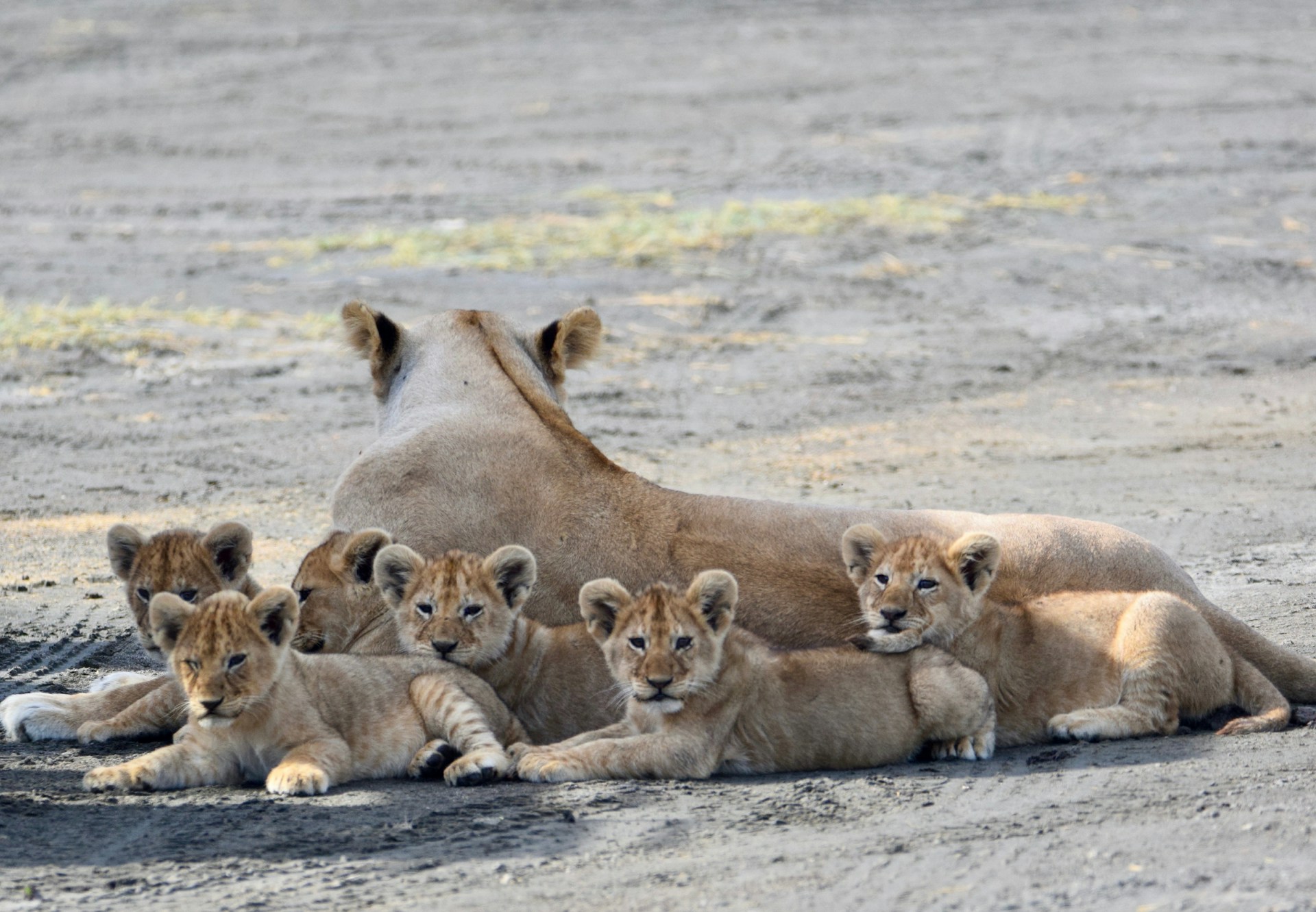
There’s a special kind of silence that exists only in places where humans rarely venture, not the absence of sound, but rather nature’s symphony playing uninterrupted by civilisation’s static. In Katavi National Park, deep in Tanzania’s remote western reaches, this silence speaks volumes. Here, where the rift escarpment cradles one of Africa’s last great wildernesses, you’re more likely to encounter a pride of lions on your morning game drive than another safari vehicle all week.
This is Africa as it existed before tourism, before roads carved through every landscape, before “peak season” meant jostling for position to photograph the same lion everyone else is photographing. Katavi National Park Tanzania offers something increasingly rare and infinitely precious: genuine isolation in spectacularly wild country where nature still dictates the rhythm and humans remain respectful guests rather than entitled spectators.
Where Buffalo Darken the Plains
Imagine standing on a rise overlooking the Katuma River floodplains as the dry season reaches its crescendo. Below you, stretching to the horizon, thousands upon thousands of Cape buffalo gather in what might be the largest buffalo herds on Earth. Not hundreds. Not a few thousand. But vast, dark rivers of buffalo flowing across golden grasslands—ten thousand, twenty thousand, perhaps more—their collective movement creating dust clouds visible for kilometers, their rumbling calls a bass note that vibrates through your chest.
This is Katavi’s signature spectacle, yet remarkably few people witness it. While the Serengeti hosts hundreds of thousands of visitors annually, Katavi welcomes merely a few hundred hardy souls seeking wilderness over convenience, isolation over Instagram opportunities, authenticity over air-conditioned comfort.
The buffalo congregations prove merely the opening act. As waterholes shrink under the relentless dry season sun, other dramas unfold across Katavi’s 4,471 square kilometers of protected wilderness.
The Hippo Pools: Nature’s Most Intimate Theater
The Katuma River, during wet seasons a substantial waterway meandering through the park, transforms dramatically as months pass without rain. What were once broad channels supporting dispersed hippo populations contract into isolated pools, creating wildlife concentrations that defy belief.
Picture a muddy pool perhaps fifty meters across. Now imagine 200 hippos packed into this shrinking oasis, their massive bodies pressed together so tightly they have no choice but to lie literally on top of each other. The smell hits you first, a pungent cocktail of mud, hippo waste, and decomposing vegetation. The sound follows: grunts, bellows, territorial disputes, and the wet slap of bodies jostling for position.
This isn’t comfortable coexistence. It’s survival strategy born of desperation, ancient instincts compelling these semi-aquatic giants to remain in water despite the overcrowding. At night, they emerge to graze, each hippo traveling up to ten kilometers seeking grass, then returning before dawn to their crowded pool refuge from the scorching sun.
Crocodiles congregate similarly—massive Nile crocodiles, some exceeding five meters in length, basking in writhing piles along muddy banks. These prehistoric predators, normally solitary and territorial, temporarily tolerate proximity when dry season concentrates both crocodiles and prey around remaining water sources.
Watching this survival drama unfold creates wildlife viewing that’s raw, unfiltered, and occasionally uncomfortable. This isn’t Disney Africa. This is nature revealing both its brutality and its remarkable adaptability.
The Spirit of Katabi: Where Legend Lives
Every landscape holds stories, but in Katavi National Park, one story towers above the rest—quite literally. Deep in the park stands an enormous tamarind tree, gnarled and ancient, its massive trunk and spreading branches creating cathedral-like shade. Local tradition identifies this as the dwelling place of Katabi’s spirit—a legendary huntsman whose prowess was so extraordinary that his essence remains, watching over the animals he once pursued.
Visitors leave offerings at the tree’s base—sometimes coins, sometimes beads, occasionally whispered prayers or simple gestures of respect. It’s a practice that transcends religion or specific belief, becoming instead a recognition of something larger than ourselves, an acknowledgment that certain places and certain stories deserve reverence.
The tamarind itself seems aware of its significance. It stands apart from surrounding vegetation, commanding presence, its shade a gathering place for wildlife. Elephants frequently rest beneath its branches, as if they too sense the spirit residing here. Whether you believe in such things matters less than the feeling the place evokes—a connection to the land’s history, to the people who’ve lived alongside these animals for millennia, to the mysterious relationship between humans and wilderness.
Habitats Woven Together
Katavi National Park proves that “untouched wilderness” doesn’t mean monotonous landscape. The park weaves together remarkably diverse ecosystems, each supporting specialized wildlife communities.
The miombo woodlands—characteristic of much of southern and central Africa—dominate higher ground. These deciduous woodlands, with their distinctive Brachystegia trees, flush vibrant green during rains then transform to copper and gold as the dry season progresses. Here, roan antelope and sable antelope—both magnificent, horse-sized antelopes with sweeping curved horns—browse in dappled shade, their rich chestnut and black coats blending into woodland shadows.
Riverine forests follow watercourses, creating dense green ribbons through drier landscapes. These gallery forests harbor different species: vervets chatter in the canopy, bushbucks browse the understory, and leopards find perfect ambush positions in overhanging branches.
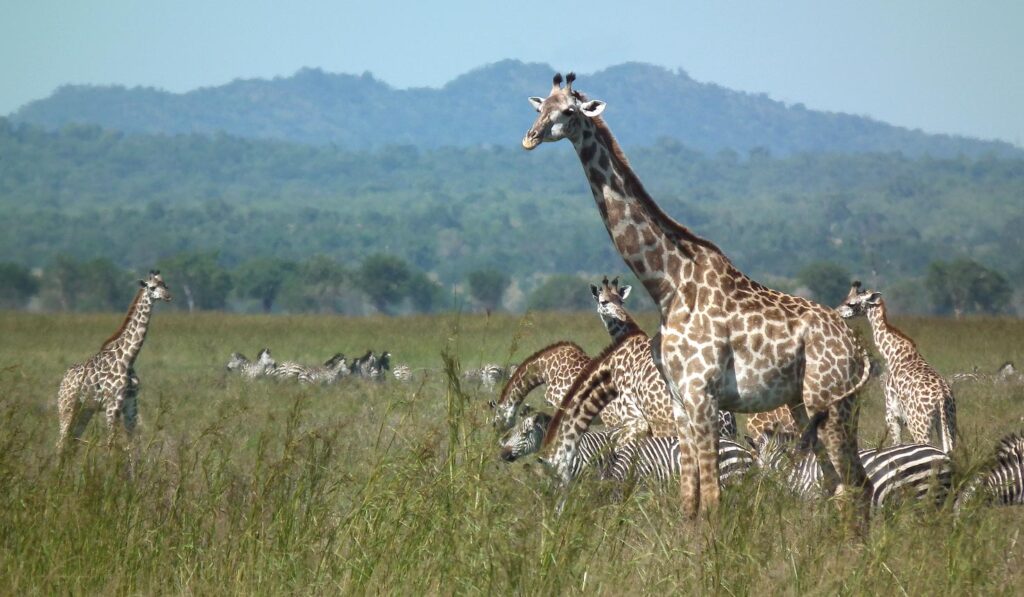
Open grasslands stretching between woodlands support vast herds during the dry season—not just buffalo, but thousands of topi (their purple-blue sheened coats catching sunlight), zebras striping the plains in classic safari imagery, and impalas gathered in mixed herds sometimes numbering hundreds.
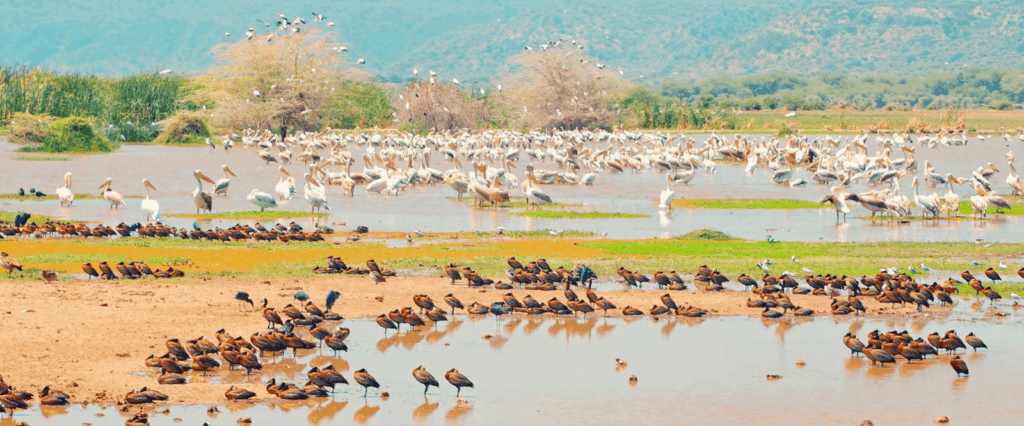
Seasonal lakes—vast shallow depressions that flood during rains—transform from aquatic ecosystems teeming with waterbirds into cracked mud pans during dry months, their alkaline soils supporting specialized grasses that attract different grazers.
This habitat mosaic creates year-round wildlife productivity and ensures that Katavi offers compelling experiences regardless of season, though dry season concentrations prove most spectacular.
The Western Circuit: A Different Tanzania
Katavi anchors Tanzania’s western safari circuit—a collection of parks and reserves that remain refreshingly uncommercialized compared to the famous northern circuit (Serengeti, Ngorongoro, Tarangire). Accessing Katavi requires commitment: expensive chartered flights from Arusha or Dar es Salaam, or arduous multi-day road journeys.
This remoteness, while making Katavi one of Tanzania’s priciest destinations per day, creates its greatest asset: exclusivity. Even during peak dry season (June-October), you might encounter one or two other safari vehicles during an entire day’s game drive. Often, you’ll have sightings completely to yourself—that pride of lions, those hippo pools, those endless buffalo herds witnessed in solitude that makes the experience feel like personal discovery rather than guided tour.
When to Experience Katavi’s Magic
The Katavi dry season (June-December) delivers the park’s most dramatic wildlife concentrations. As months without rain progress, animals increasingly concentrate around the Katuma River and remaining waterholes. By September-October, the concentrations reach peak intensity—those impossibly crowded hippo pools, those vast buffalo herds, predators following prey to water.
Yet even wet season (January-May) holds appeal for those seeking true solitude and don’t mind occasional road challenges. The landscape transforms to emerald green, migratory birds arrive in spectacular numbers, and the few camps operating offer even deeper wilderness immersion.
Your Untamed Africa Awaits
Katavi National Park isn’t for everyone. It demands acceptance of basic comforts, longer travel times, higher costs, and the understanding that wildlife, while abundant, requires patient searching across vast landscapes.
But for those seeking what East Africa offered before mass tourism, before the crowds, before every dramatic moment was filmed from six angles simultaneously—Katavi remains. Wild. Untamed. Waiting.
This is where your wildest Africa dreams become reality. Come ready for dust, solitude, and the kind of wilderness that changes you.